

Boyd Block, Portland

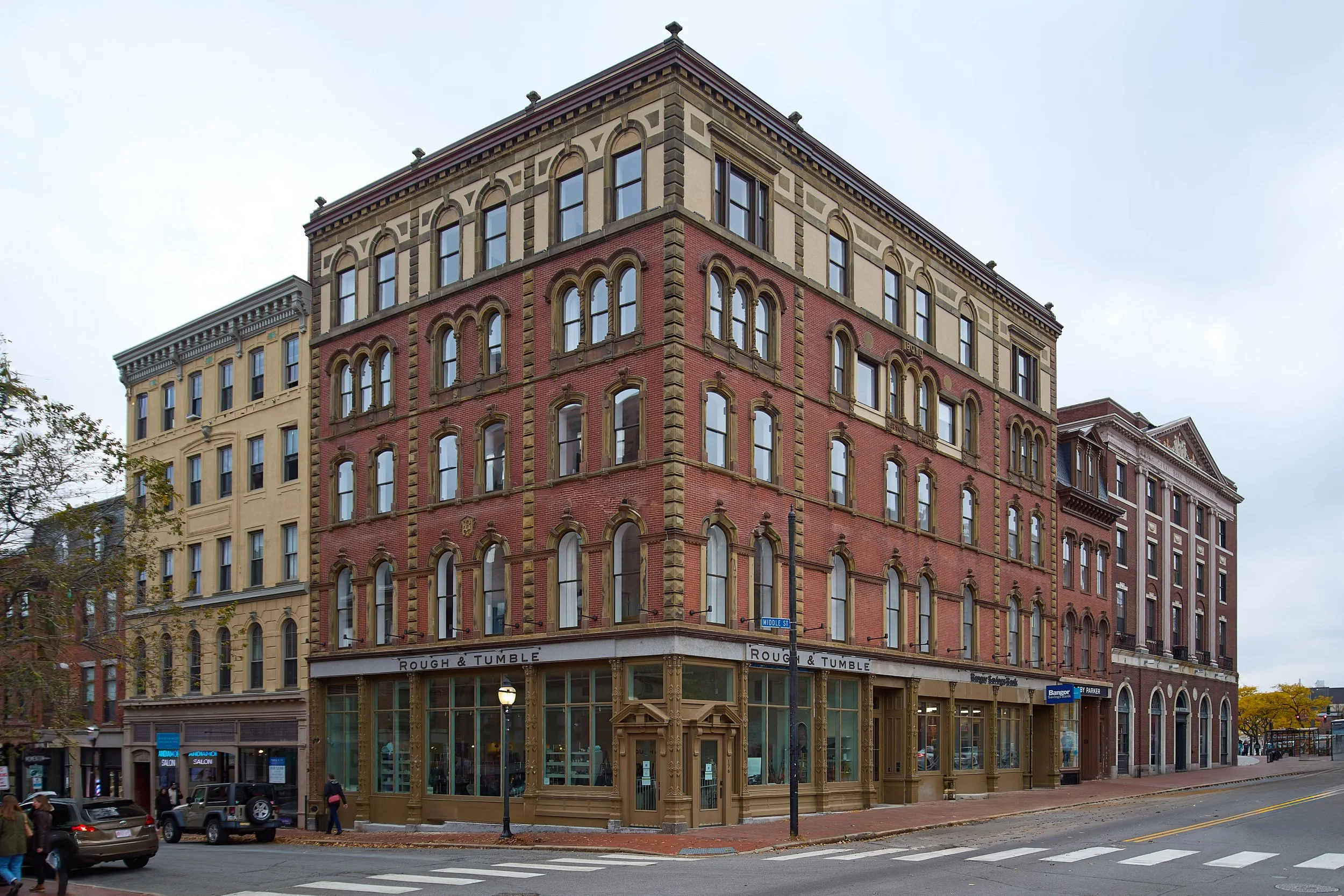
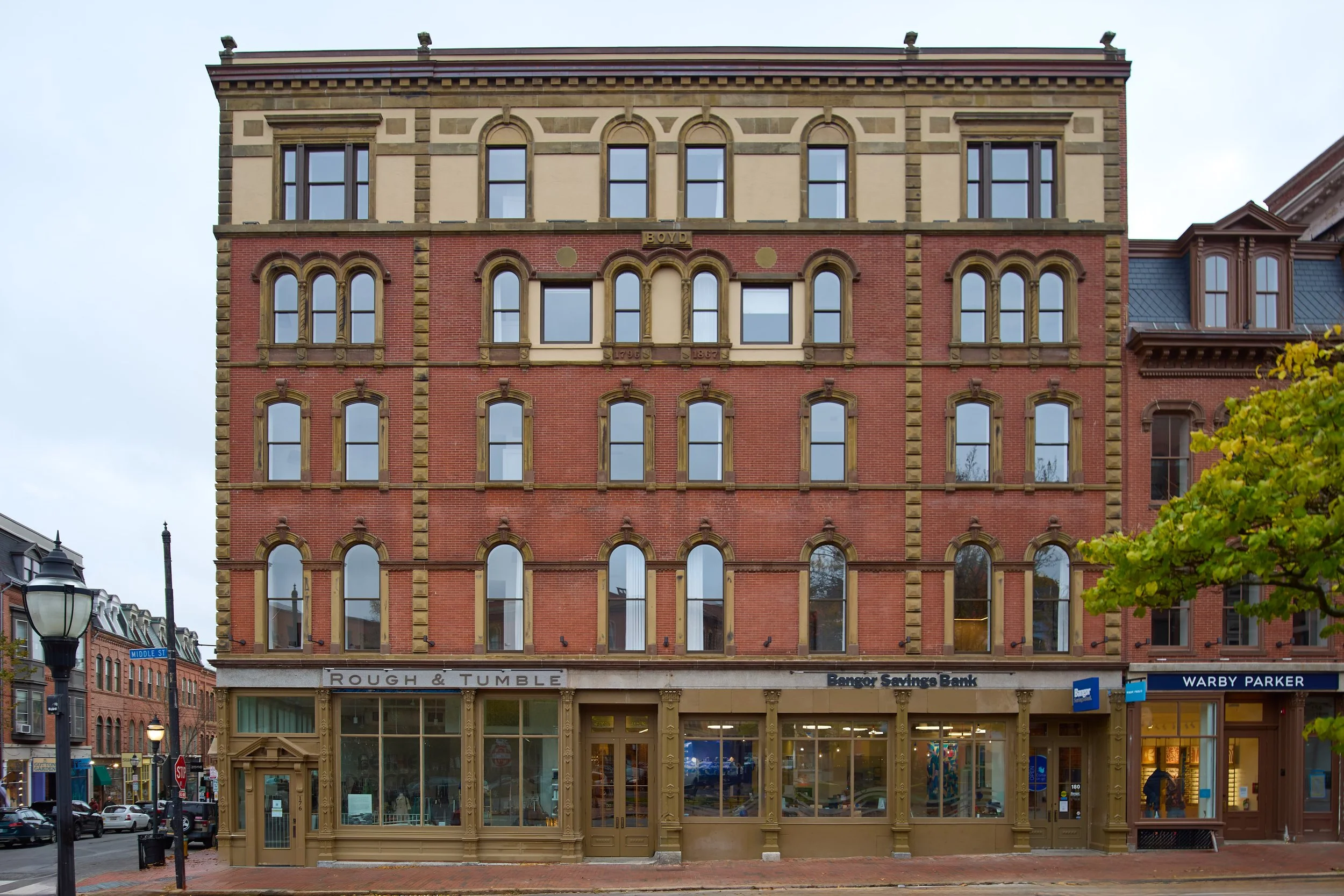
The rehabilitation of the Boyd Block returned the building to its architectural roots while strengthening its connection to the urban fabric of Portland. 

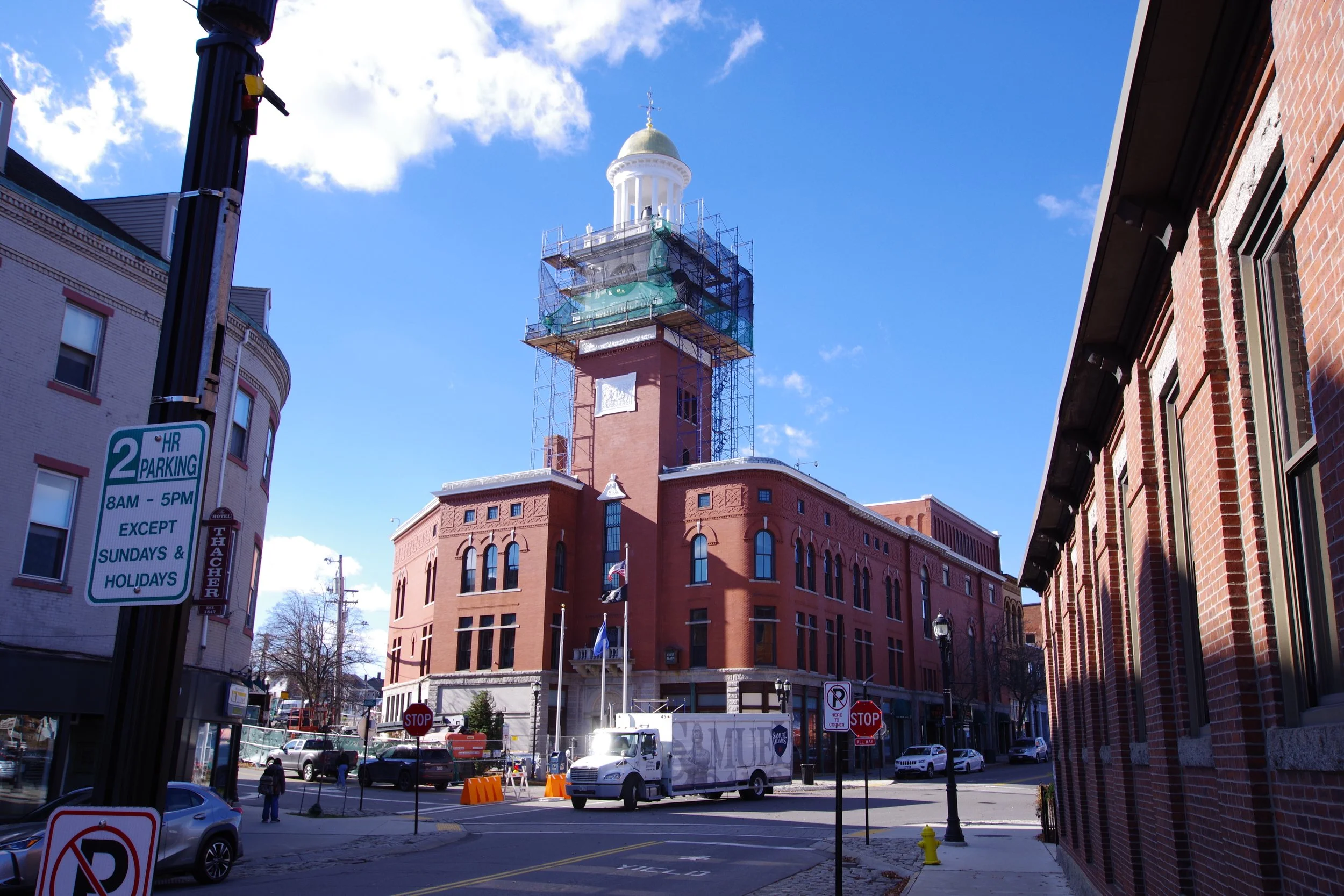
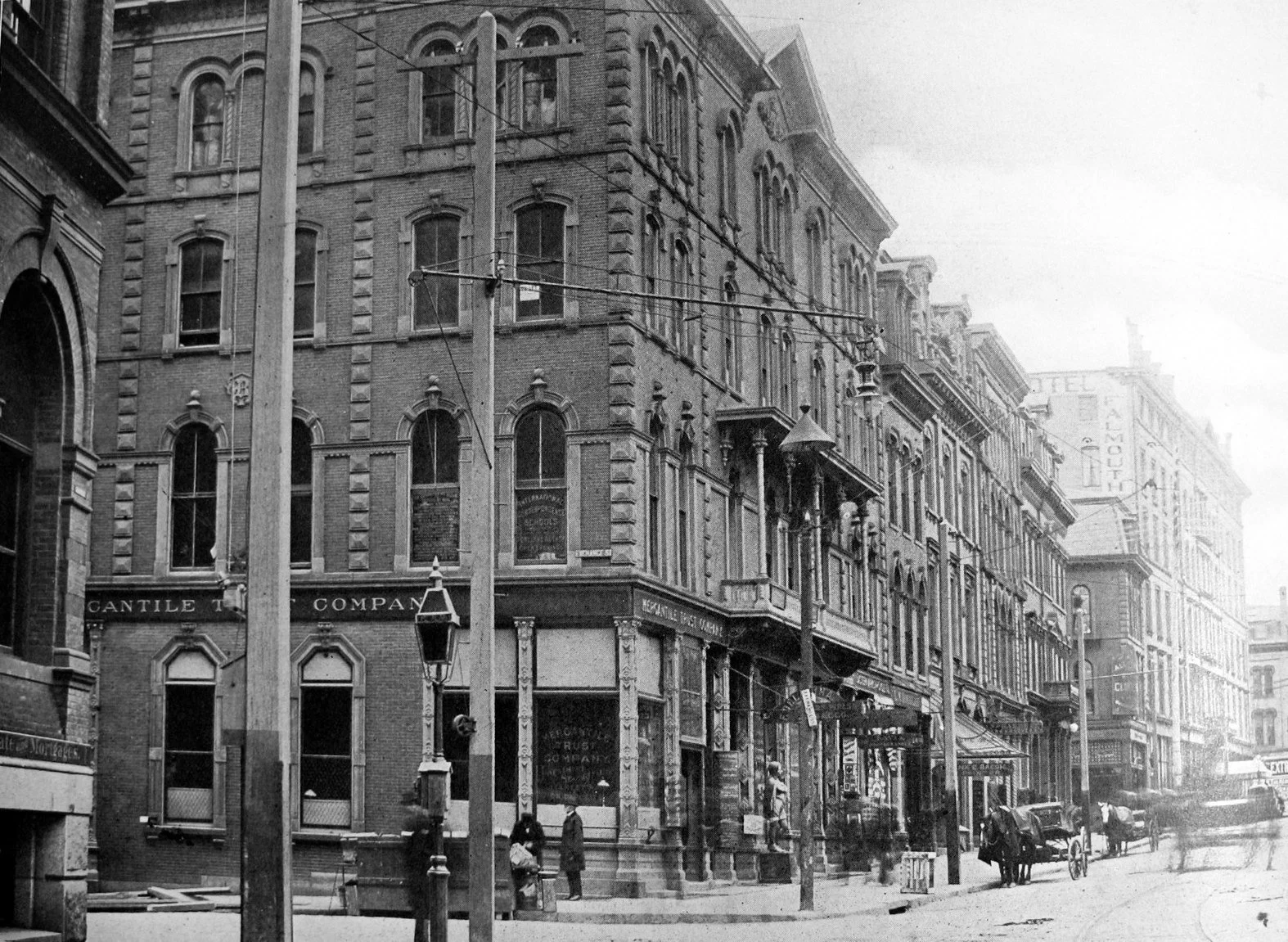
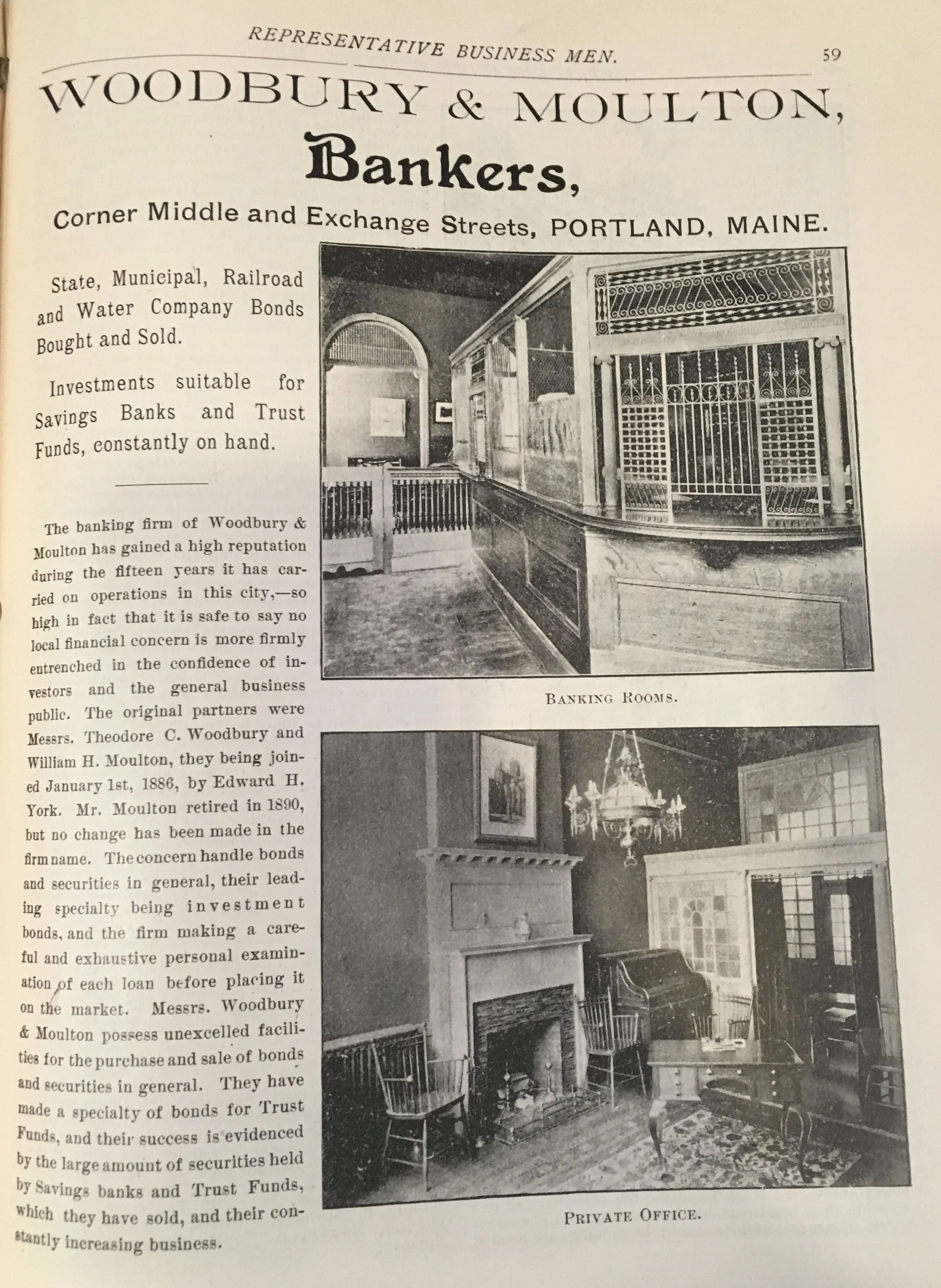
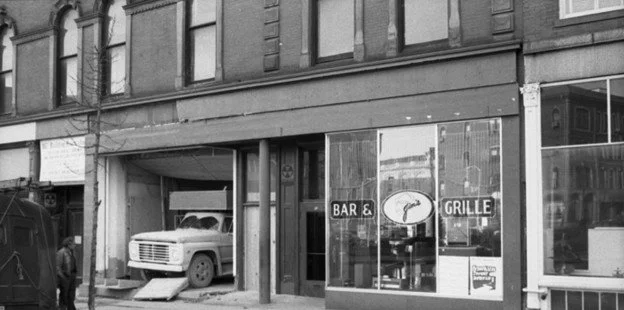
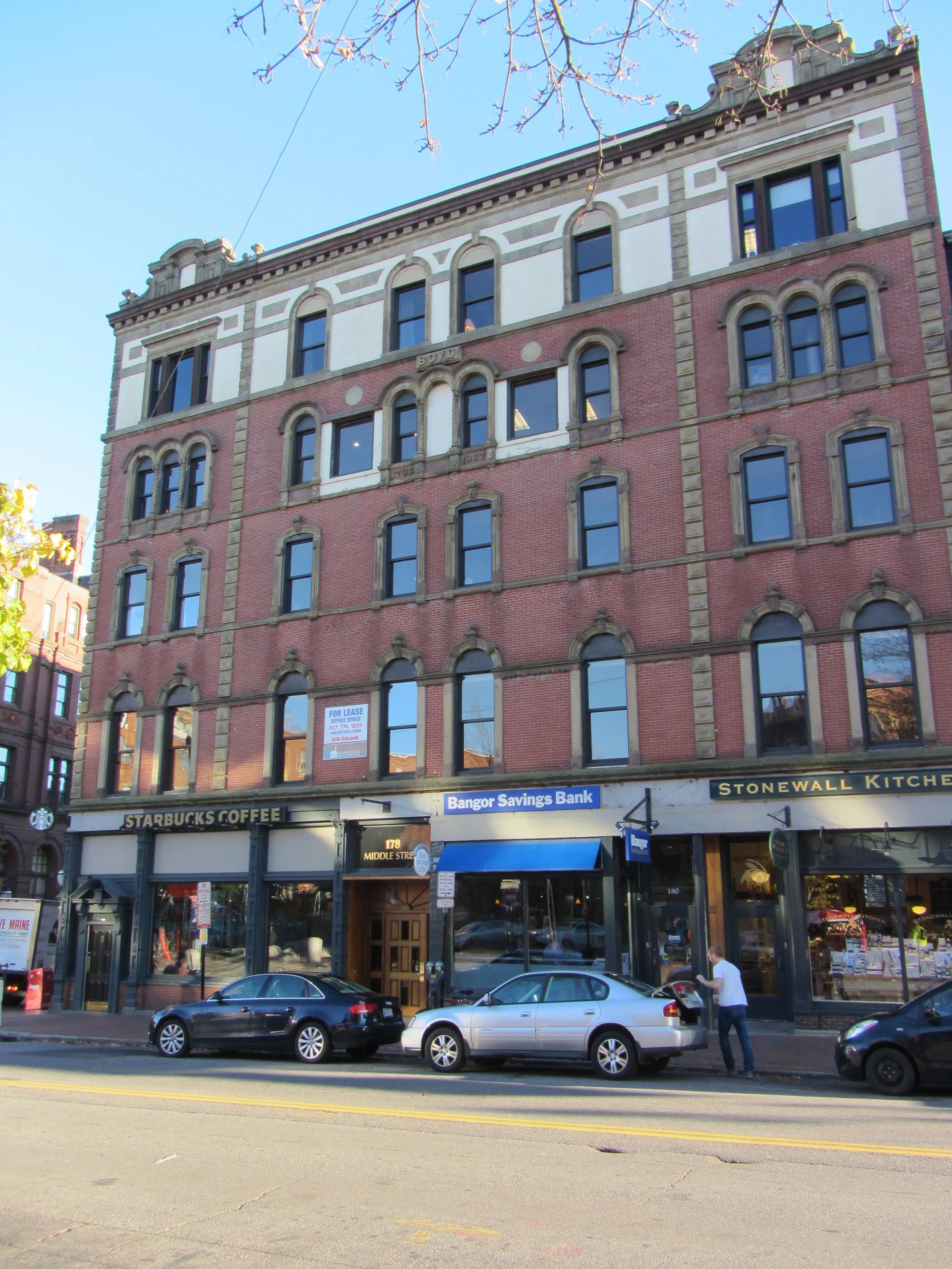
The Boyd Block was designed by Portland architect George M. Harding as part of the city’s rapid reconstruction efforts following the Great Fire of 1866. The Italianate-style commercial block is among five Harding-designed buildings erected along Middle and Exchange Streets. From its earliest days, banking and retail filled its ground floor, while the upper floors provided offices for lawyers, engineers, and architects. Over time, the building underwent significant alterations, most notably in the 1920s when a fifth floor was added, original roof elements were removed, storefronts were reconfigured, and windows were replaced. In the 1970s, Jim’s Bar & Grill converted a storefront bay into a garage!   

Even as interest and investment returned to downtown, the Boyd Block slumbered. Enter East Brown Cow. The Old Port stalwarts purchased the building in 2021 and embarked on a four-year journey to shore up the structure, reverse piecemeal renovations, and reinstate nineteenth-century details. 

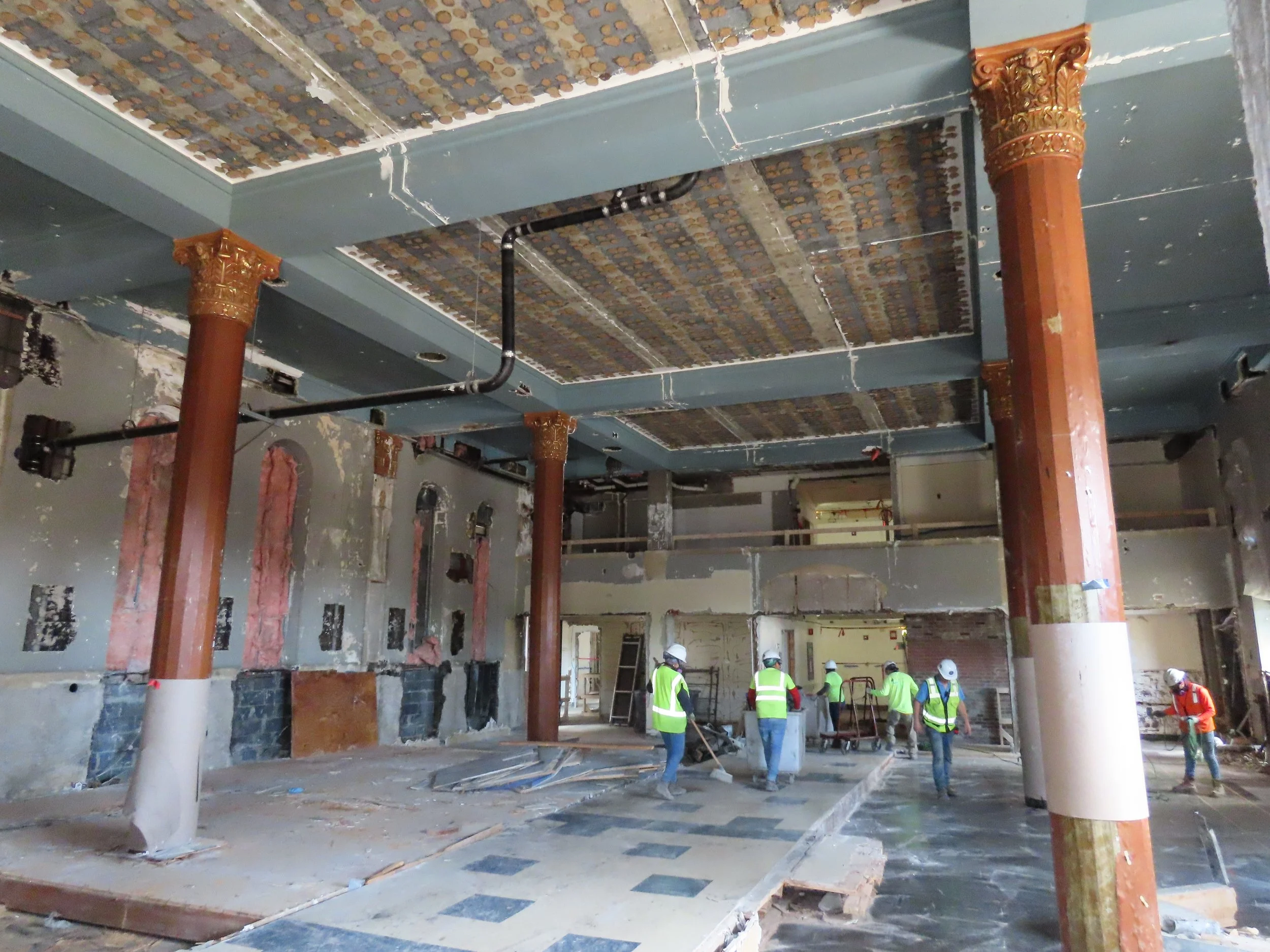
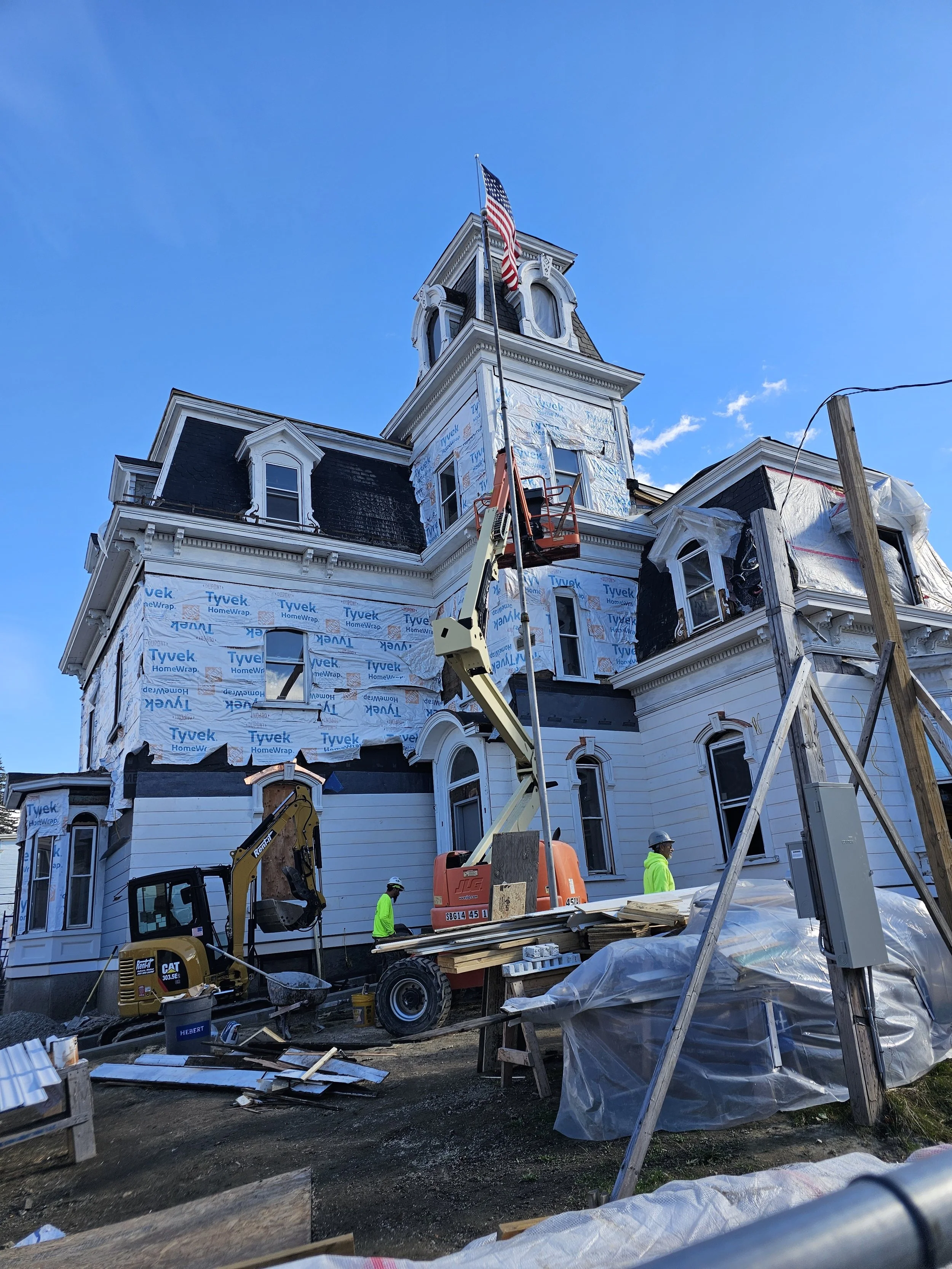
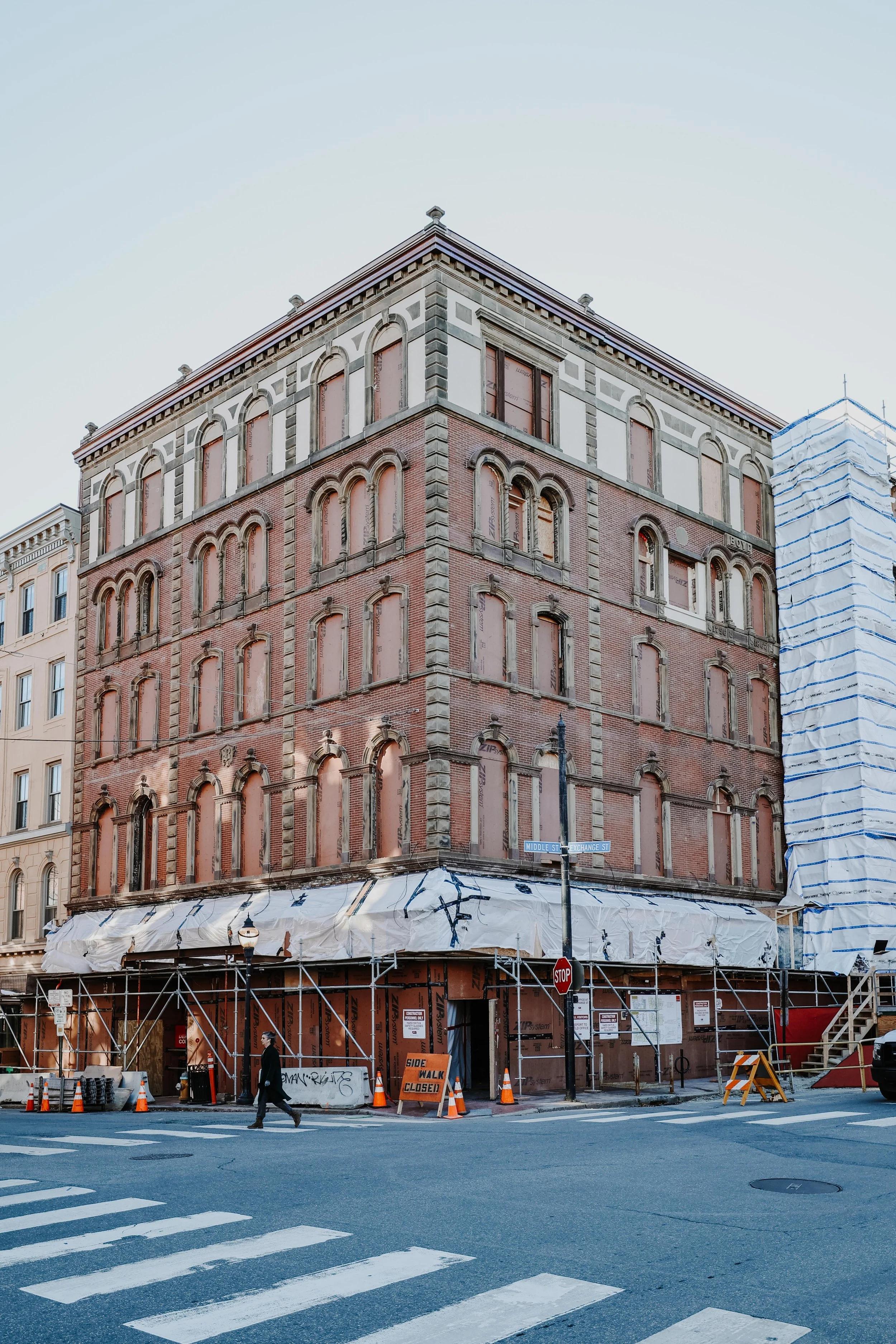
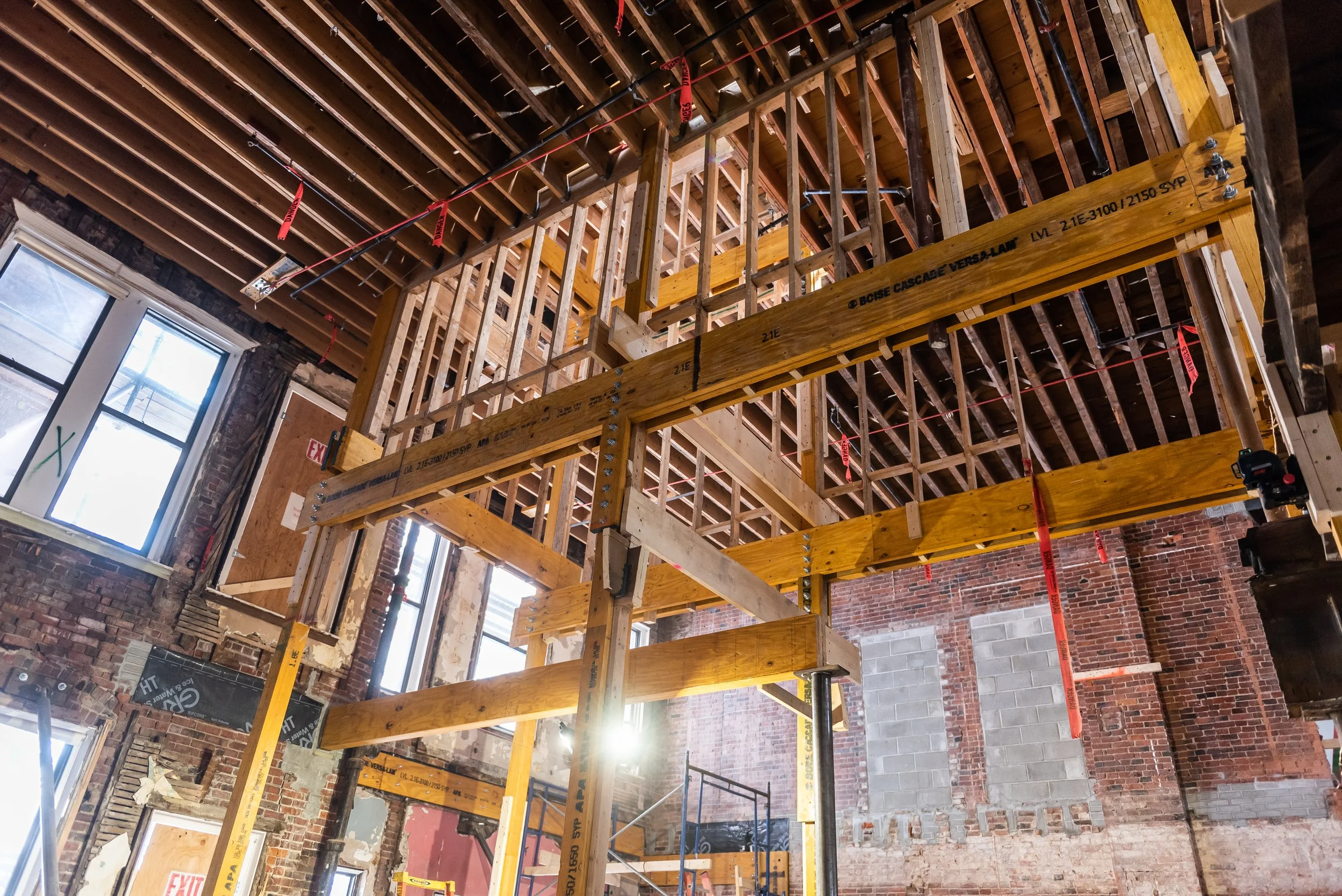
The project involved building-wide interventions that balanced preservation with modern use. The design team was led by Simons Architects with Consigli Construction serving as the construction manager. Structurally, the building had been heavily modified with compromised circulation systems, altered storefront openings, and a basement that lacked full usability. The solution? The building was quite literally taken apart—at one point, you could stand in the basement and see the roof rafters—and reconstructed to meticulous detail. 

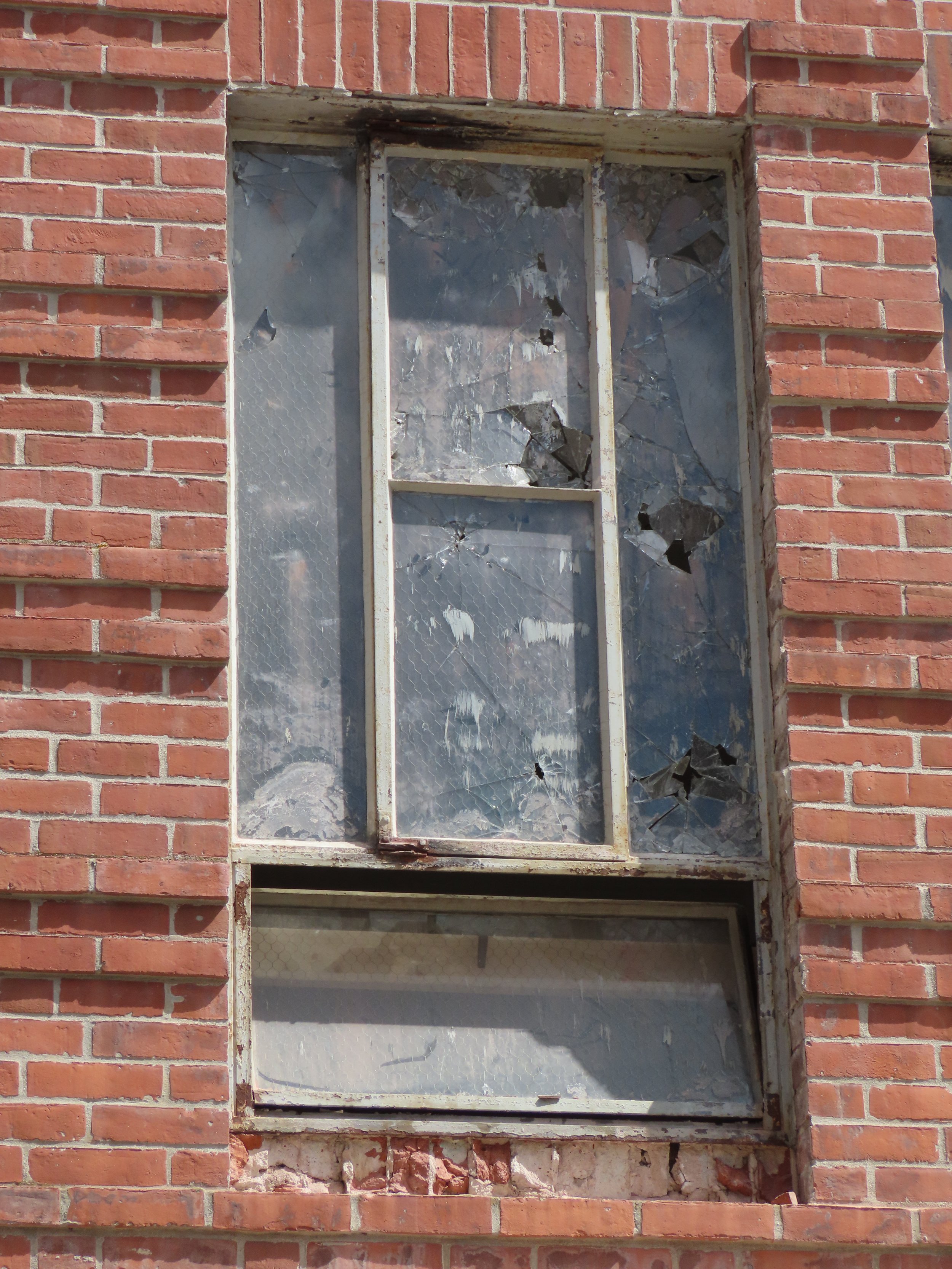
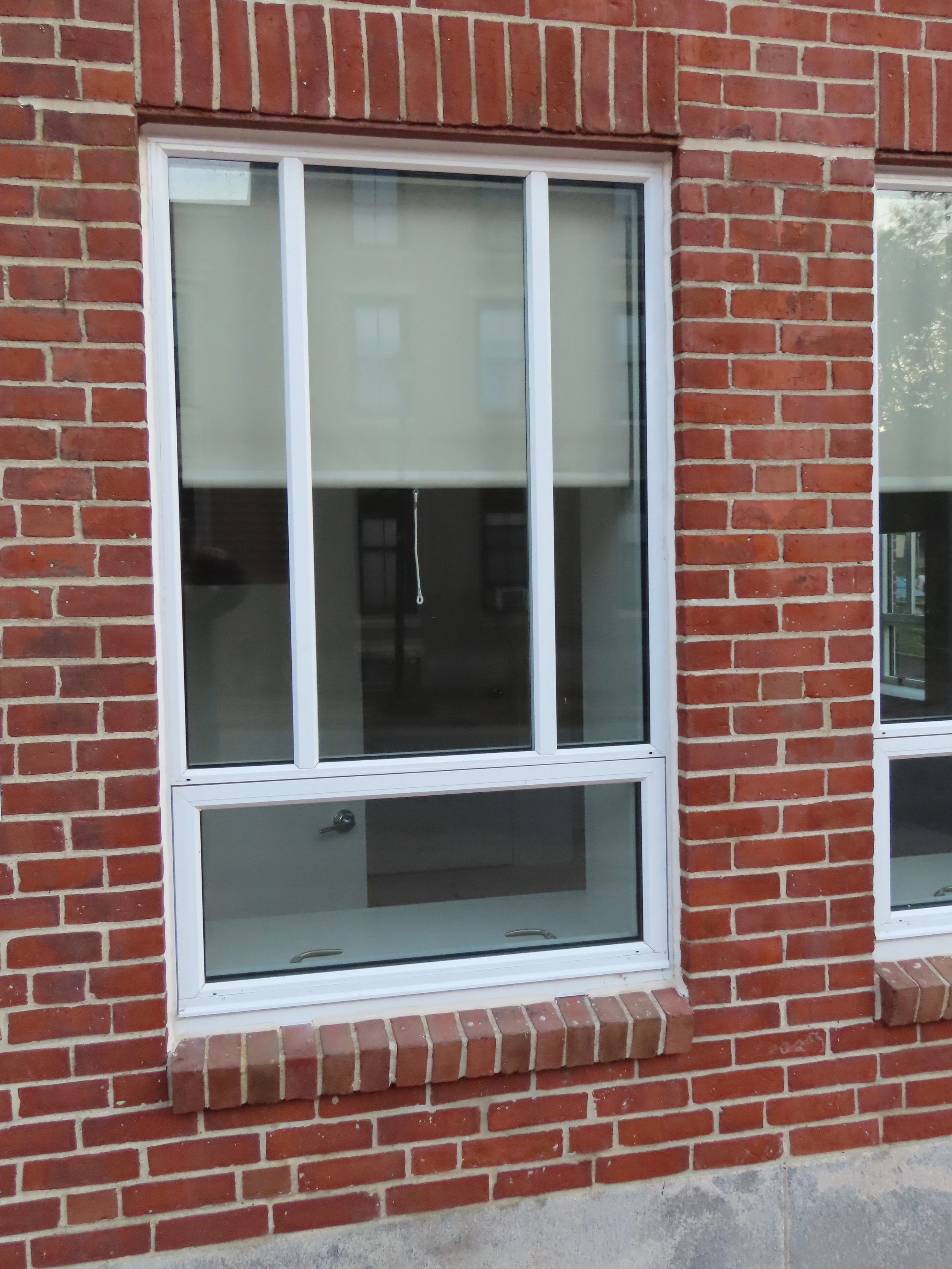
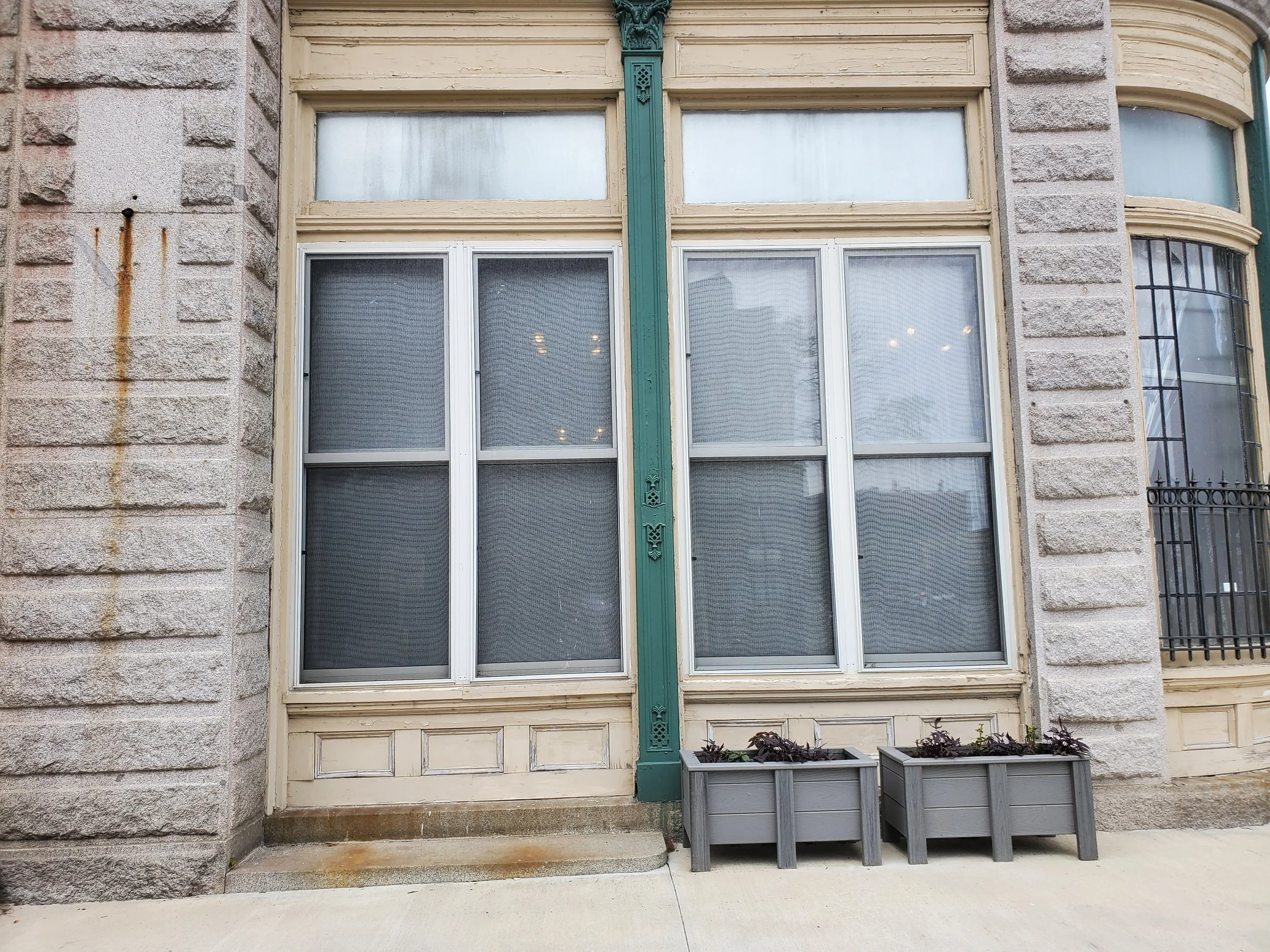
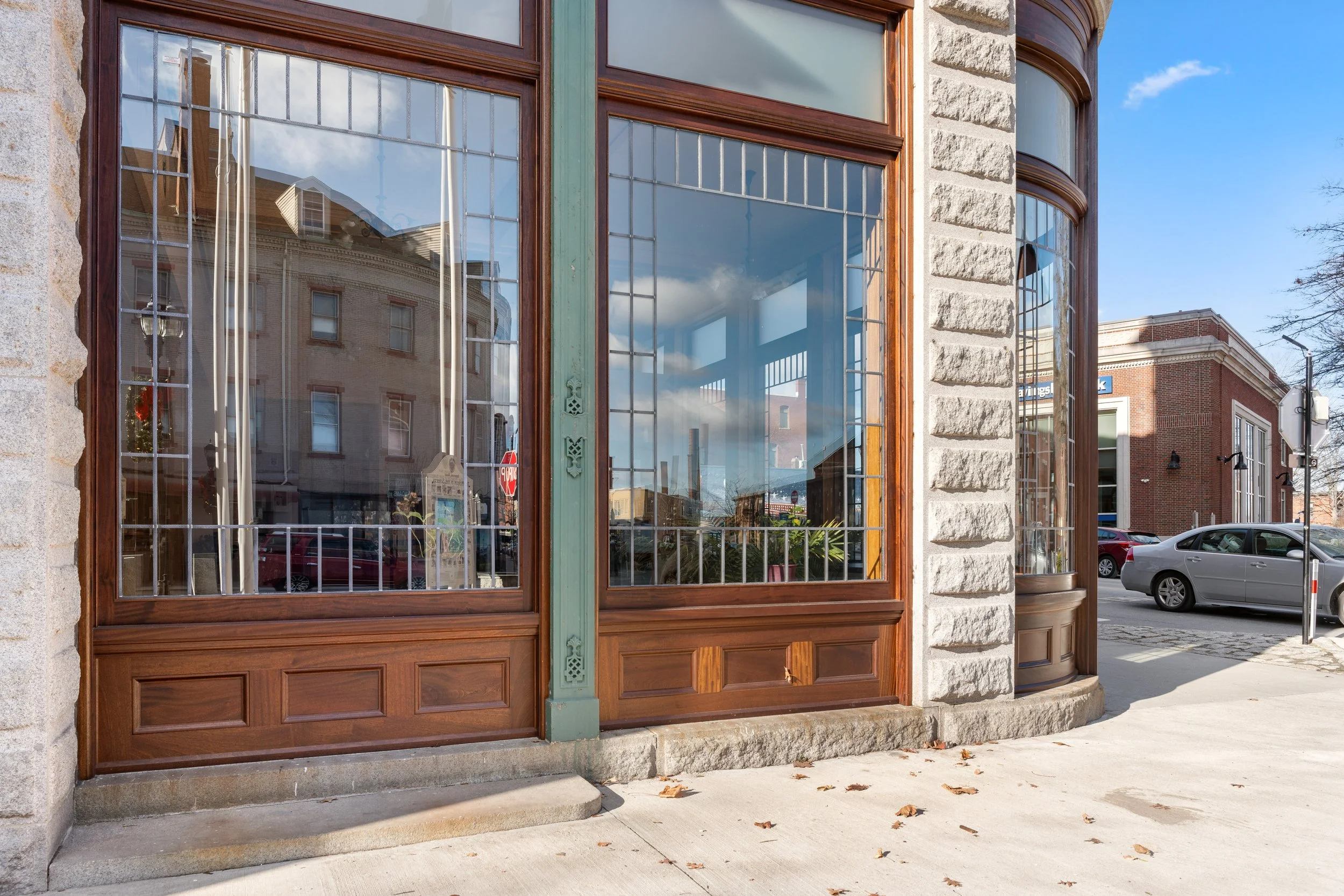
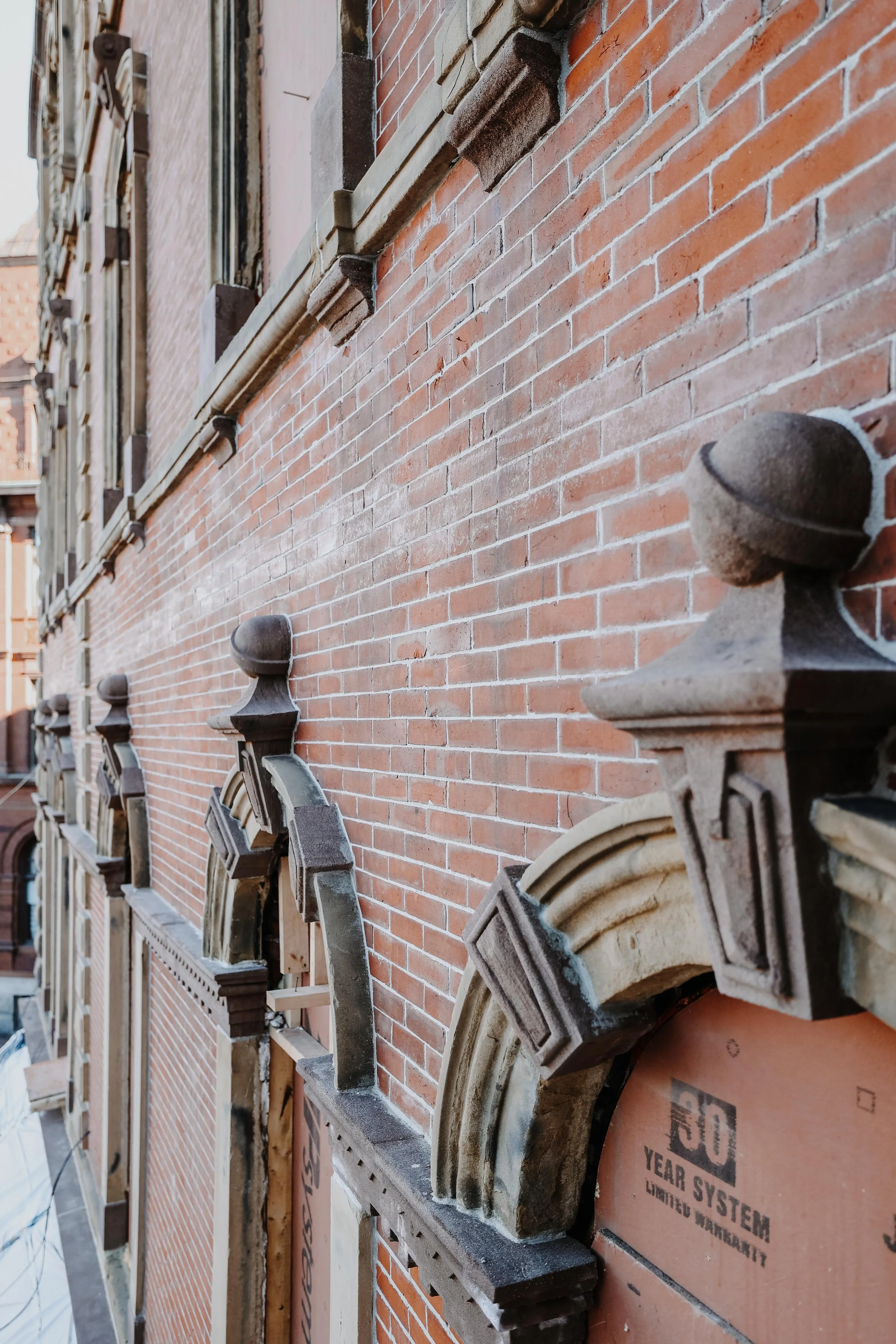
The building envelope received careful attention: repointing of the brick facade, restoration of brownstone and sandstone detailing, a new roof, and installation of custom windows crafted by Green Mountain Window that returned historic profiles to the arched brick openings. 

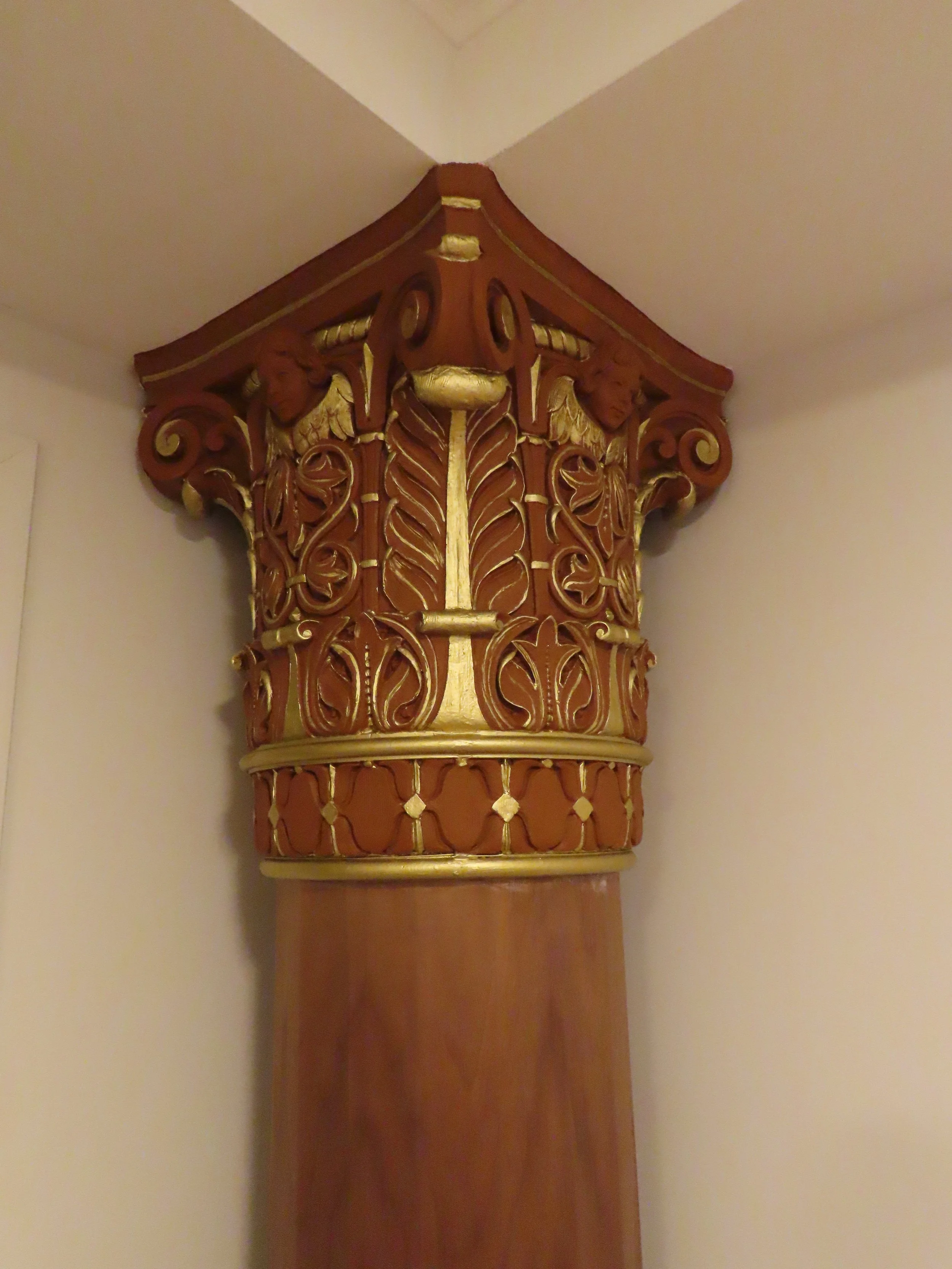
One of the most significant preservation achievements was the recovery and restoration of original interior millwork. Decades-old false walls were removed to reveal intact 1867-era window casings, baseboards, and trim. These were carefully cataloged, restored, and reinstalled. Custom knives were fabricated to accurately replicate the original profiles when needed.  

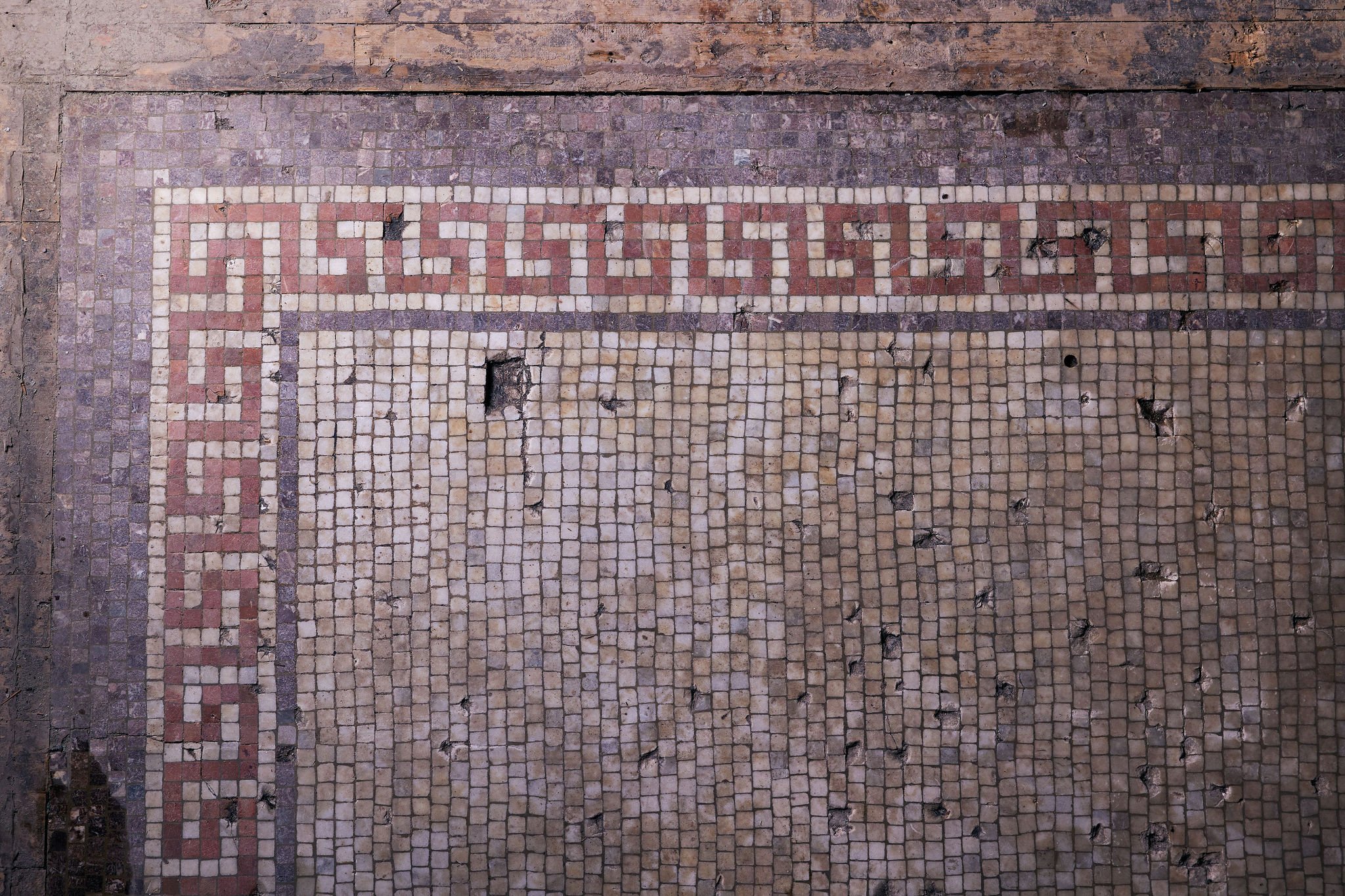
Additional preserved features include the original lobby newel post and banister and historic mosaic flooring. Historic paint analysis led by Hanson Historic Consulting guided the restoration of exterior color schemes and textures, further reinforcing the building’s 19th-century character. 

The project numbers are equally striking. The $22 million project was backed by federal and state historic rehabilitation tax credits and required 241,593 total work-hours from the construction trades and craftspeople including M.R. Brewer, Knowles Industrial Services, Heritage Co. Coppersmiths, and Vintage Glass Works. Crews rebuilt 4,400 feet of floor plates and installed 104 custom wood windows.  

The ground floor now features two Maine businesses, Rough & Tumble and Bangor Savings Bank. The upper floors feature 16 one- and two-bedroom lofts as part of The Docent’s Collection, where guests enjoy short-term stays in strikingly modern interiors juxtaposed with preserved historic architecture.  

Today, the rehabilitated Boyd Block serves as a visual and civic anchor—an illuminated nexus within the Old Port that underscores the value of thoughtful historic preservation as a tool for urban vitality. 

Project Participants:

  • East Brown Cow

  • Simons Architects

  • Consigli Construction

  • Thornton Tomasetti

  • Woodard & Curran

  • Ealain Studio

  • Lam Partners

  • Hanson Historic Consulting

  • Saco & Biddeford Savings

  • M.R. Brewer

  • Green Mountain Window

  • Knowles Industrial Services

  • Heritage Co. Coppersmiths

  • Vintage Glass Works

  • Longfellow Communications

Photo Credits: City of Portland, East Brown Cow, Longfellow Communications, Maine Historical Society, Portland Public Library, Robert Umenhofer Photography 
The Spinning Mill, Skowhegan

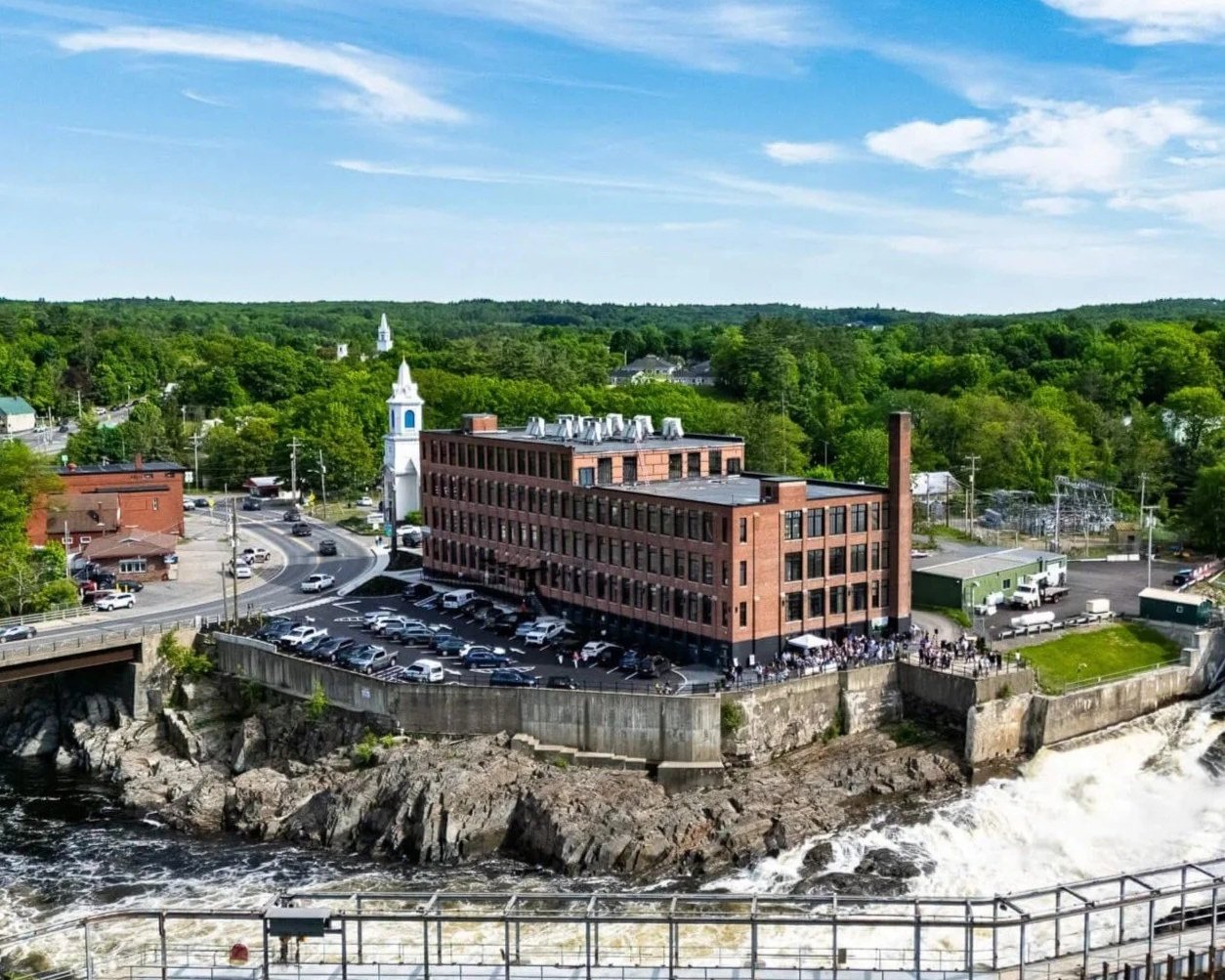
The high-profile redevelopment of the Spinning Mill exemplifies the transformative effect of an adaptive reuse project–turning Skowhegan’s shuttered mill into a beacon for the community by providing new jobs, housing, and accommodations. 

The Maine Spinning Company Mill was erected in 1922 at the heart of downtown Skowhegan, where the main roads connecting Bangor, Quebec, and central and southern Maine intersect. The company first leased space in a complex of wood frame mill buildings across the Kennebec River in 1904. Lockwood, Greene & Co., the leading mill engineering firm at the time, is credited with the innovative and efficient design of the three-story, brick mill, which integrated fully electric-driven machinery, full fire protection, double-glazed windows, and steam heat and humidification to ensure both worker health and efficient production. An additional floor added in 1946 brought the mill’s size to 80,000 square feet.   

Following several mergers, Solon Manufacturing Company was the mill’s last operator and closed its doors in 2005. A discount retail warehouse company filled the first floor, delaying its full vacancy until 2019. Inside, failure of the roof resulted in significant water infiltration and thus damage to hardwood flooring in much of the building. Many of the windows were removed or damaged and covered with metal roofing material. The highly visible mill, that once employed upwards of 300 residents to produce 2 million pounds of yarn a year, sat vacant giving the impression of a depressed and failed community. 

In 2017, Jeff and Pam Powers, owners of Bigelow Brewing, purchased the mill for brewing and canning operations and a brew pub. For help redeveloping the rest of the site, a mutual connection introduced Dash Davidson and Max Patinkin of High Tide Capital, whose adaptive reuse projects were contributing to downtown Bangor’s resurgence. Sadly, Jeff unexpectedly passed away in 2023, with High Tide Capital taking the reigns of the project.  

In another tragic turn, a "100-year" flood in December 2023 inundated the lower story of the building mid-construction, causing an estimated $3 million in damage, including stored materials for use on the upper floors. However, a Business Recovery & Resilience Grant from the State of Maine helped safeguard the project’s viability.  

One of the most striking parts of the transformation was the return of historically appropriate, 8-foot-tall windows, bringing both light and a sense of vitality to the mill. New hardwood flooring was installed on the main floors, while original riveted steel framing, wood ceilings, and brick walls remained exposed. The plans for reuse, led by DJLU Architects with support from Hanson Historic Consulting and executed by Pike Project Development, included a 20-room boutique hotel, coworking space, gym, and 41 apartments. The top of the original concrete coal bin was repurposed as a riverside patio for the new restaurant Biergarten. In addition, a 5,000 square-foot rooftop deck now overlooks the Kennebec River. The industrial loft-style hotel rooms and apartments have provided a new type of hospitality and living space to the region.  

The Spinning Mill has reclaimed its prominence in the heart of Skowhegan. 

Project Participants:

  • High Tide Capital

  • Djlu Architect

  • Pike Developers

  • High Tide Capital

  • Kasa

  • Hanson Historic Consulting

  • Skowhegan Economic Development Corporation

  • Biergarten

Photo Credits: Bigelow Brewing, High Tide Capital, Hanson Historic Consulting, Maine Historical Society 

Nightingale, Portland

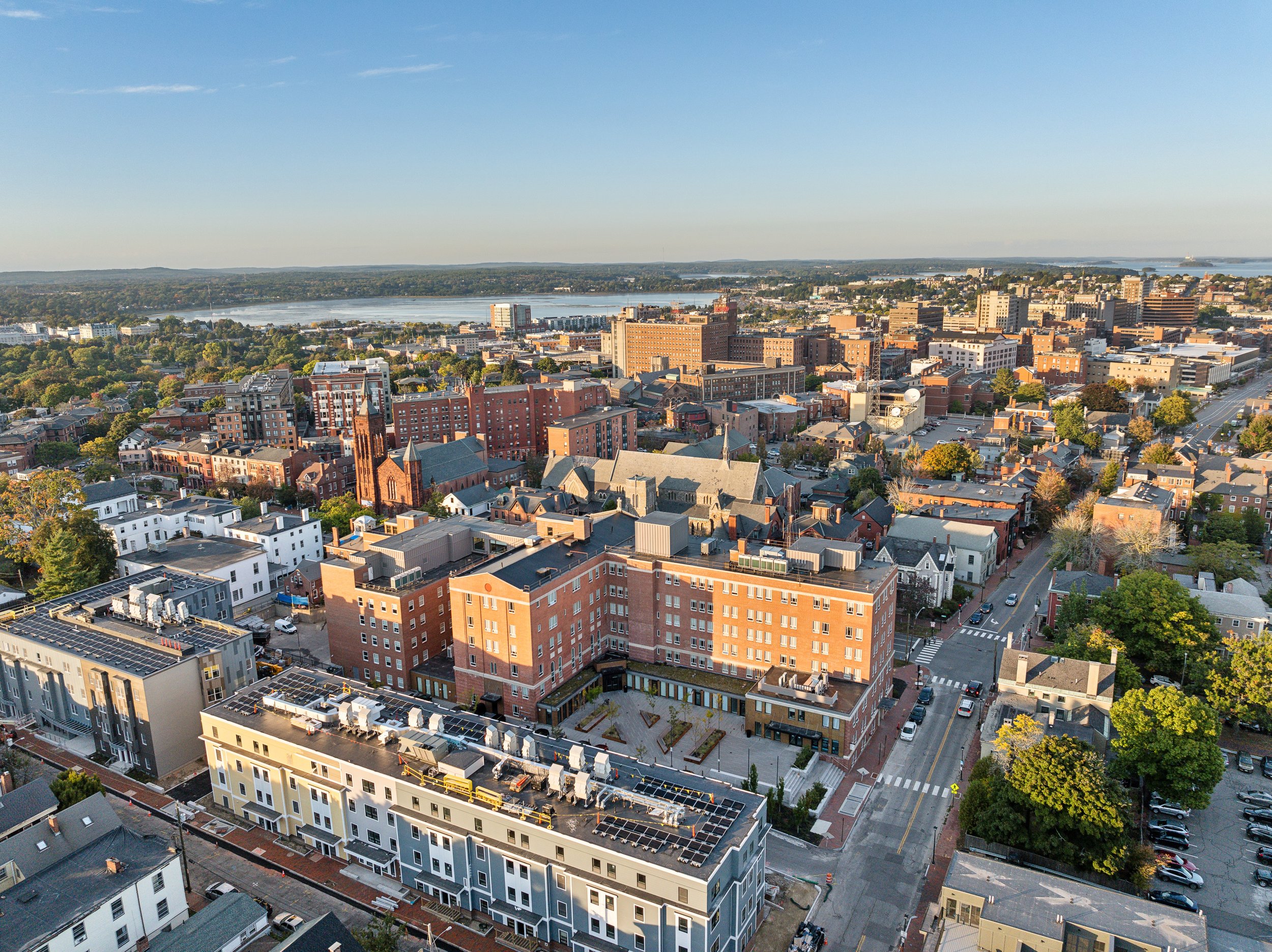
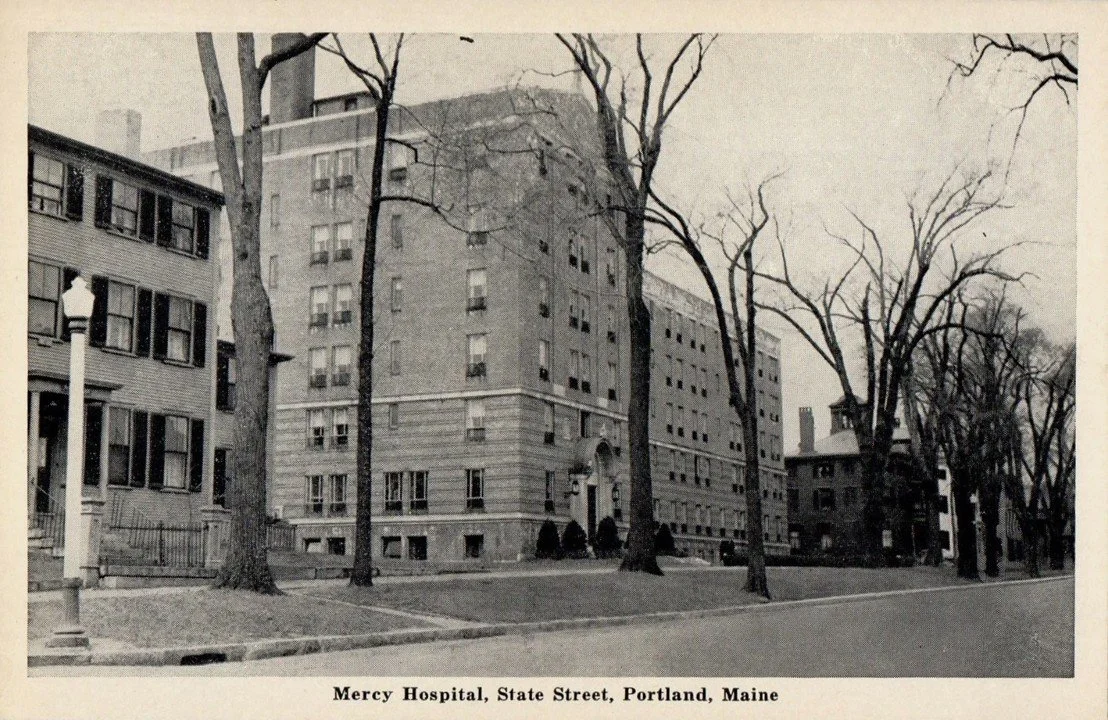
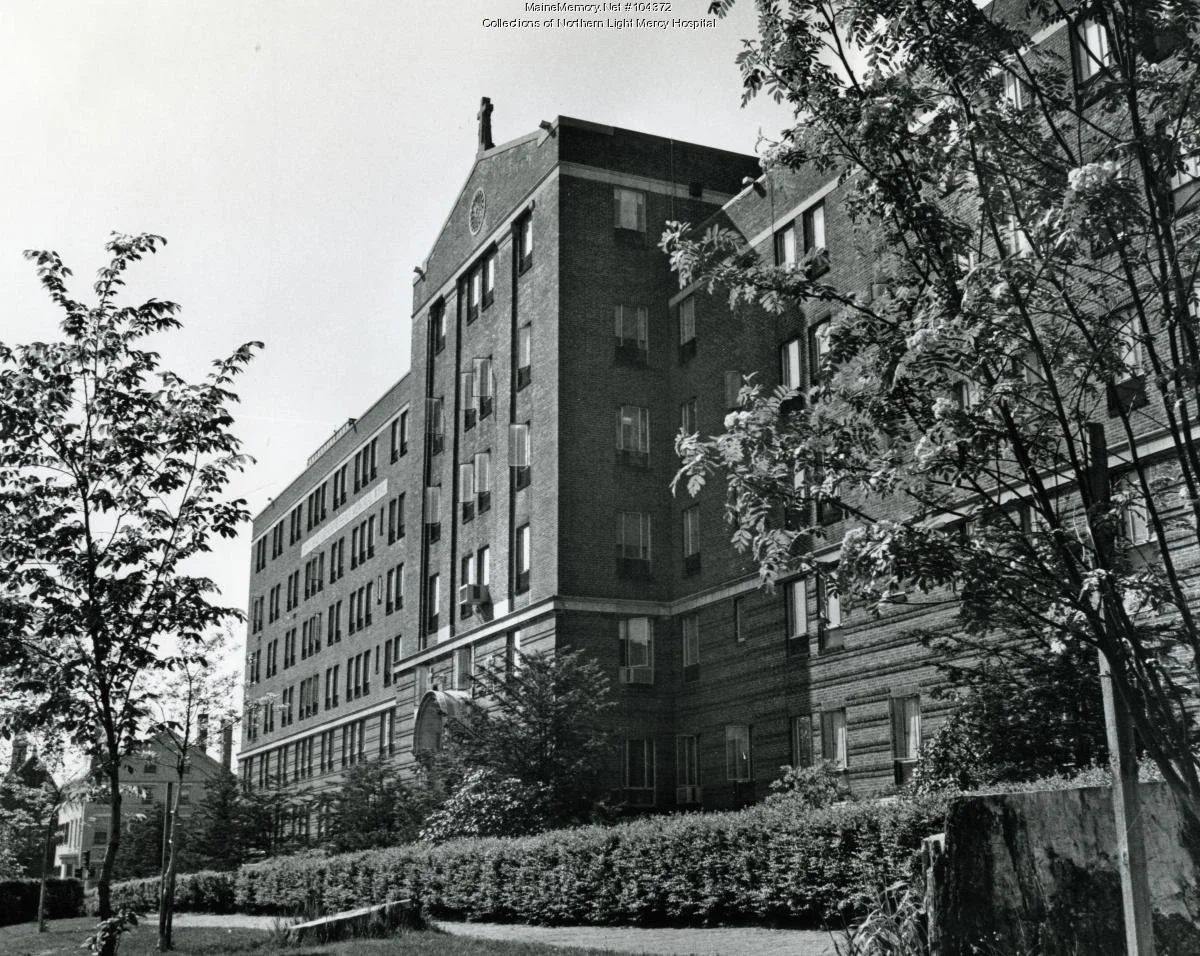
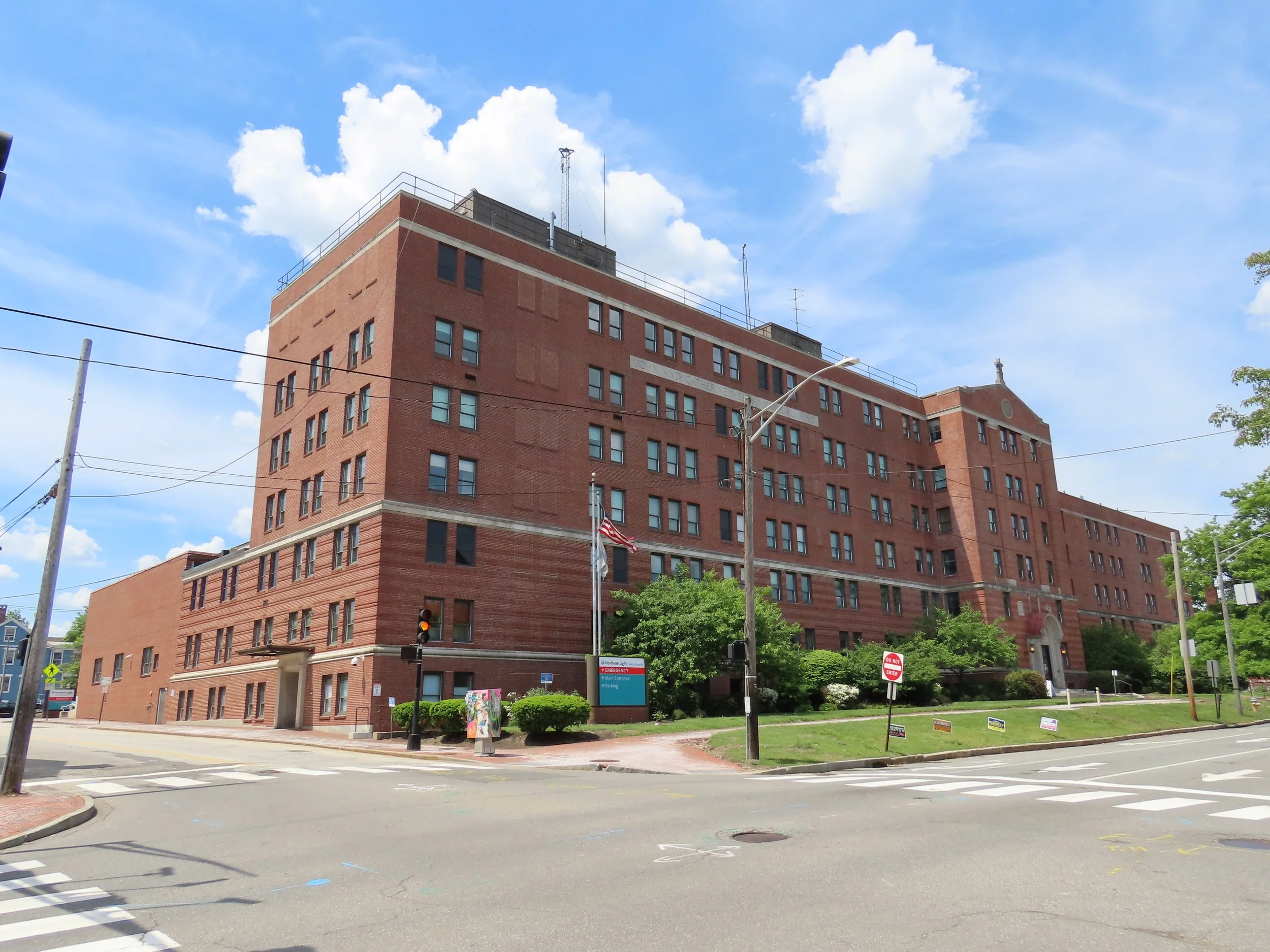
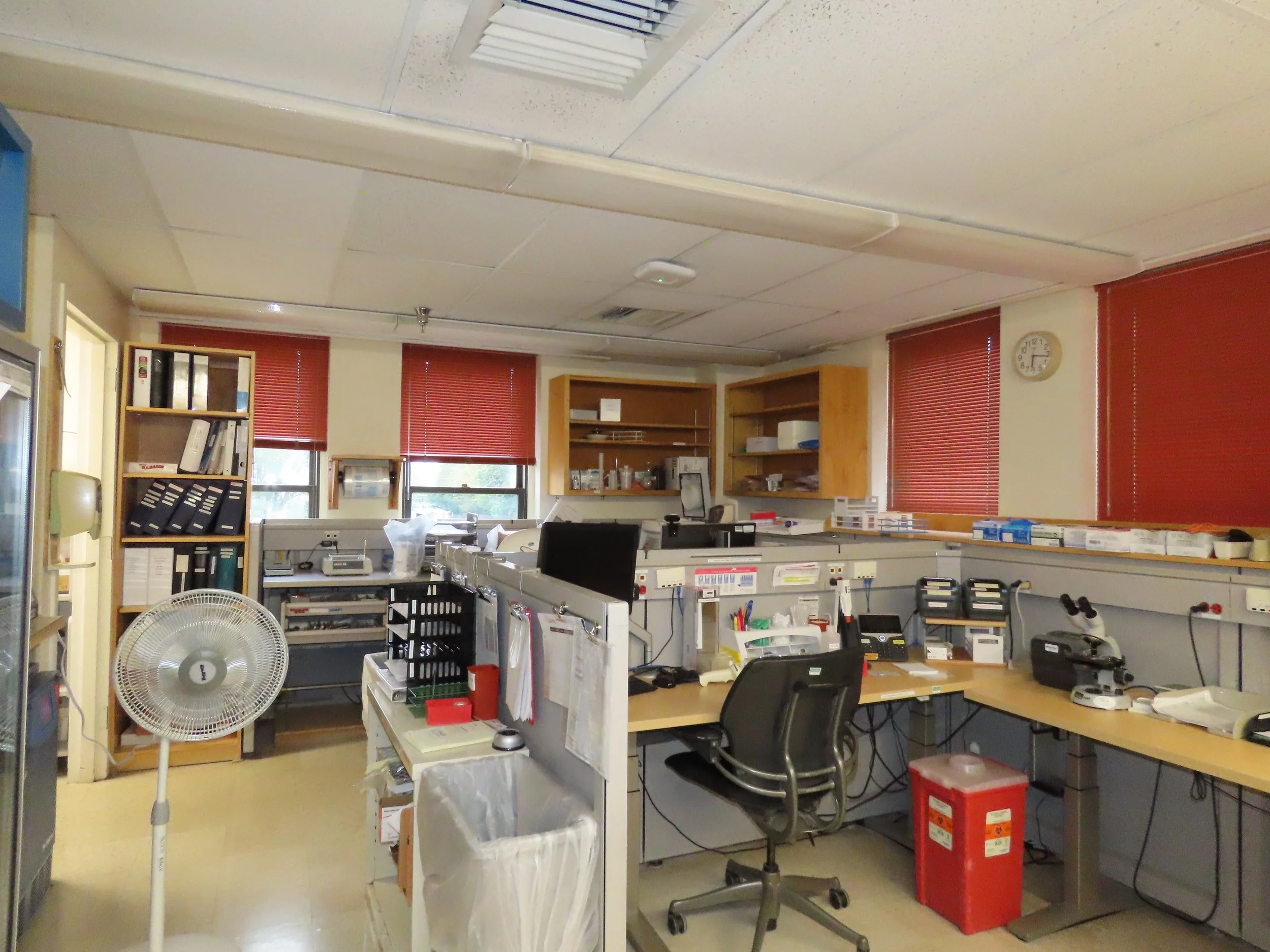
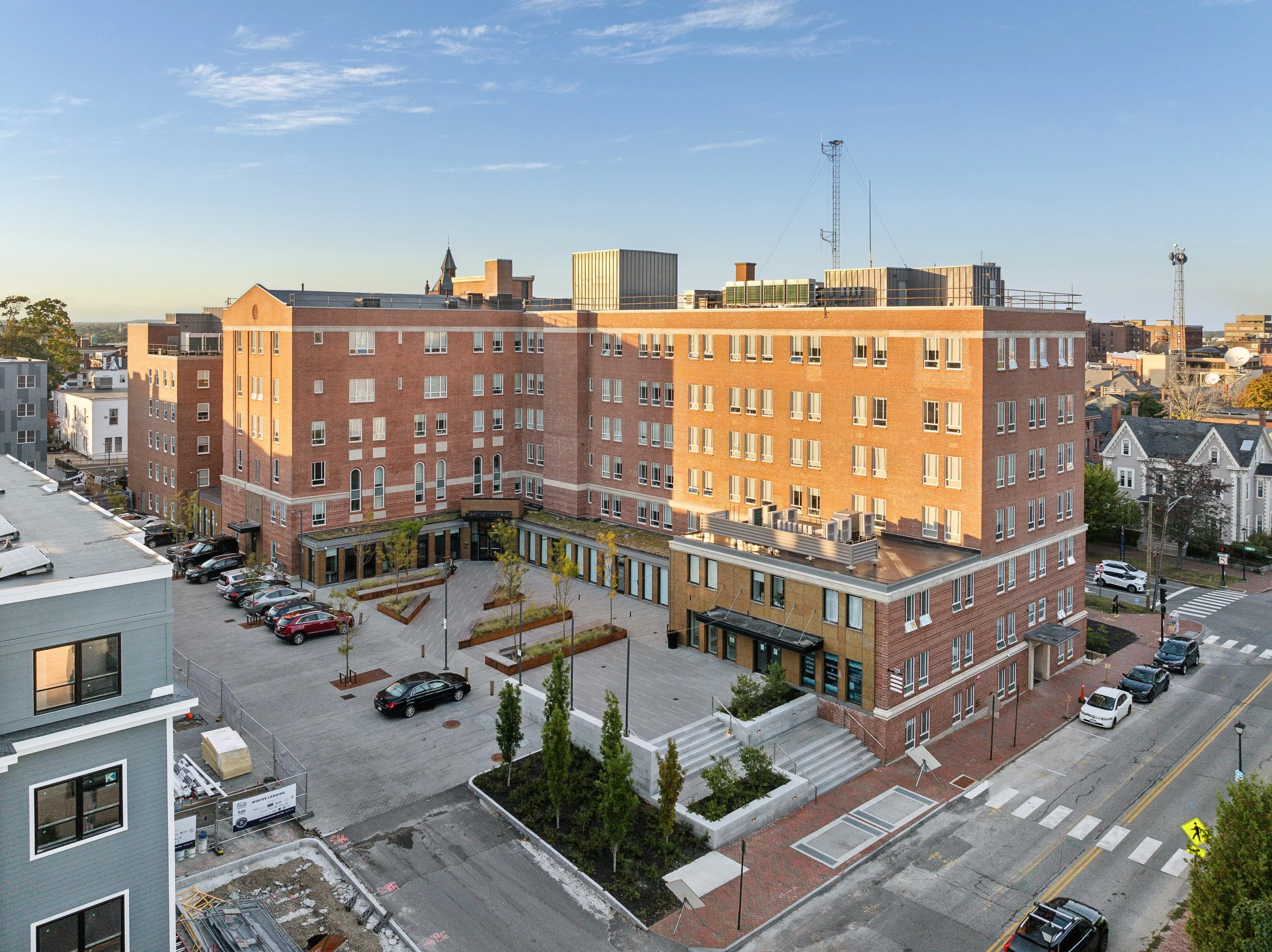
Portland’s Mercy Hospital has its origins in the flu pandemic of 1918 when Bishop Walsh of the Portland Diocese established Queen’s Hospital with the assistance of Portland’s Sisters of Mercy. The original building could not meet the increased demand in the lead up to World War II, when thousands came to work in the booming wartime industries. In 1943, the Sisters of Mercy completed a new state-of-the-art, 150-bed facility. A second wing laid out in the original plans was completed eight years later.  

Fast forward to 2006, when construction of a new hospital campus commenced. It prompted the question of what to do with the State Street campus, now part of both a local and National Register historic district. Although the 2008 recession delayed construction and the relocation of Mercy’s services, the Sisters of Mercy decided the hospital’s fate through a Request for Proposal process.  

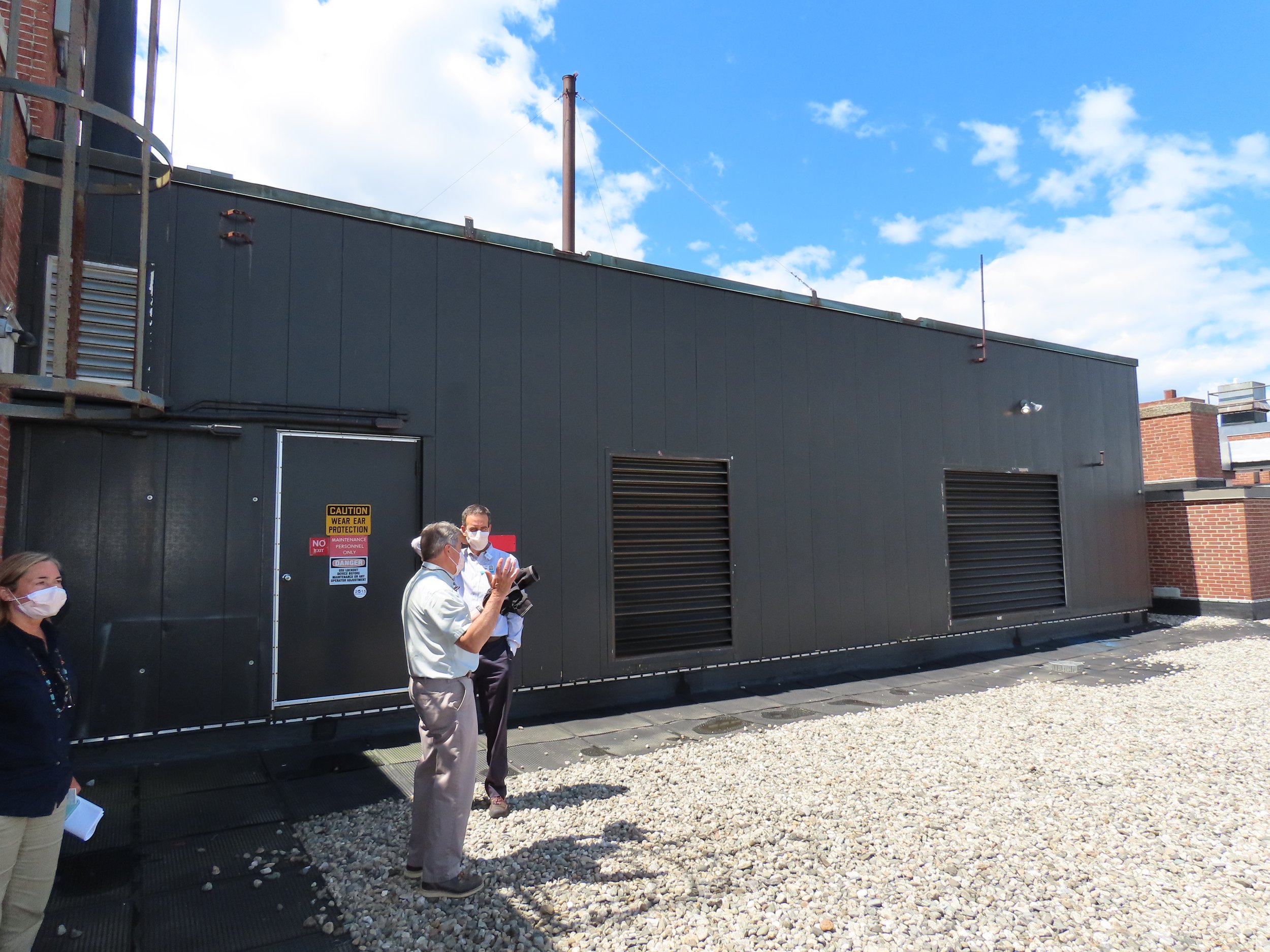
The winning bid was submitted by NewHeight Group with partners: Redfern Properties, Community Housing of Maine, and the Portland Housing Authority. The team leased the building back to the hospital in 2019 until their new campus was completed. Unbeknownst to them, Mercy would soon be hosting a dedicated Covid ward, and a significant amount of the planning work would require site visits through the height of the pandemic. 

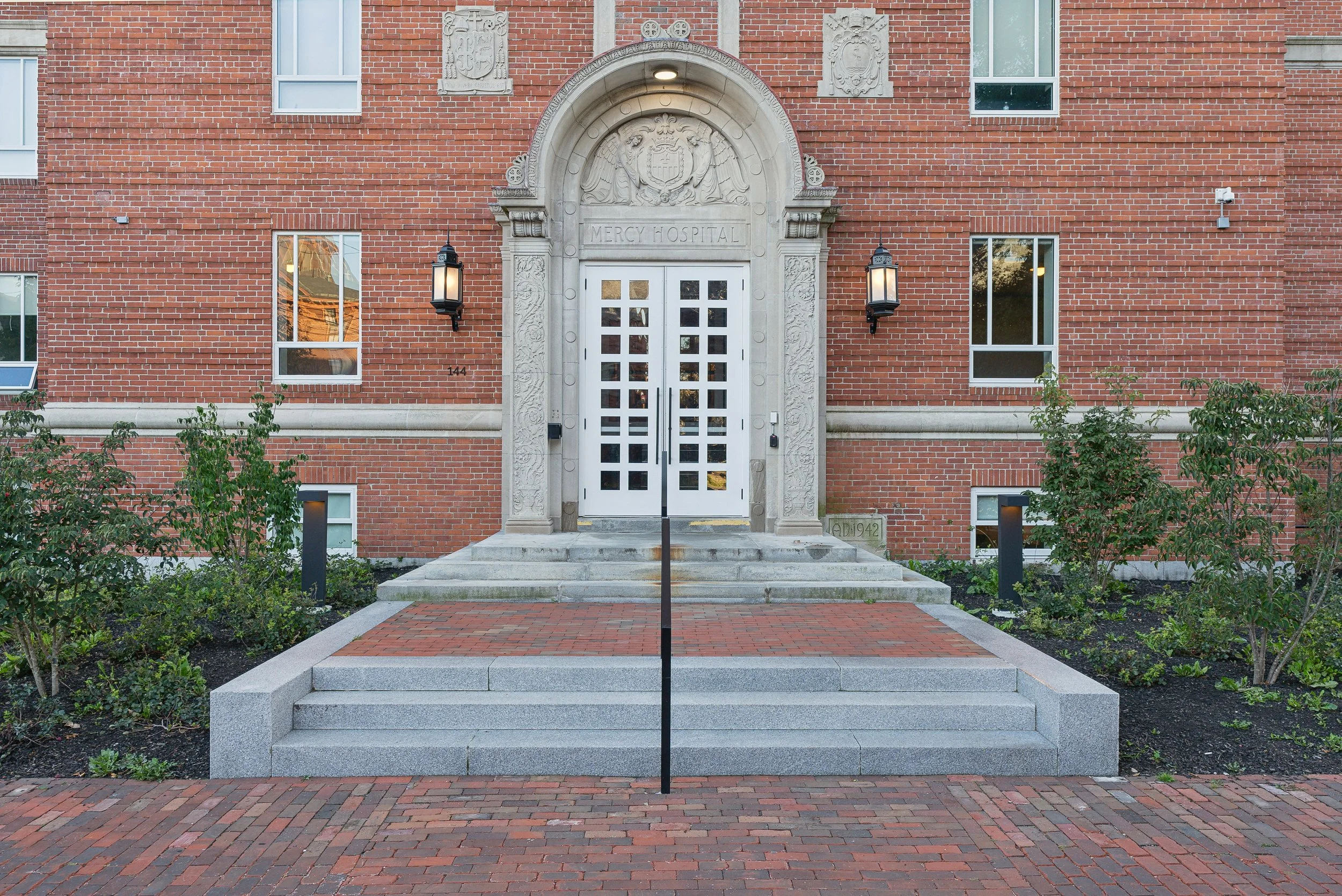
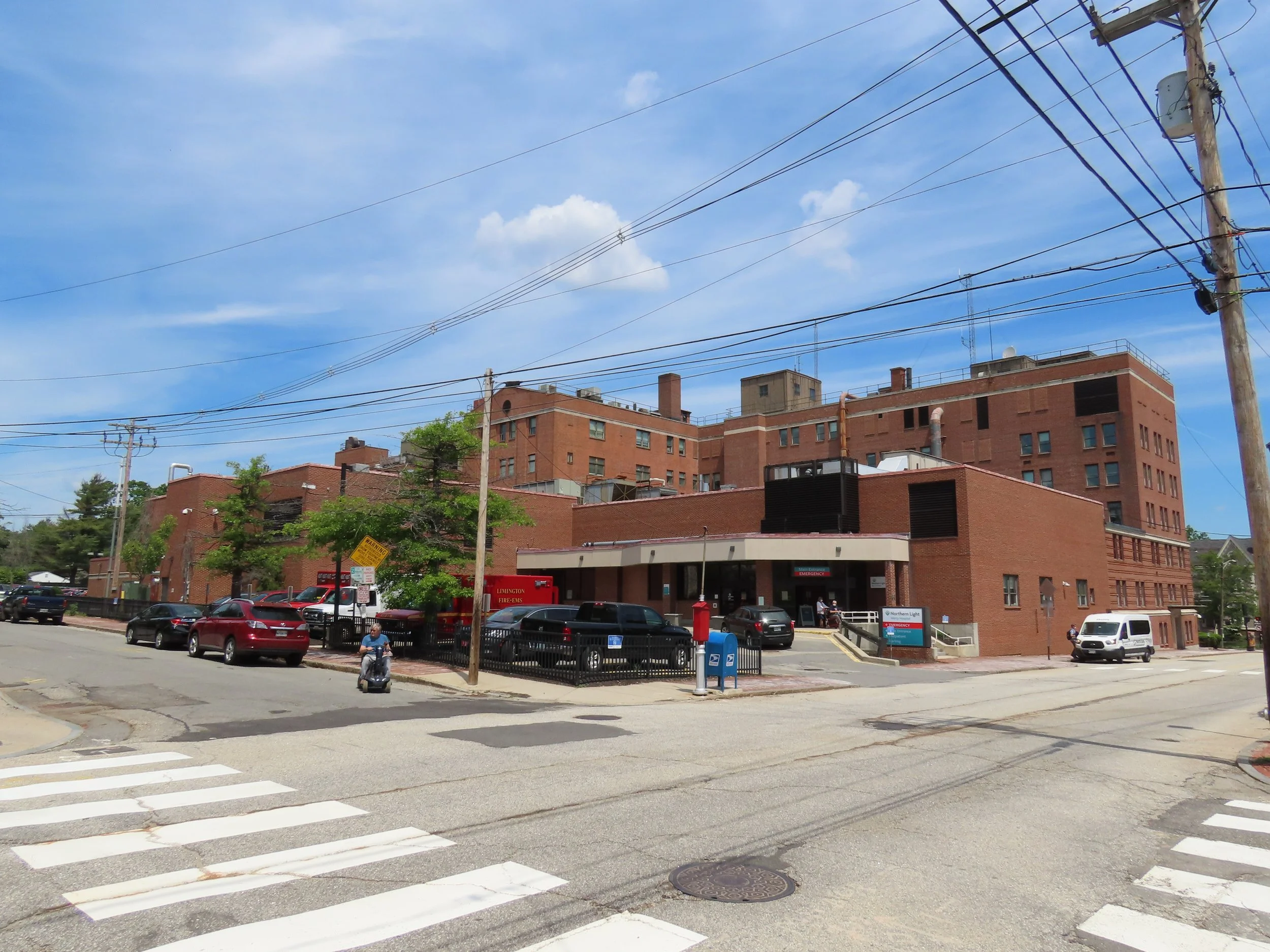
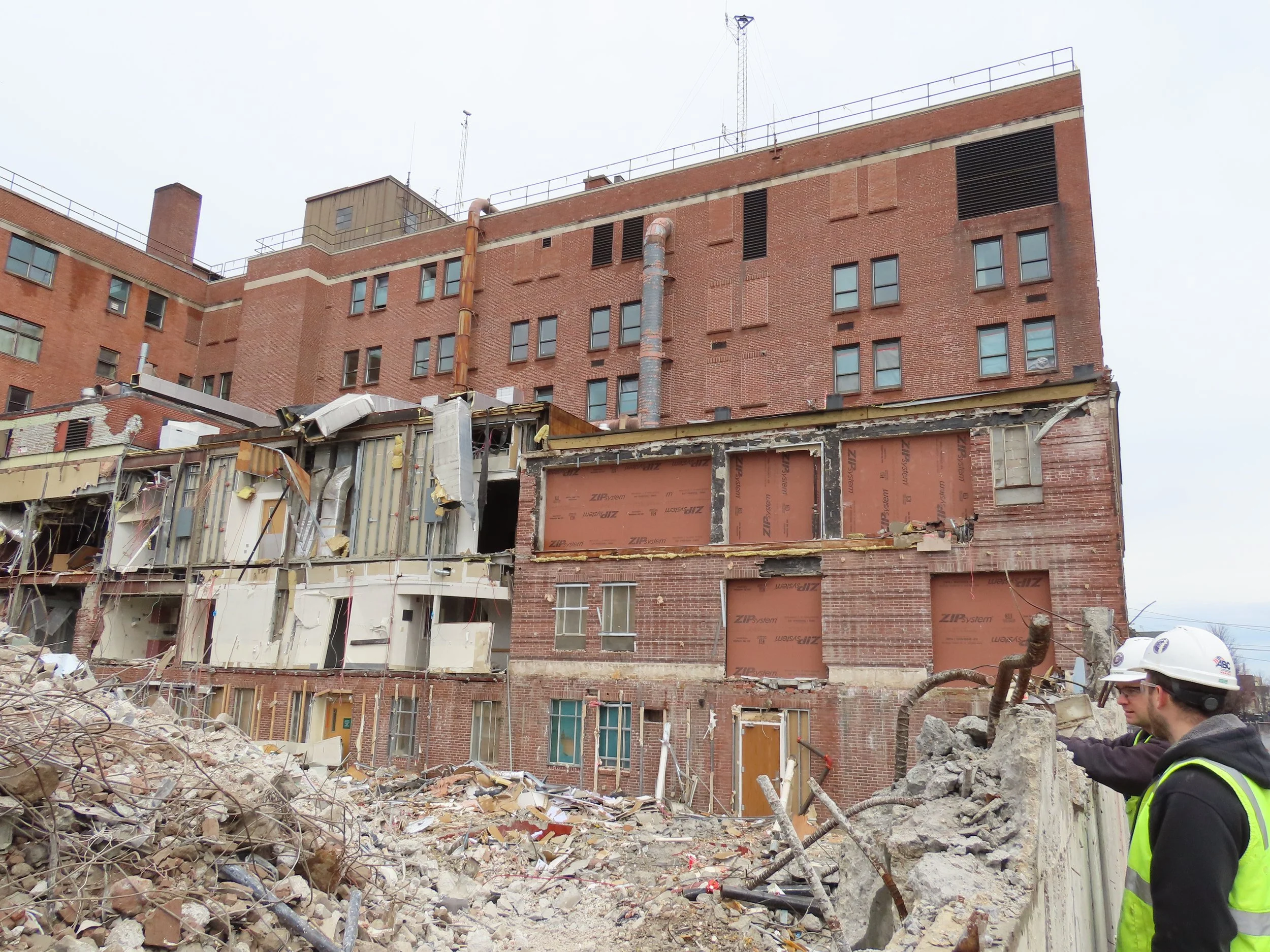
With input from Hanson Historic Consulting, the team set out to rehabilitate the building to its 1943 construction date. The structure had been well-maintained but riddled with alterations intended to meet the needs of modern medicine. Additions for the emergency department were removed to make way for a new accessible entrance compatibly designed by Ryan Senatore Architects. Zachau Construction oversaw the work, which included masonry repointing and extensive restoration work to mend the wounds caused by the additions, as well as installation of new mechanical systems.   

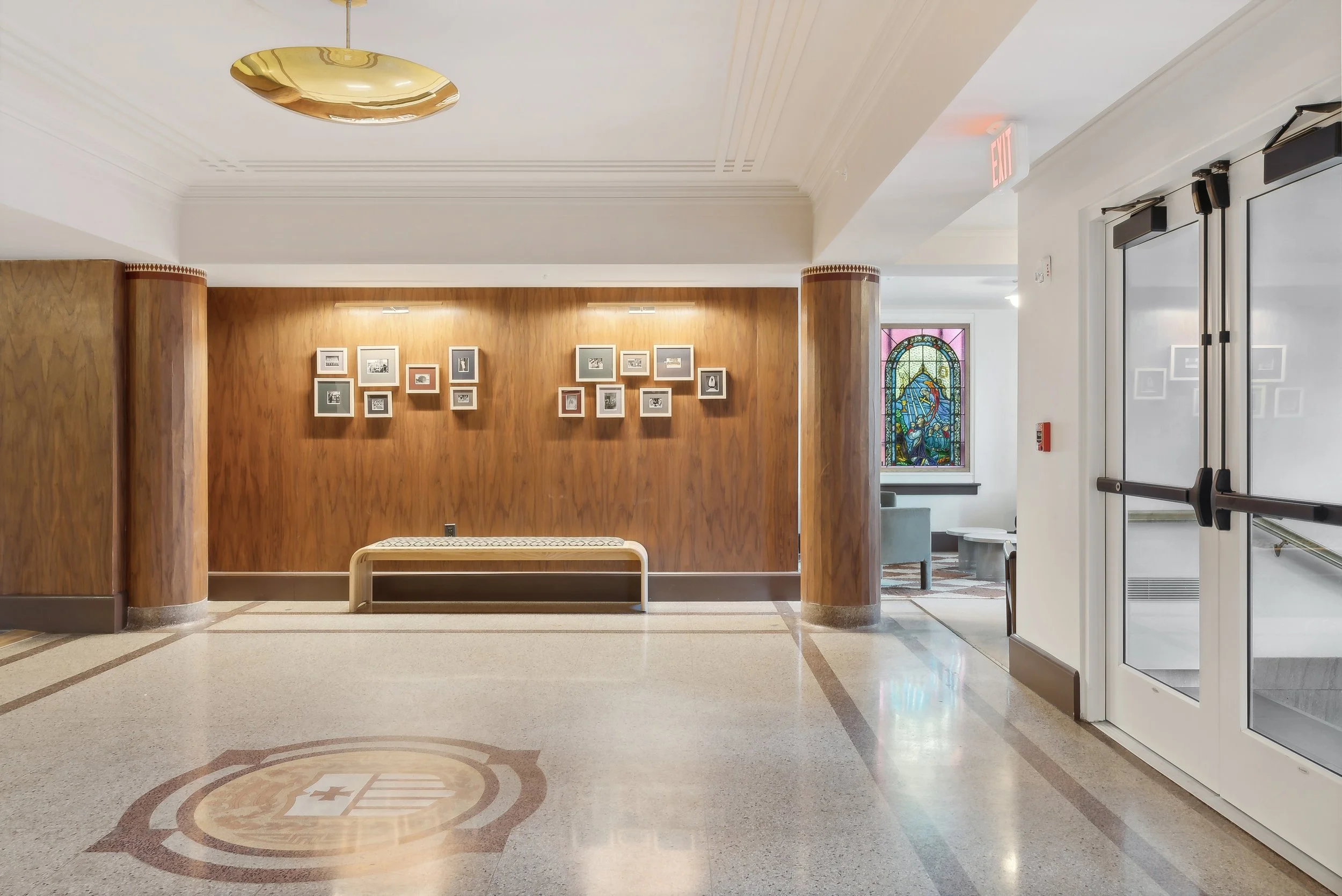
Decorative cast plaster in the original chapel was uncovered and restored by Sampson & Company, and wood veneer columns were recovered in the lobby. An inlayed linoleum floor discovered in the surgery suite was recreated, offering a pop of color to the new residential units. The combination of historic photographs and architectural clues during selective demolition informed the design of the new windows installed across the building.  

The reuse of the former hospital created 165 new market-rate apartment units and four retail suites, thanks in part to historic tax credit investment from JP Morgan Chase and CEI. The City of Portland supported adjacent infrastructure improvements and updated local codes to allow for the conversion of the spaces below-grade to be used as a self-storage operation.  

Additionally, the new family and senior affordable housing constructed behind the hospital building stitched it back into the neighborhood, having long been separated by surface parking lots. The creation of outdoor public space, designed by Aceto Kimball Landscape Architecture, meshed the new with the old.    

Nightingale now serves as a national model for hospital-to-housing conversions. It honors the legacy of care and compassion offered by the Sisters of Mercy to thousands of Mainers who were born or treated there over the nearly 70 years of operation on State Street.   

Project Participants:

  • Hanson Historic Consulting

  • Zachau Construction

  • Aceto Kimball Landscape Architecture

  • Bennett Engineering

  • Warren Mechanical

  • Ryan Senatore Architects

  • Acorn Engineering

  • Summit Geoengineering

  • Owen Haskell

  • NewHeight Group

  • Redfern Properties

  • Mey & Company

  • Sisters of Mercy

  • Northern Light Health

  • Sampson & Co. Ornamental Plasterers

  • JP Morgan Chase

  • CEI

Photo Credits: Hanson Historic Consulting, Structure Media, Maine Historical Society 

Gehring House, Bethel

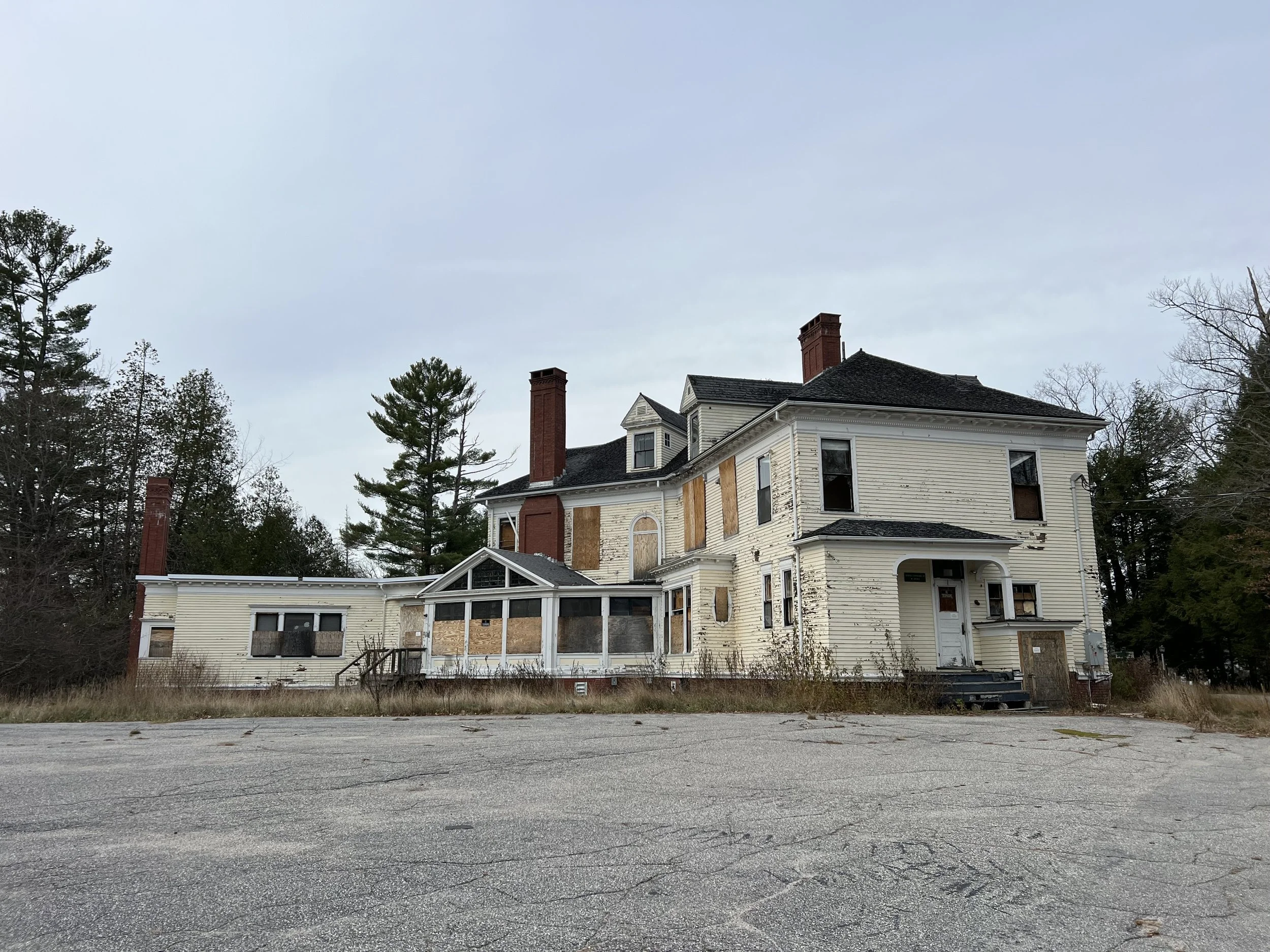
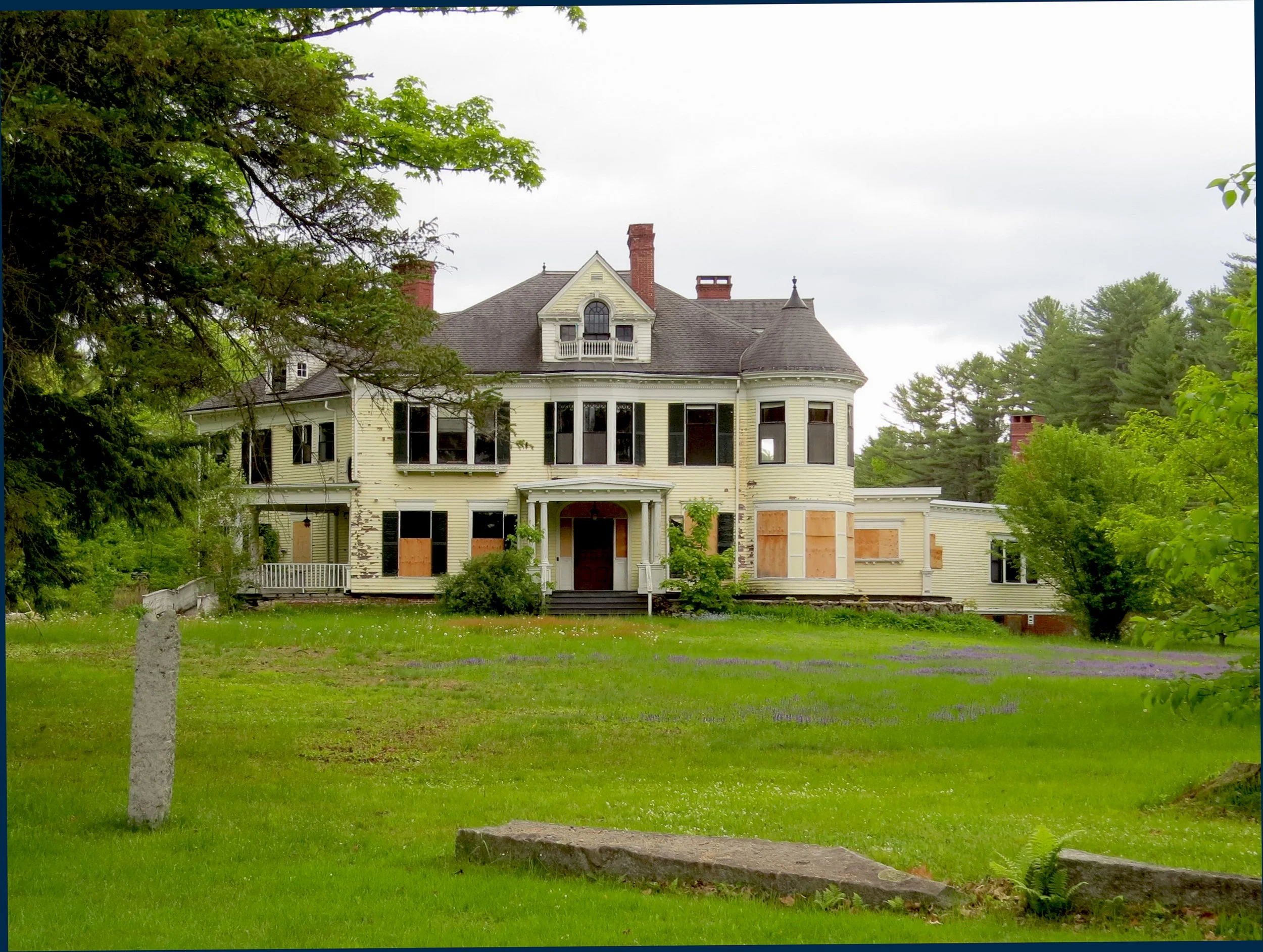
By 2010, the boarded up and deteriorating Gehring House, one of Bethel’s most architecturally significant properties, had become an idle eyesore. 

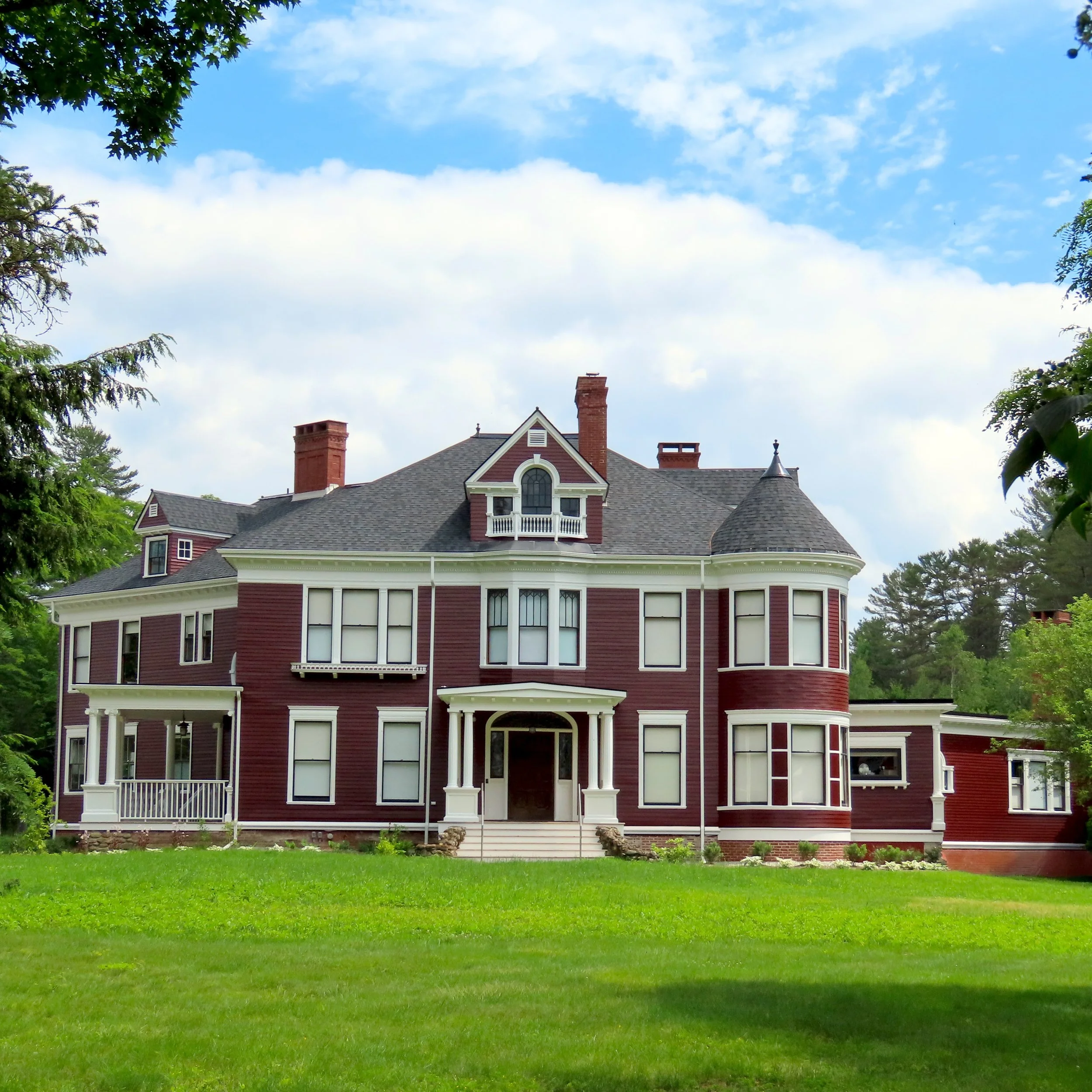
Dr. John George Gehring and Mrs. Marion True Gehring built the house in 1896, designed in the Queen Anne style with an interesting mix of Colonial Revival detailing. It was intended to serve as a clinic for patients seeking treatment for stress, anxiety, depression, and digestive ailments, many of whom were prominent figures in science, academia, government, and industry. Dr. Gehring’s legacy of “therapeutic tourism” was carried on by the building’s next owner, The National Training Laboratories Institute for Applied Behavioral Science, which brought people to Bethel from around the world until its closure in 2006. Several subsequent attempts to redevelop the property failed and pushed the building towards a precipitous decline.  

At the same time, Bethel was facing a larger problem. A boom in the short-term rental market and a severe shortage of housing was hindering people from living and working in the same community. The Northern Forest Center, a multi-state nonprofit working to sustainably strengthen local economies in the northern forest region, saw a possible solution with the Gehring House site. The organization purchased the property in 2022 with the goal of creating quality, attainable housing for people who work in the area. 

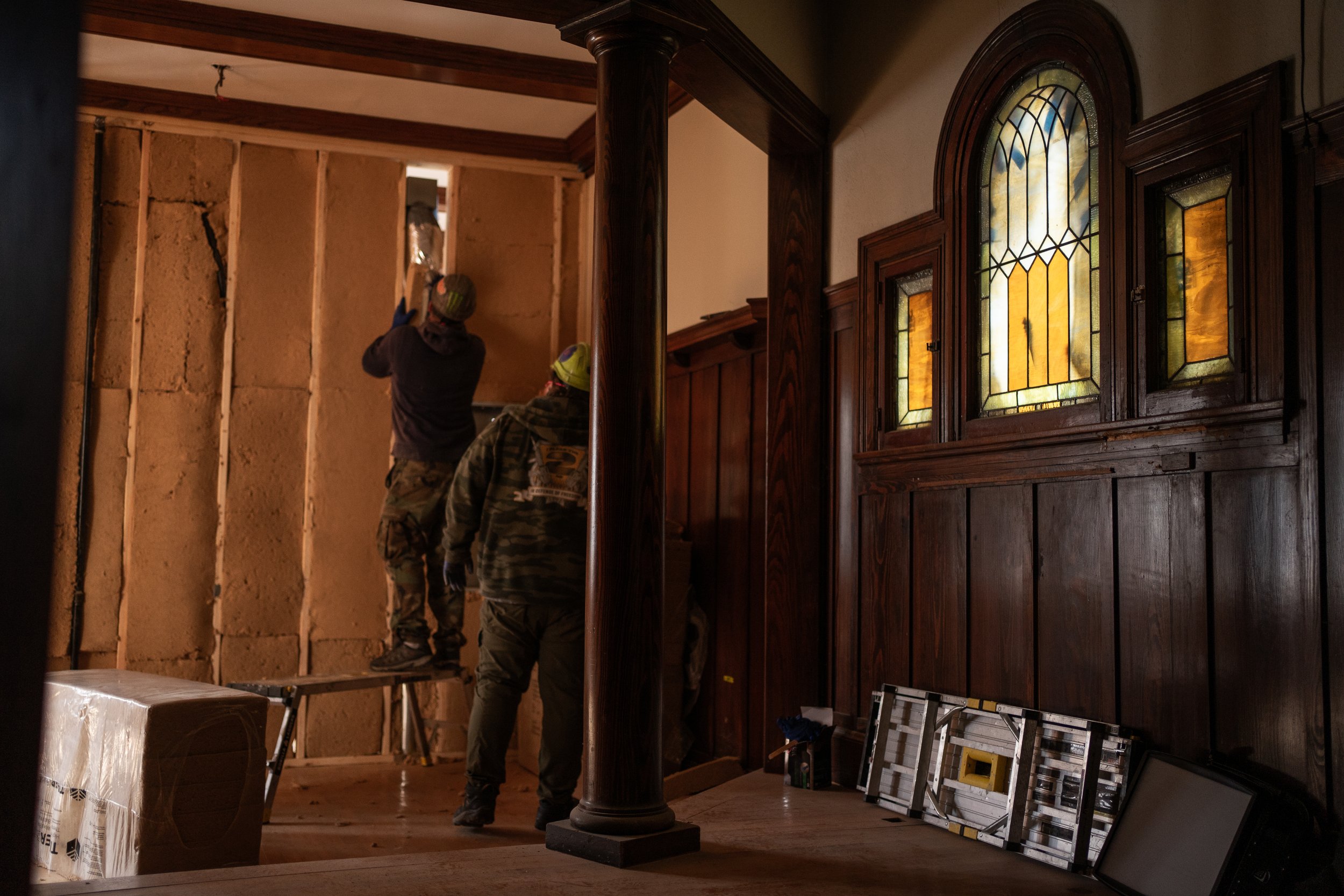
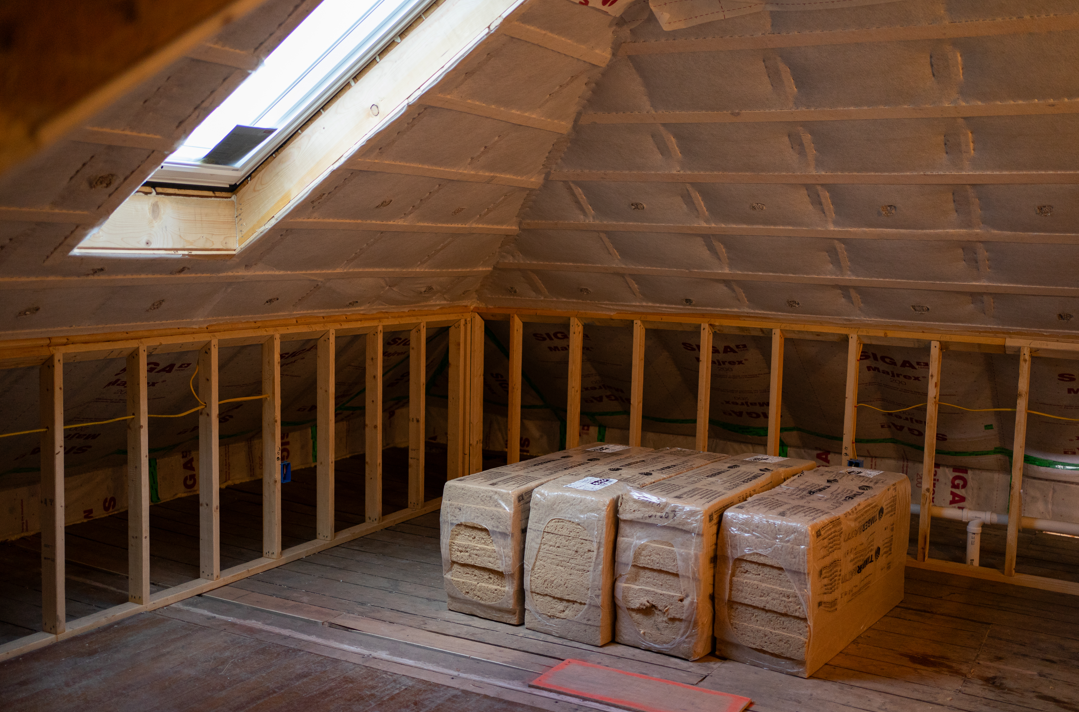
The Gehring House’s majority-wood construction, beautiful hardwood interiors, and outdated systems presented the opportunity for the Northern Forest Center to demonstrate sustainable redevelopment by preserving historic fabric, using local materials, and introducing new energy sources.  

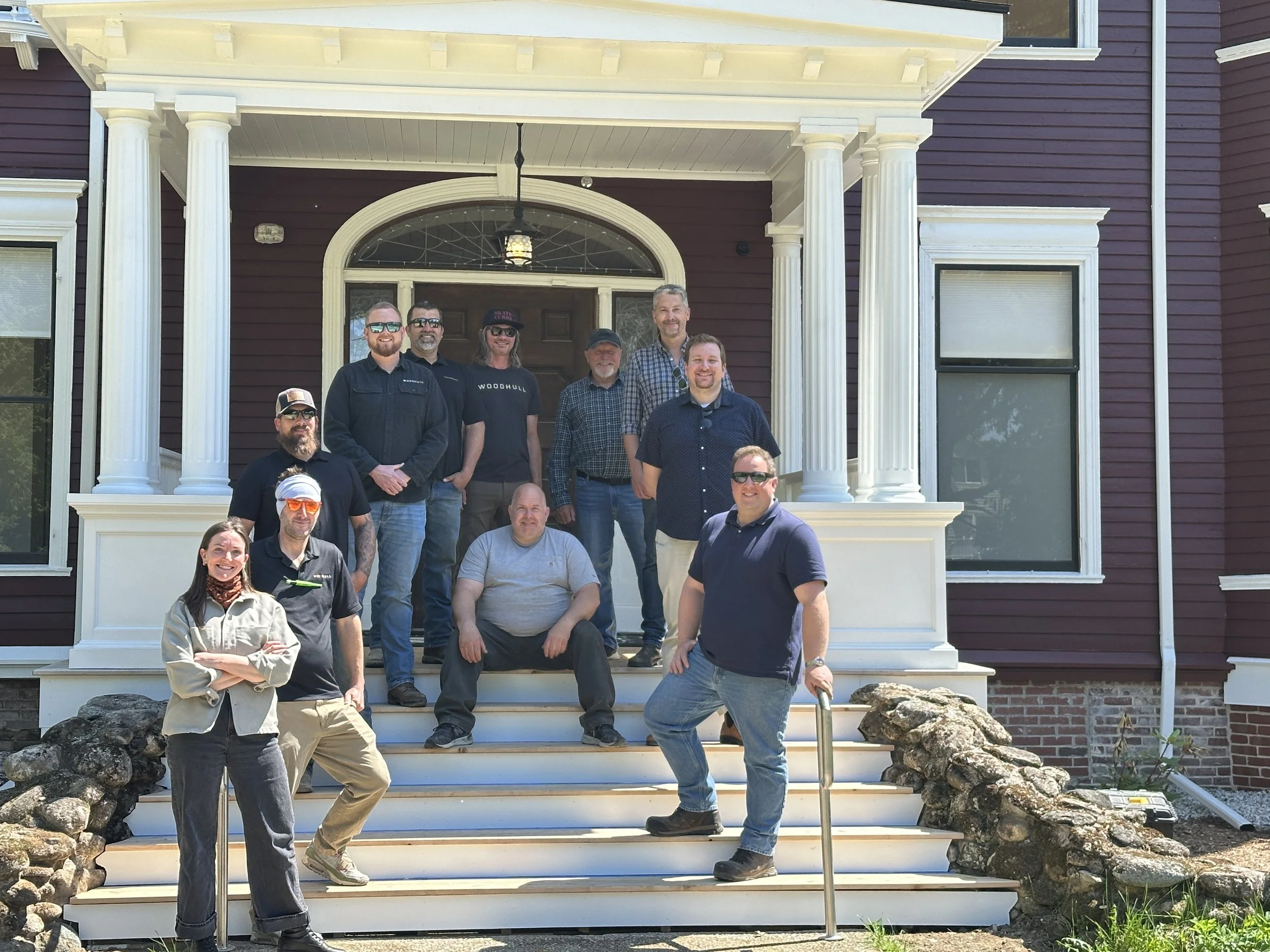
Woodhull, an integrated architecture, construction, and millwork firm based in Portland, was perfectly aligned to lead the rehabilitation, with support from preservation consultant, Margaret Gaertner. The team’s initial assessment found the exterior envelope in a sorry state. The years-long vacancy left broken windows, failing porch supports, and signs of extensive water infiltration that had rotted clapboards and significant sections of sill. But the remarkably intact interior instilled hope.   

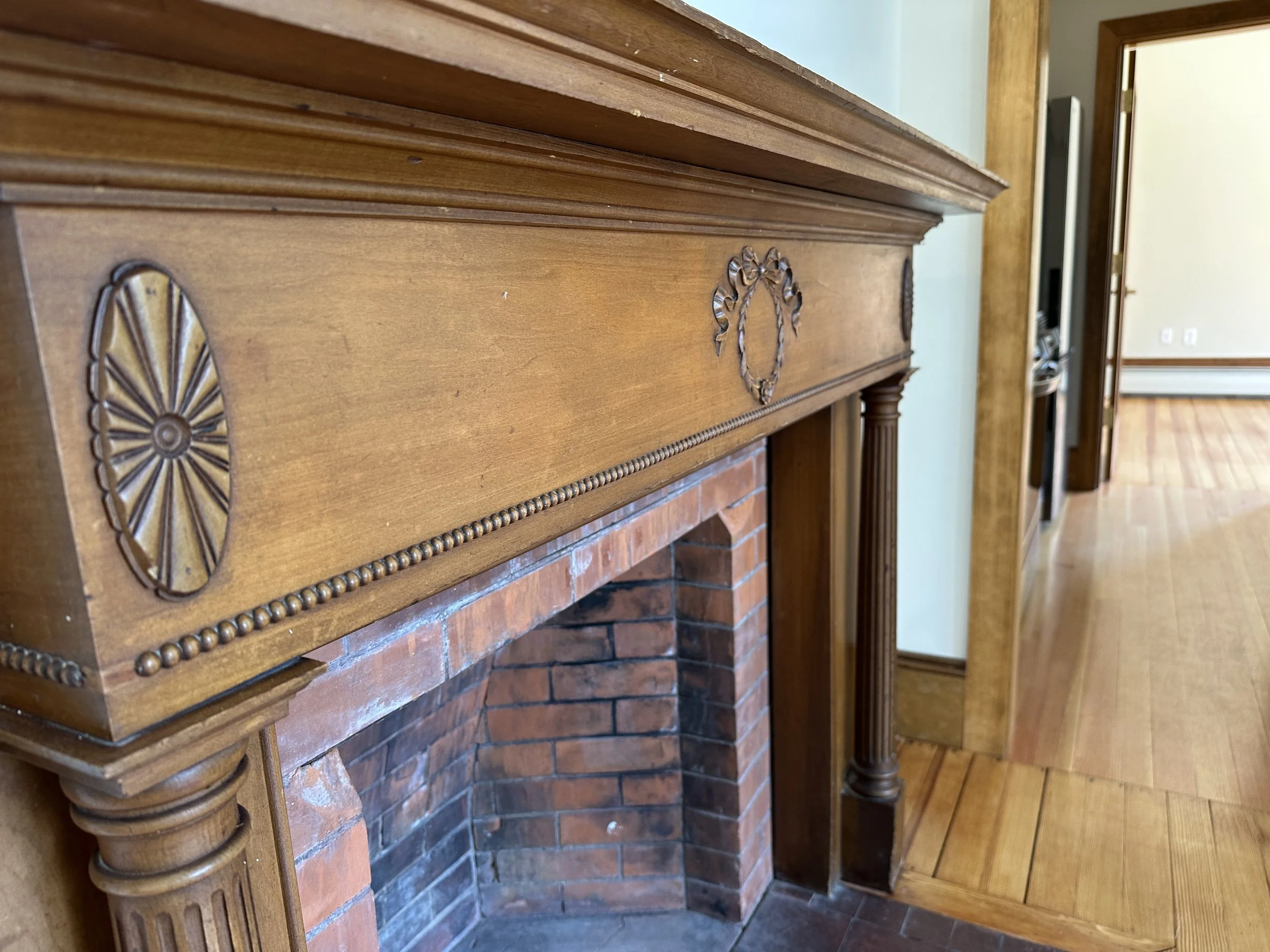
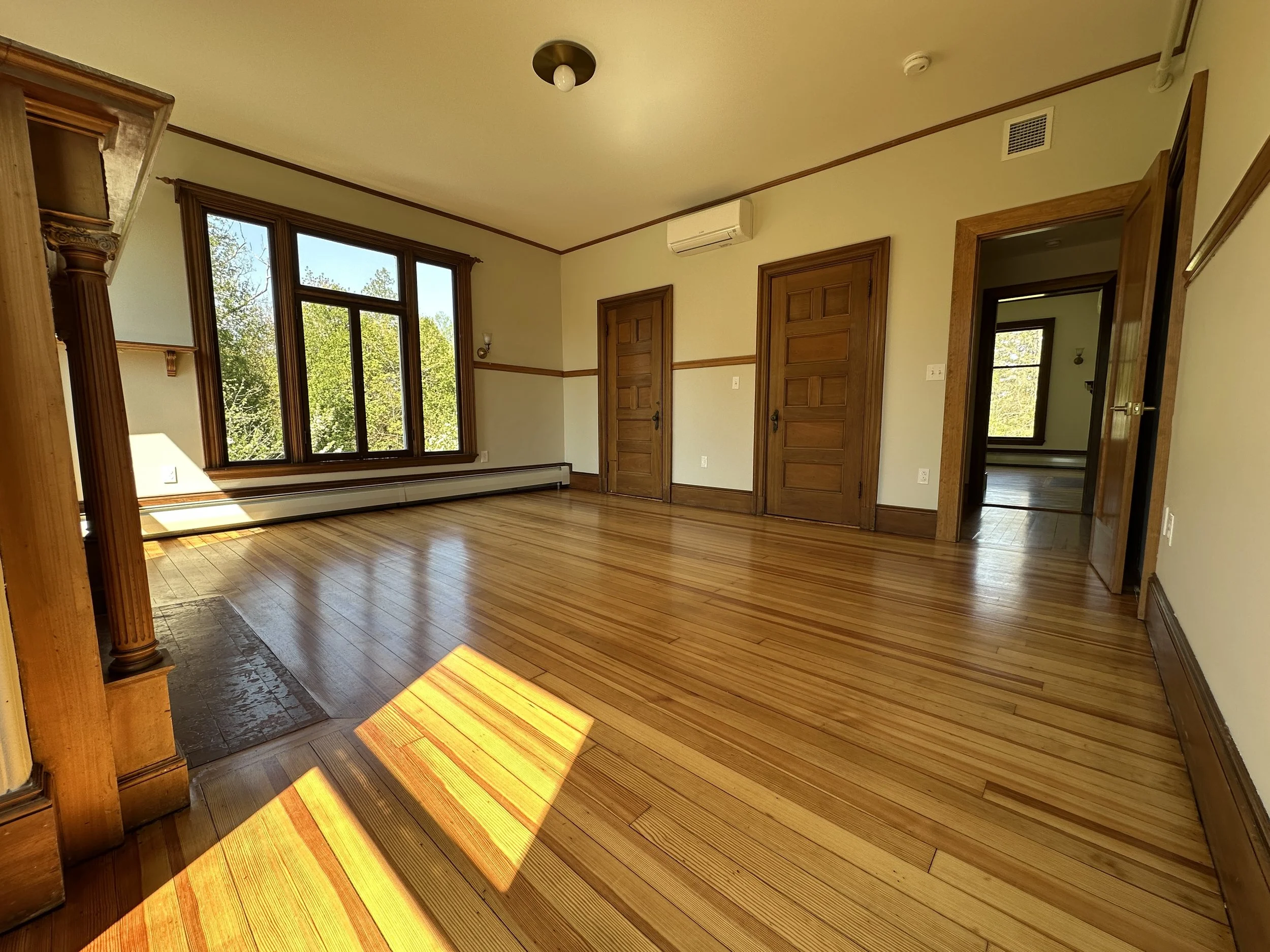
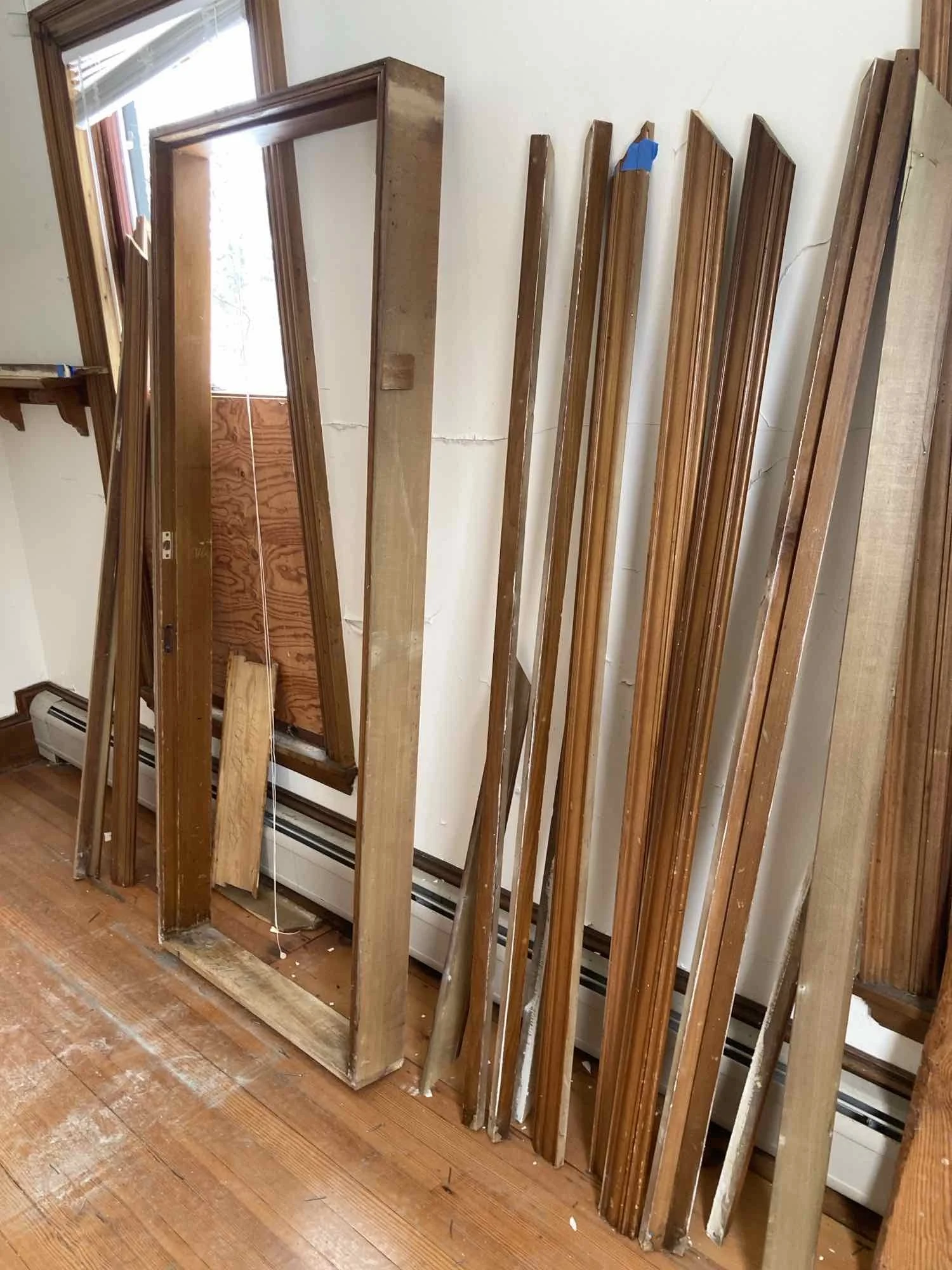
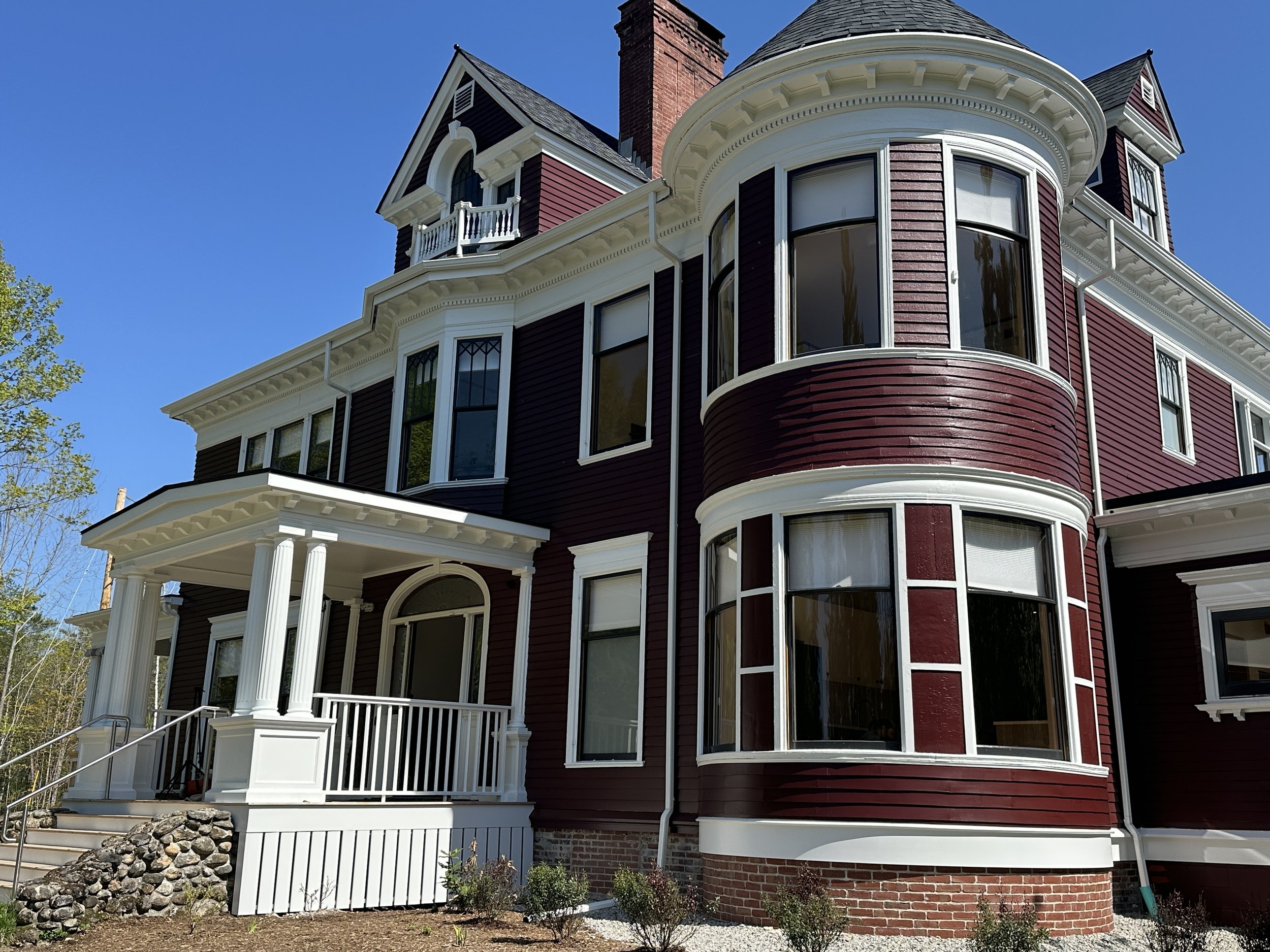
Work commenced to transform the former clinic and retreat into nine, light-filled apartments in 2024. Priority was given to reclaiming existing materials. Doors, trim, and intricate mantels were retained or carefully numbered for reinstallation. The house’s original wood windows were thoughtfully restored and painted black to contrast with the new, deep red façade.   

Both traditional and new Maine-based forest products were used. Wood fiber insulation was sourced from Madison-based TimberHP while nearly all the new lumber and pine siding came from Hancock Lumber. The fossil-fuel heating system was scrapped to make way for wood pellet boilers obtained from Maine Energy Systems in Bethel.  

The $5.8 million project was funded through diverse sources, including impact investment capital from the Center’s Northern Forest Fund, state and federal historic rehabilitation tax credits, and charitable donations. Lead funders included the U.S. Forest Service, The 1772 Foundation in partnership with Maine Preservation, the William Bingham Foundation, Thomas W. Haas Foundation, Betterment Fund, and Maine Timberlands Charitable Trust.  

The Gehring House now blends history and innovation, with a small carbon footprint and a big boost to Bethel.  

Project Participants:

  • Northern Forest Center

  • Woodhull

  • Northern Forest Futures

  • Margaret Gaertner

Photo Credits: Bethel Historical Society, Scott Hanson, Northern Forest Center 

Dr. Milton Wedgewood House, Lewiston

The rehabilitation of the Dr. Milton Wedgewood House in Lewiston is an excellent example of how preservation and progress complement one another, and that repairing and repurposing our historic building stock is an important tool in tackling Maine's housing crisis.  

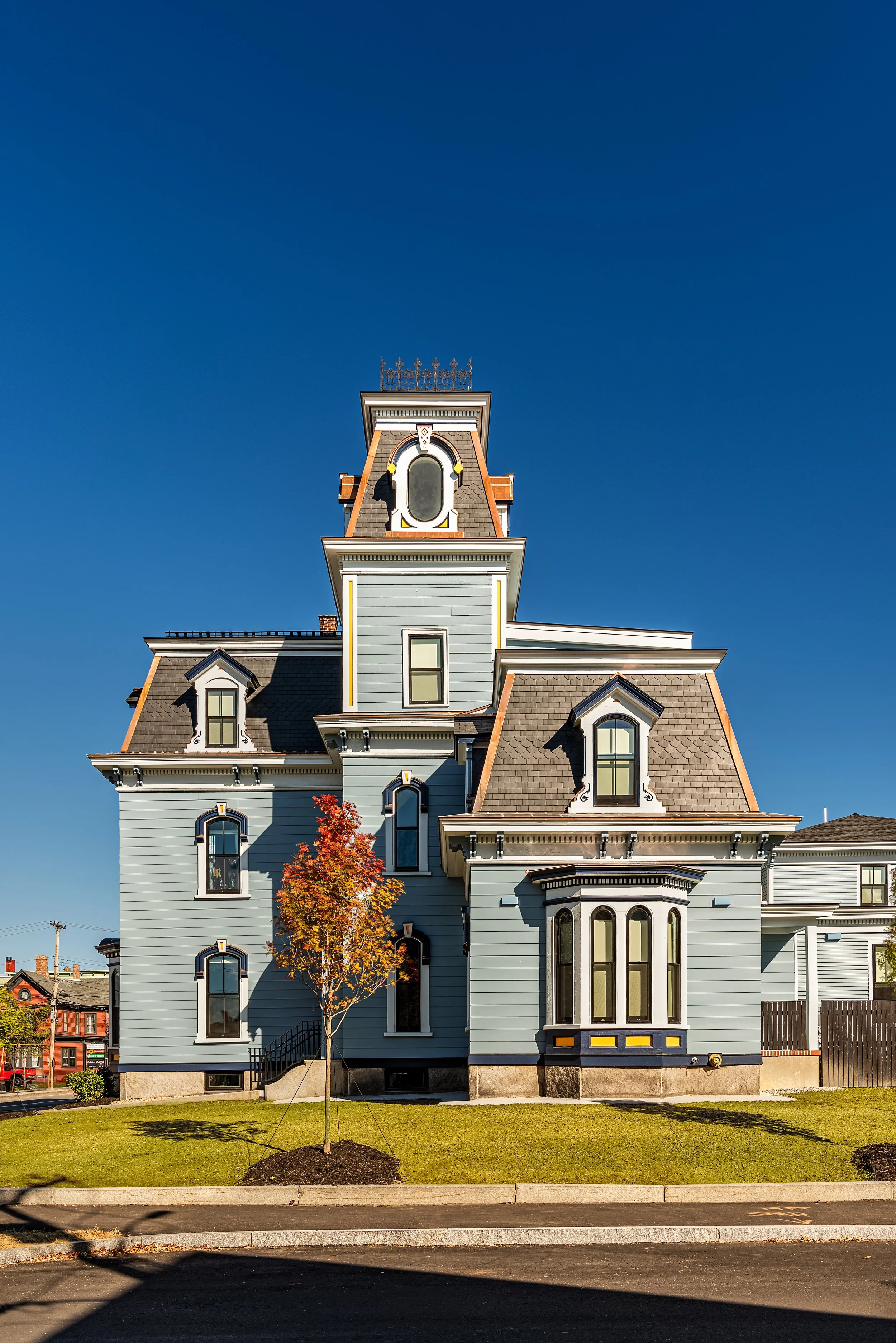
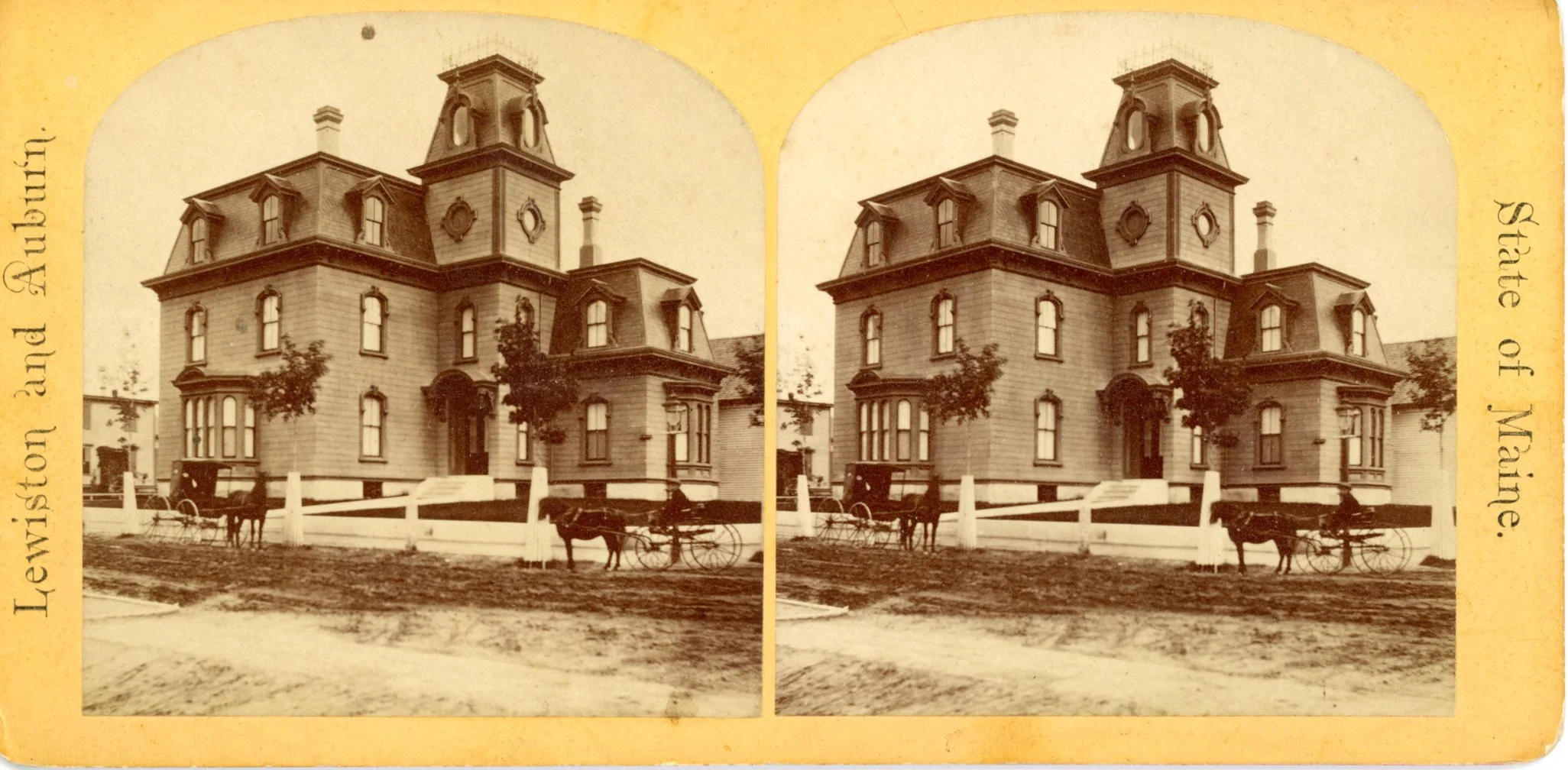
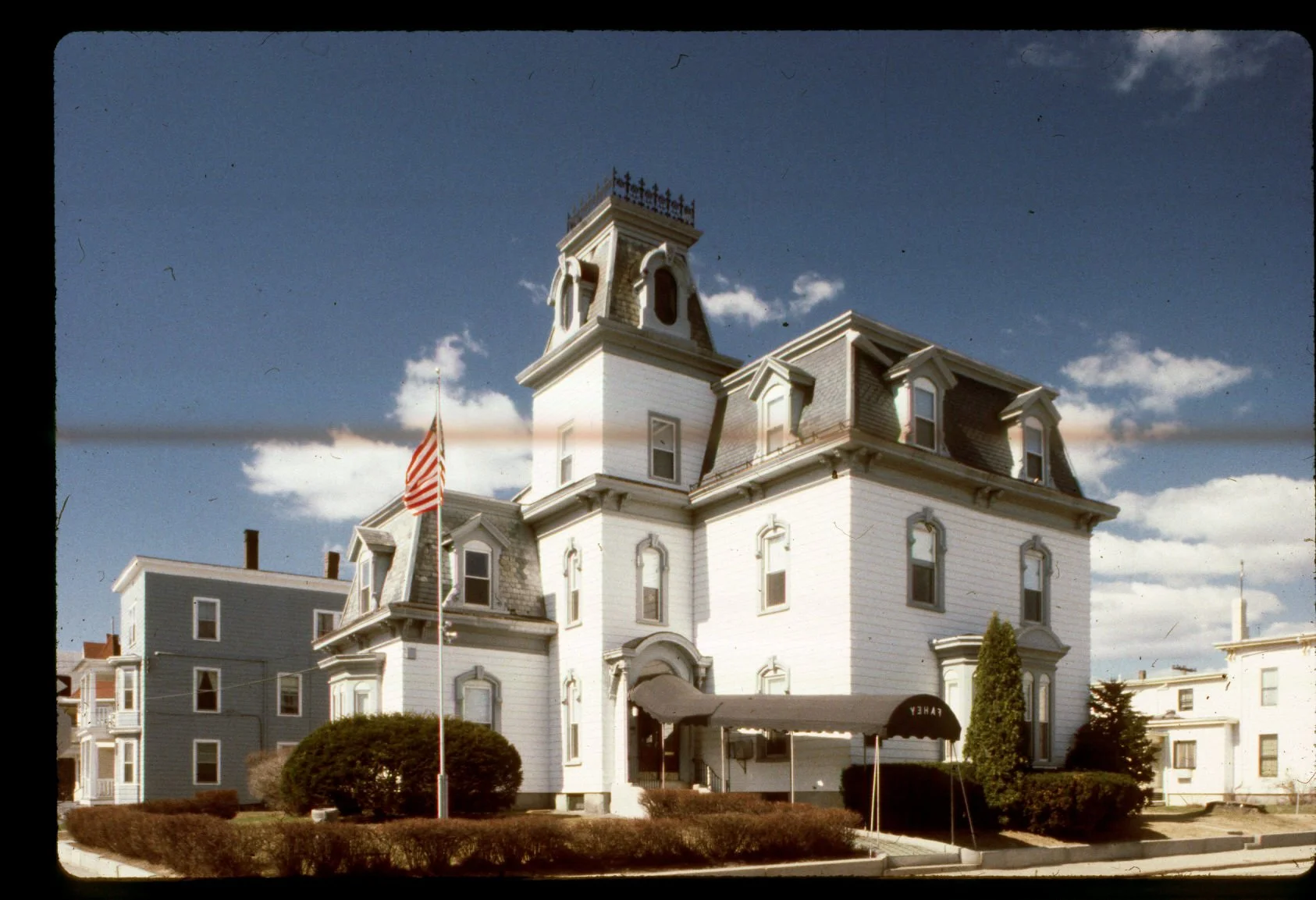
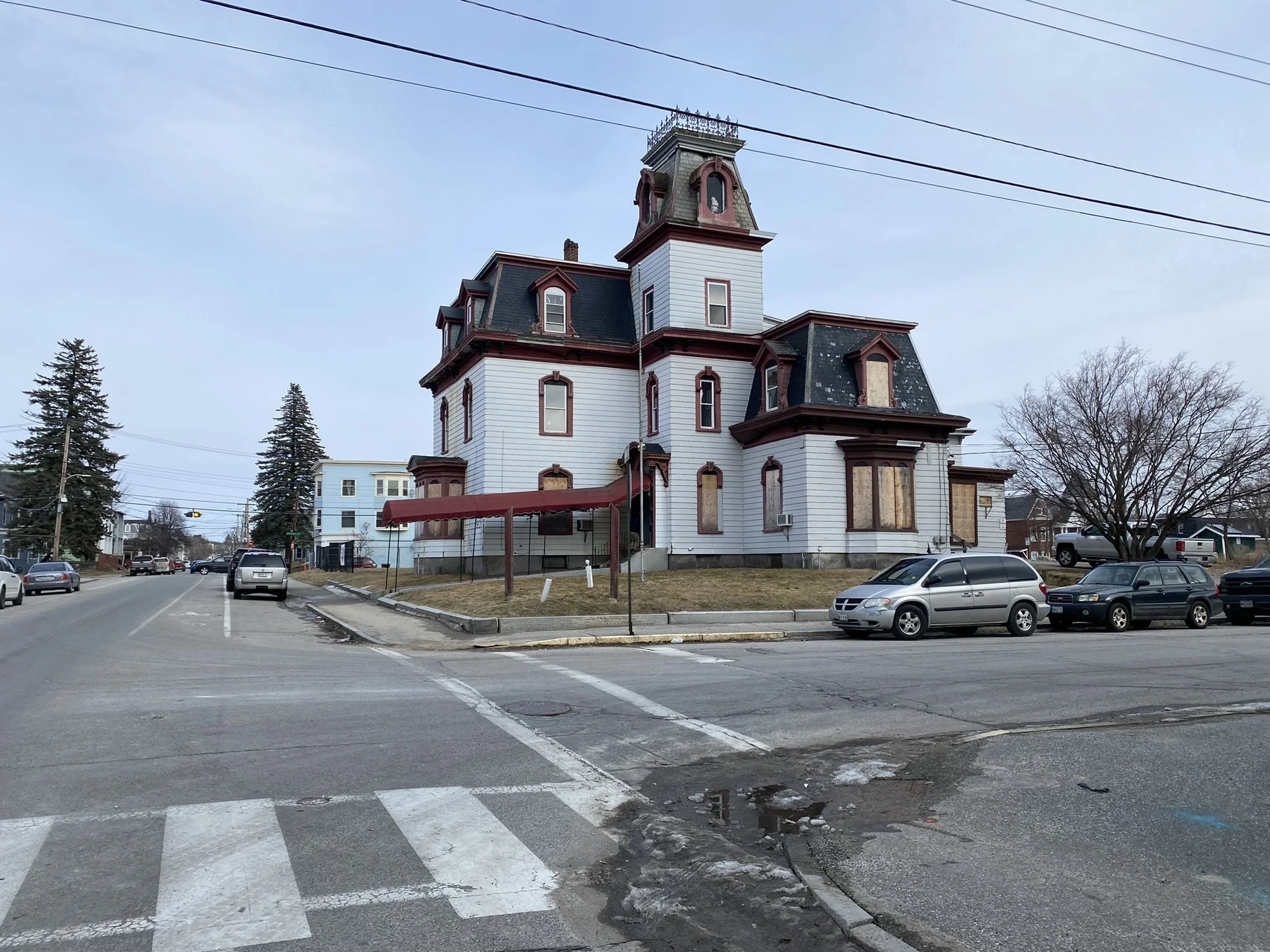
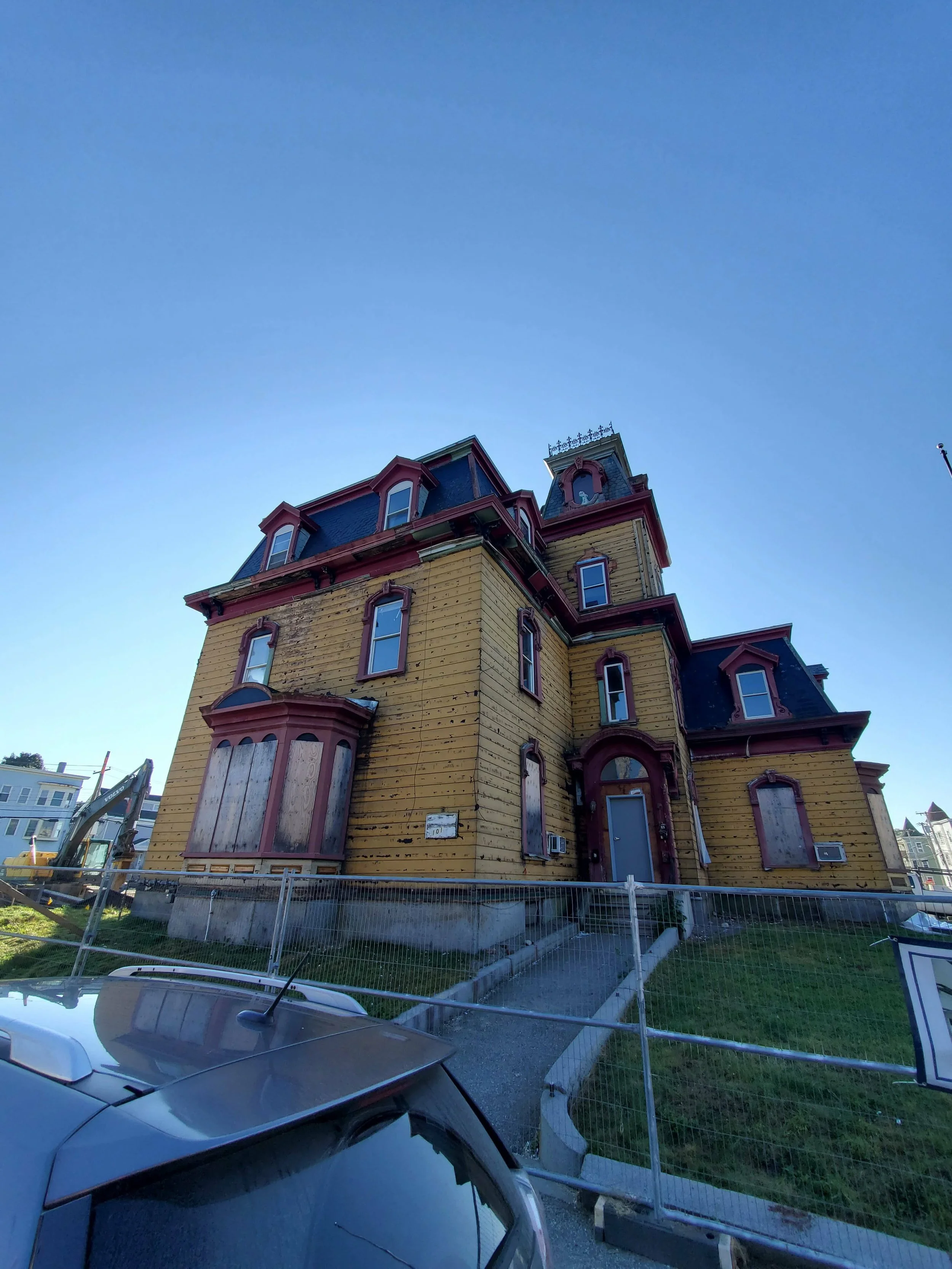
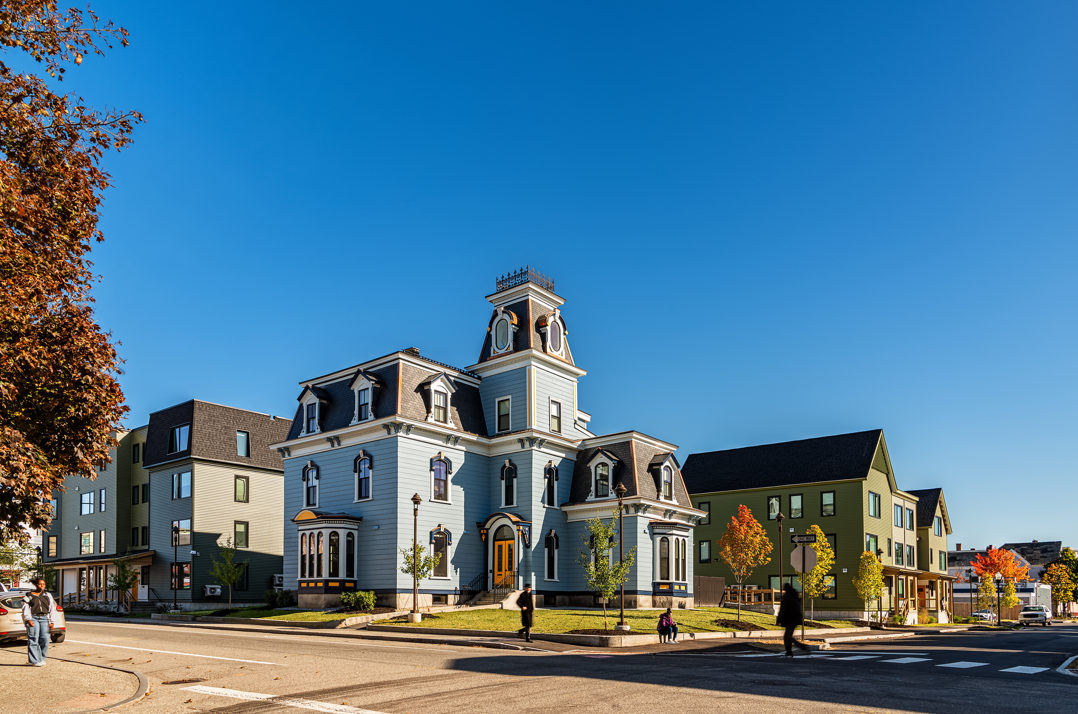
The house was built in 1873 as the home and office of Dr. Milton C. Wedgewood, a surgeon and one of the founders of Central Maine General Hospital. A local Lewiston architect, Charles F. Douglas, integrated the form of an Italianate villa with a French mansard roof in the sophisticated design. Multiple funeral home businesses occupied the building from the 1930s to the early 2000s, before it was subdivided into apartments. In 2013, a fire rendered it unhabitable, and the vacant building added to the decades of disinvestment and demolition in the Tree Streets Neighborhood.  

The house’s latest iteration emerged as part of an ambitious push to redevelop the entire block. Thanks to a years-long, grassroots planning process, the city received a $30 million grant through HUD’s Choice Neighborhood Initiative. The Lewiston Housing Authority partnered with Avesta Housing to develop 84 units in what would be called the Wedgewood Development, including the namesake Dr. Milton Wedgewood House.  

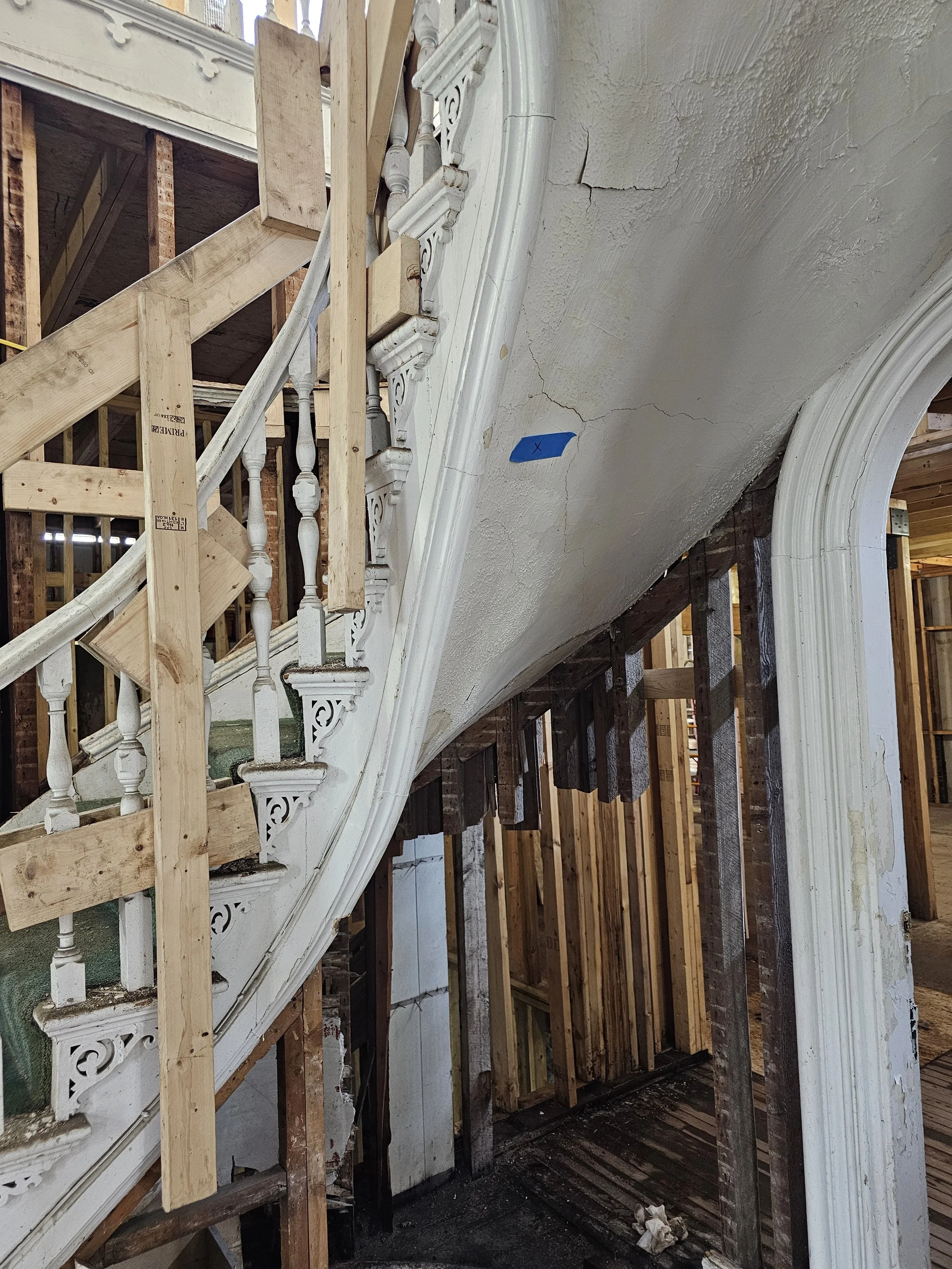
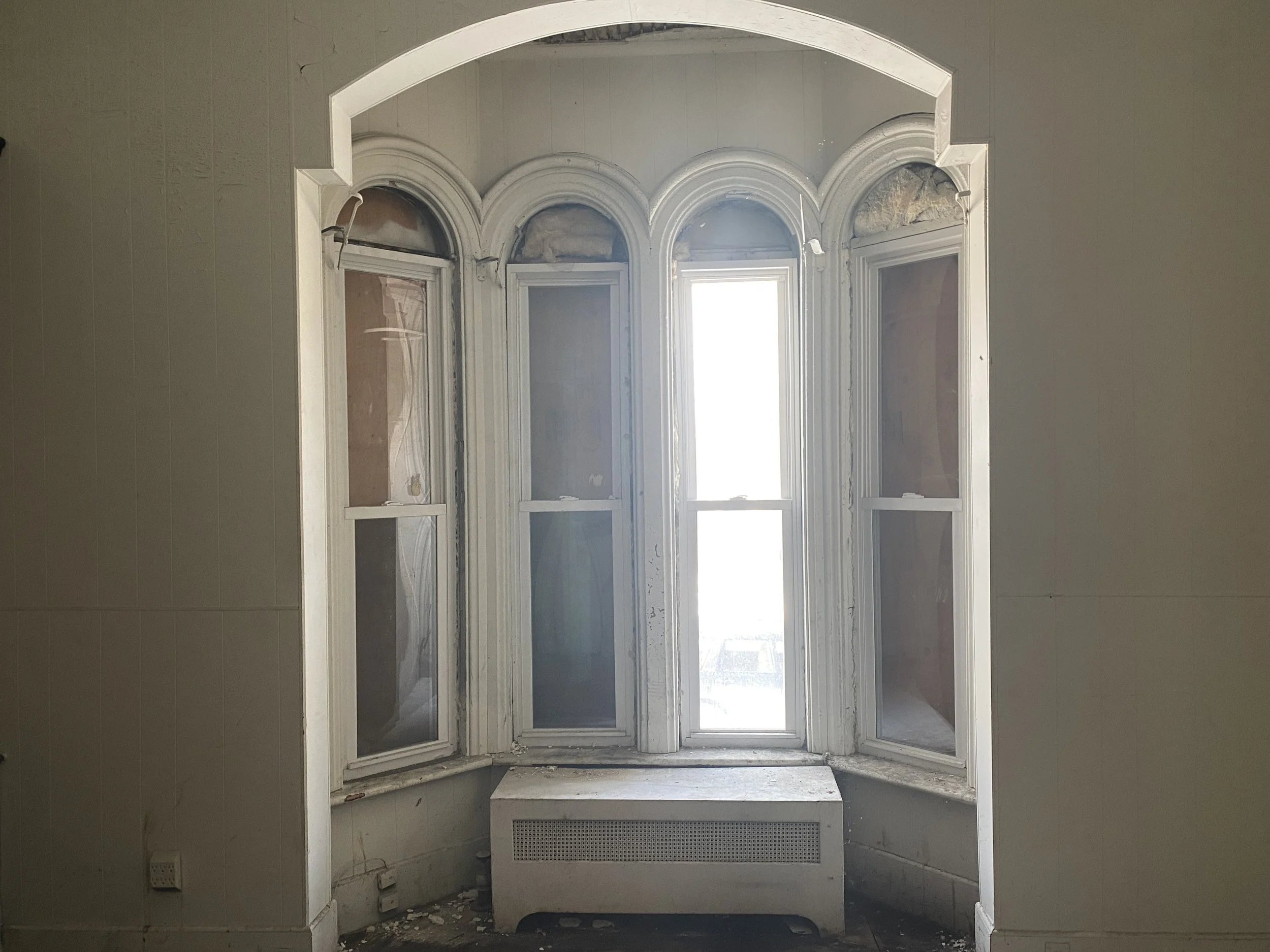
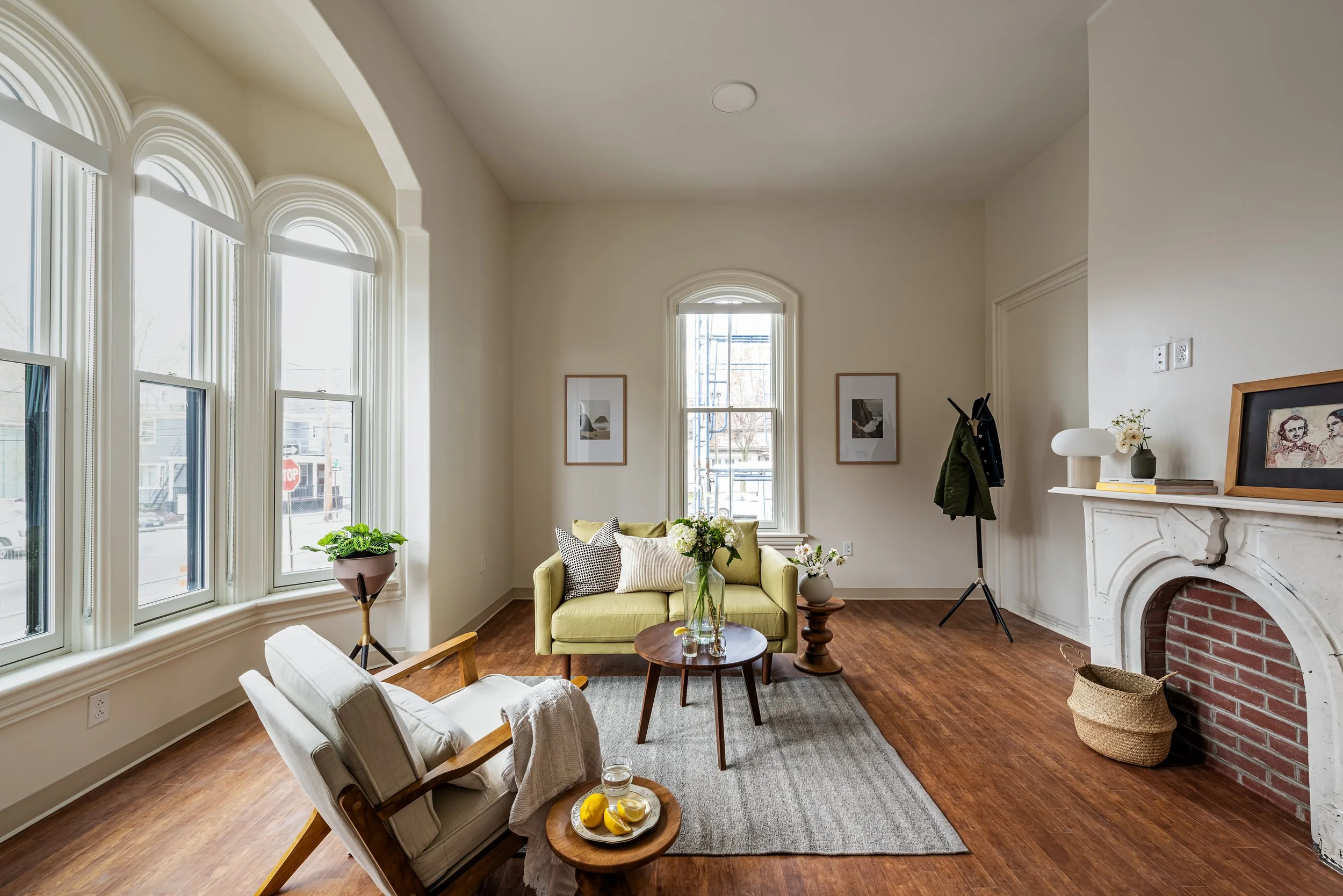
Kaplan Thompson Architects, with expert preservation support from Barba + Wheelock, found much of the original building fabric was intact despite suffering from years of neglect. The matchboard siding and decorative wood trim had been covered with aluminum, while the slate roof and iron tower cresting had reached its end. Wood flooring, trim, and moldings; curved walls; and ornate fireplaces remained inside. Sagging floors and a history of fires required close inspection and shoring up by Allied Engineering.  

Work commenced with Hebert Construction at the helm. The original siding and wood trim were repaired, and the slate roof was replaced in-kind. Decorative iron cresting on the tower was restored. New energy efficient windows with arched tops reclaimed original openings, while details like the scrolled window jambs and bracketed cornice were carefully restored. The connected carriage house was lifted to make room for a new foundation clad with the original granite foundation stones. The striking blue and mustard paint scheme was inspired by older colors found on the house.  

Accessibility and life safety improvements were integrated into the site, from a building-wide sprinkler system and accessibility ramp to the reduction of uneven surfaces through the careful re-laying of historic wood floors.  

An imperceivable aspect of the project was the careful study needed to meet the Secretary of the Interior’s Standards and the energy efficiency standards of Maine Housing, required to unlock both Low Income Housing and Historic Rehabilitation Tax Credits. Efforts to improve the hygrothermal performance of the building–how it manages heat and moisture–included the addition of insulation in the basement, vapor permeable barriers, and insulation board on the exterior walls. Careful negotiation with the National Park Service earned approval for insulating the building from the exterior given the minimal changes to the historic trim and siding profiles.  

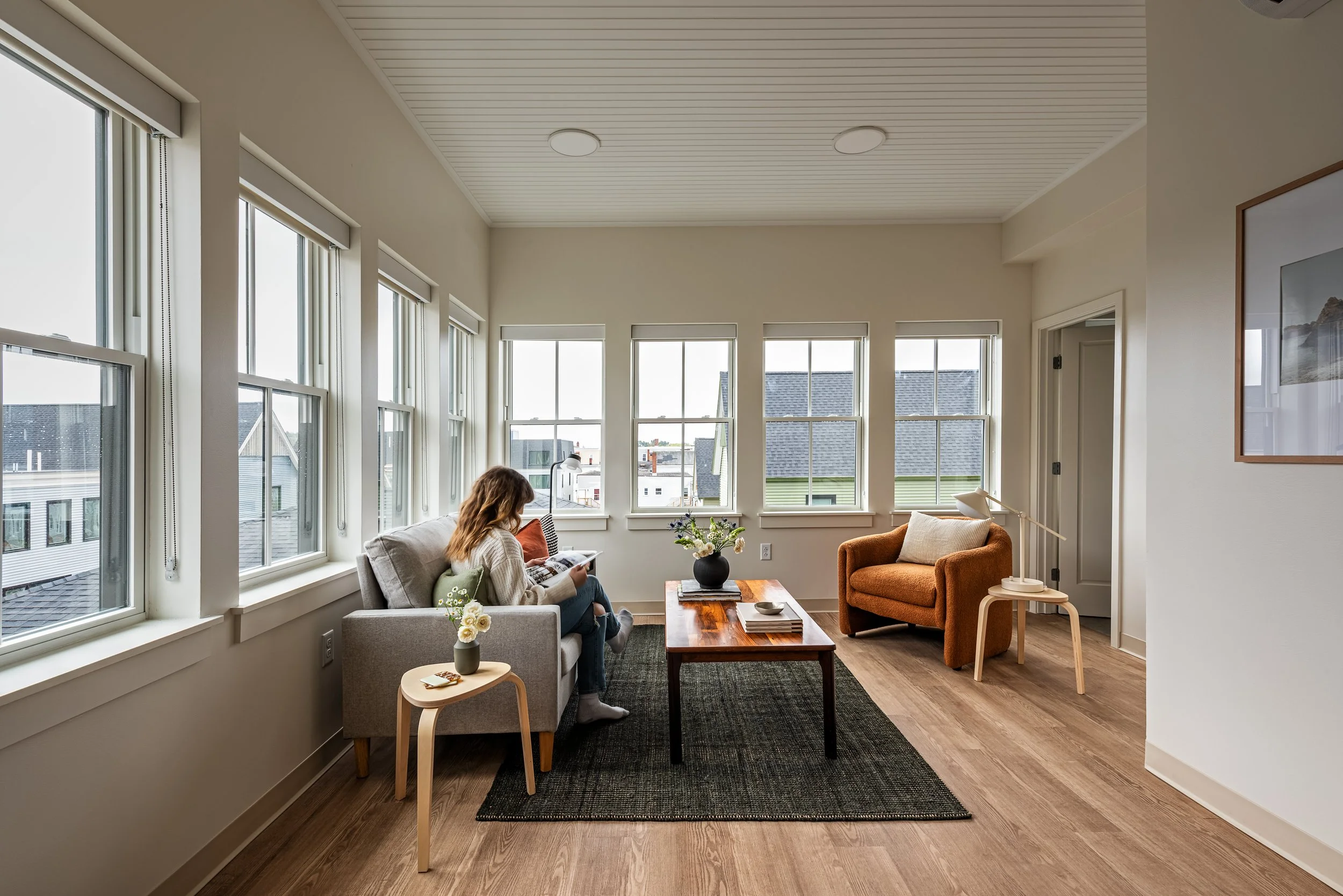
The result is eight energy efficient and comfortable affordable housing units carefully introduced with minimal impact to the historic floor plan and a beautifully restored façade that anchors the enlivened neighborhood.  

Project Participants:

  • Avesta Housing

  • Kaplan Thompson Architects

  • Barba + Wheelock

  • Allied Engineering

  • Carroll Associates LA

  • Acorn Engineering, Inc.

  • Hebert Construction

  • Lewiston Housing

  • Lewiston Auburn Area Housing Development Corporation (LAAHDC)

Photo Credits: Barba + Wheelock, Christian Phillips Photography, Herbert Construction, Maine Historic Preservation Commission  

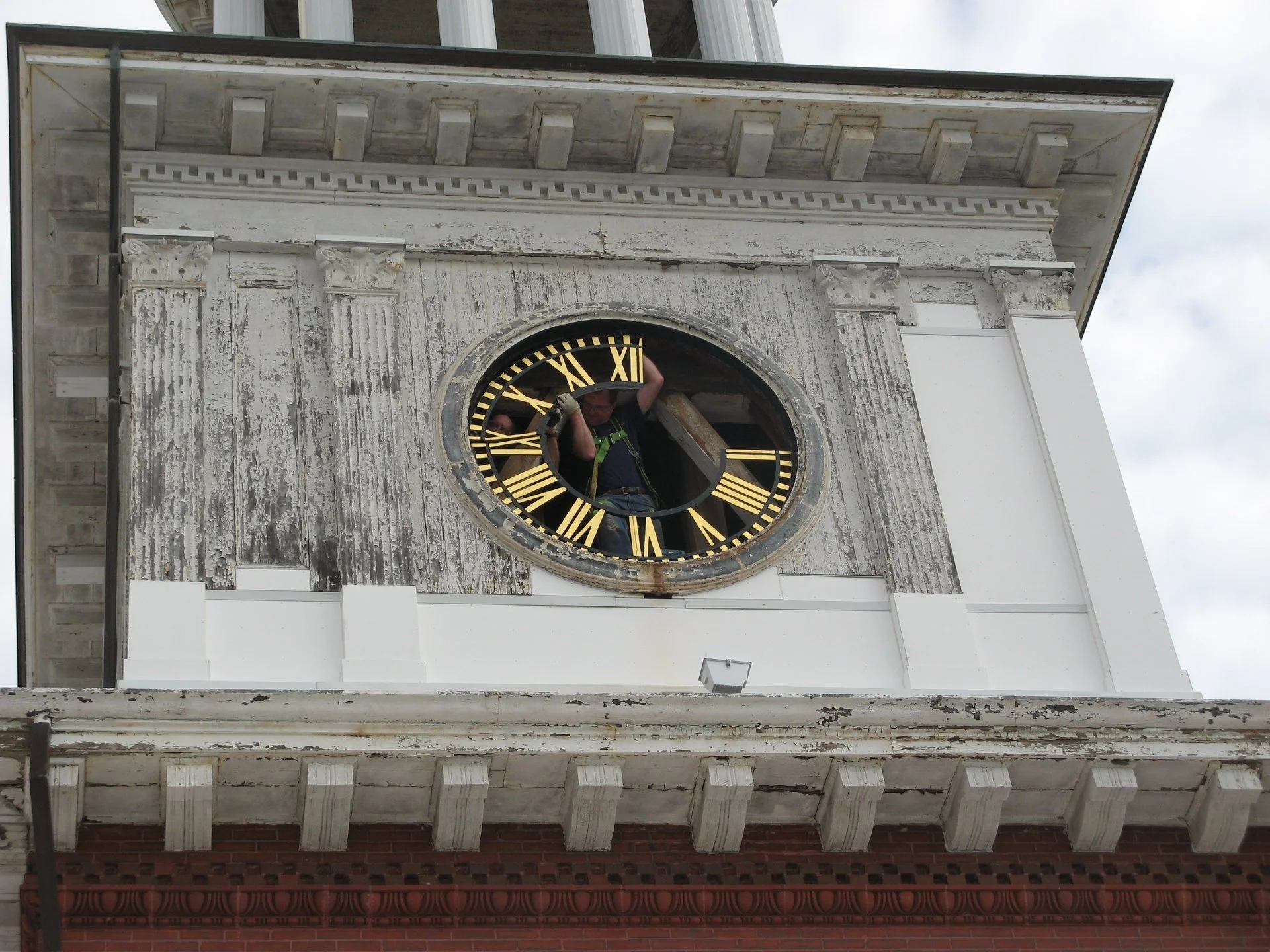
Biddeford City Hall Clock Tower, Biddeford 

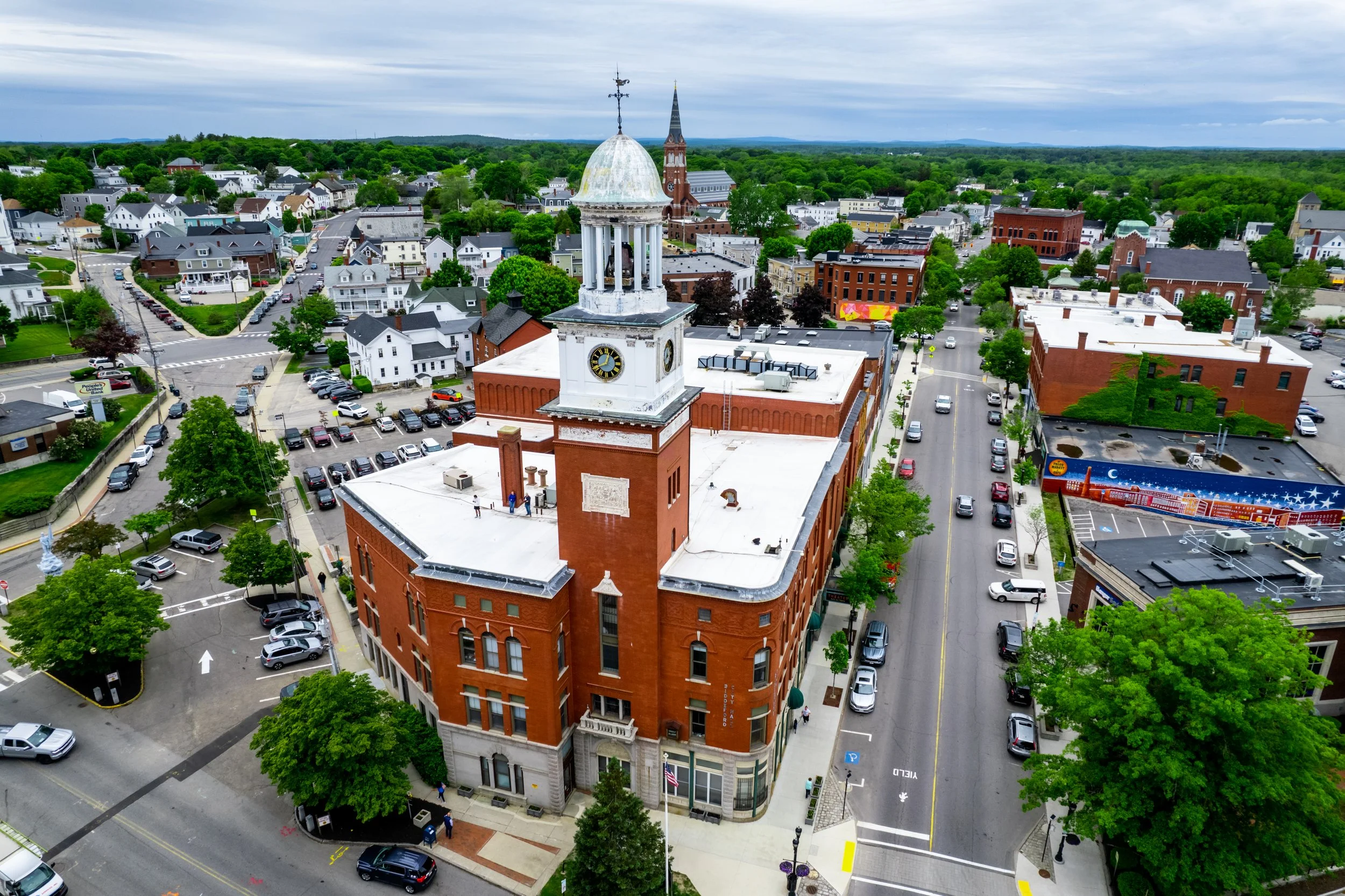
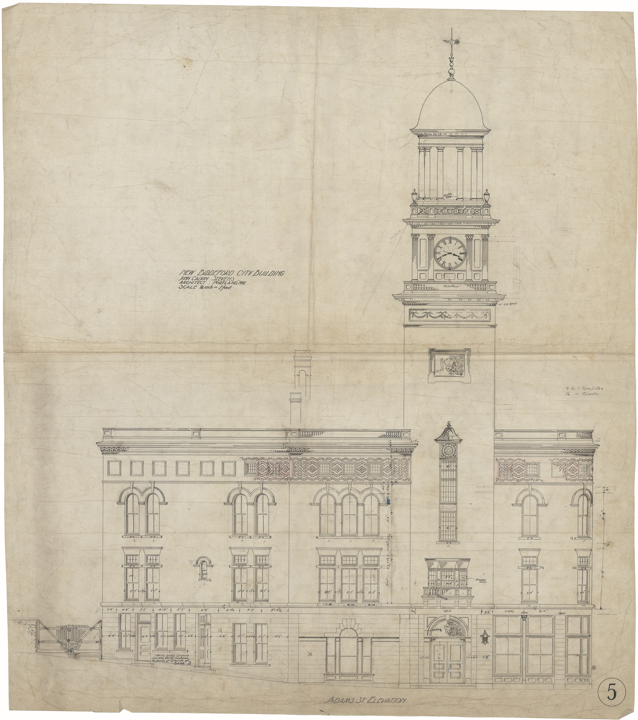
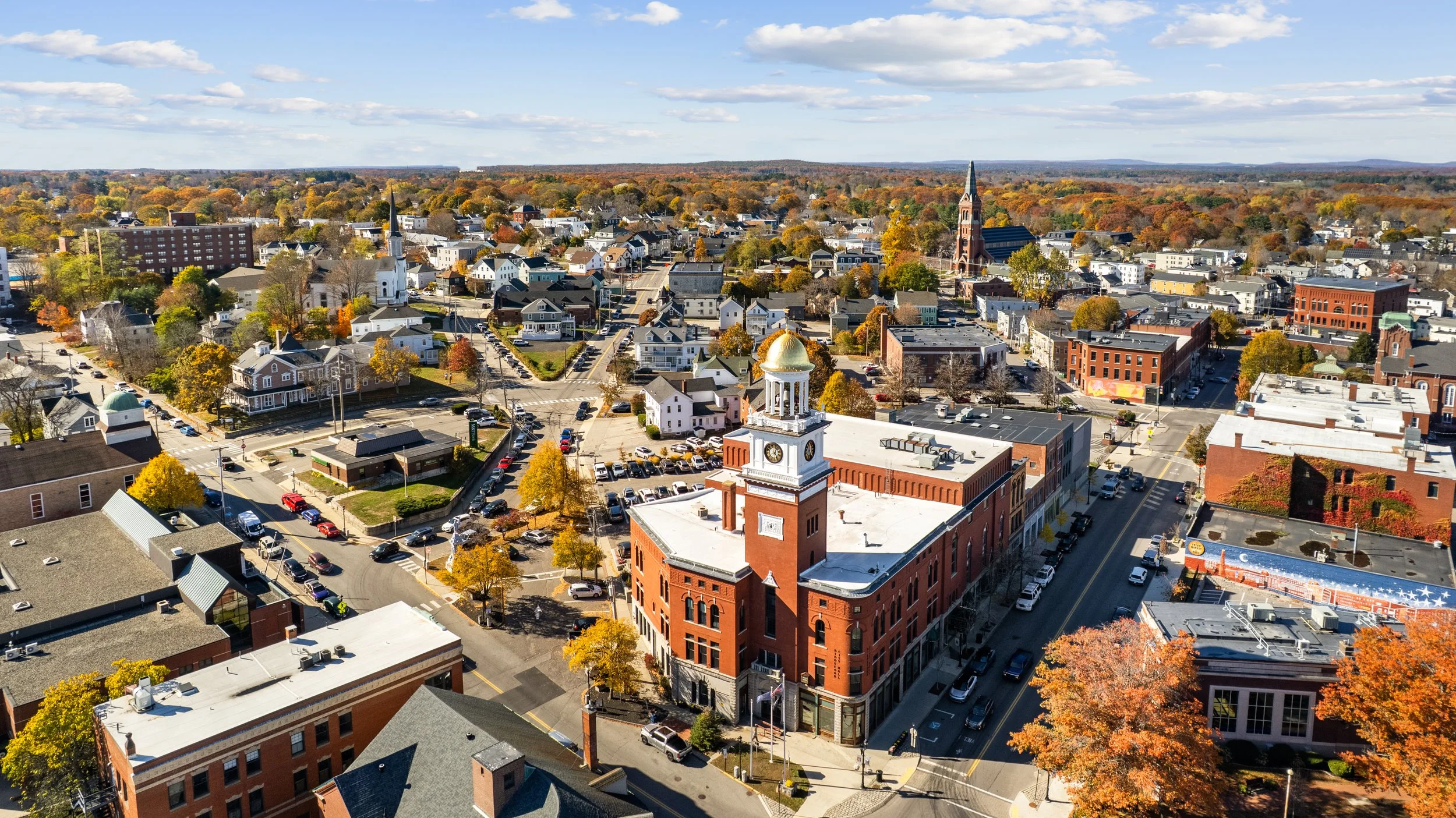
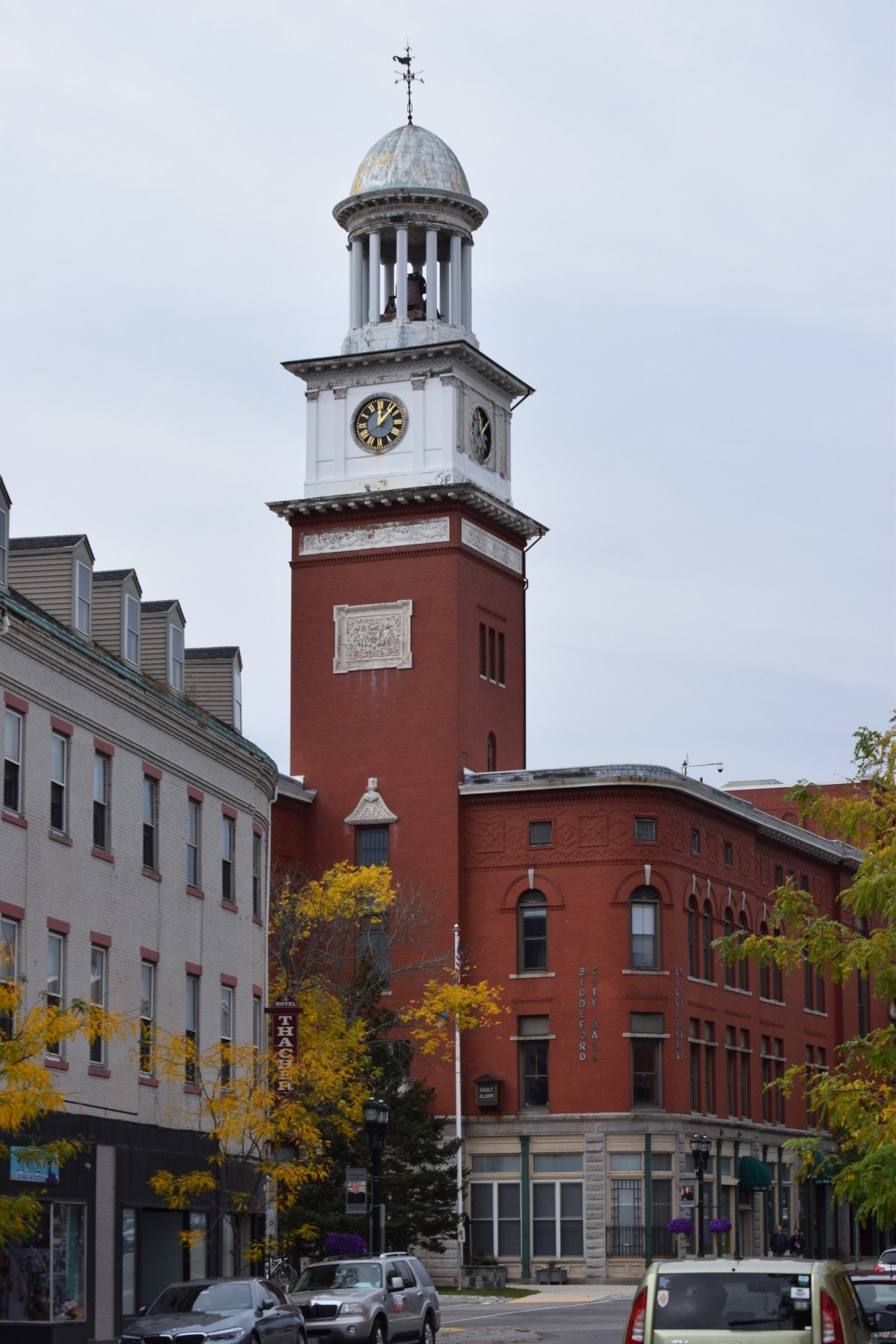
The restored Biddeford City Hall Clock Tower is a testament to the pride and commitment of the city’s residents and leaders who persisted and ensured the historic center of civic life and municipal services would endure for future generations.   

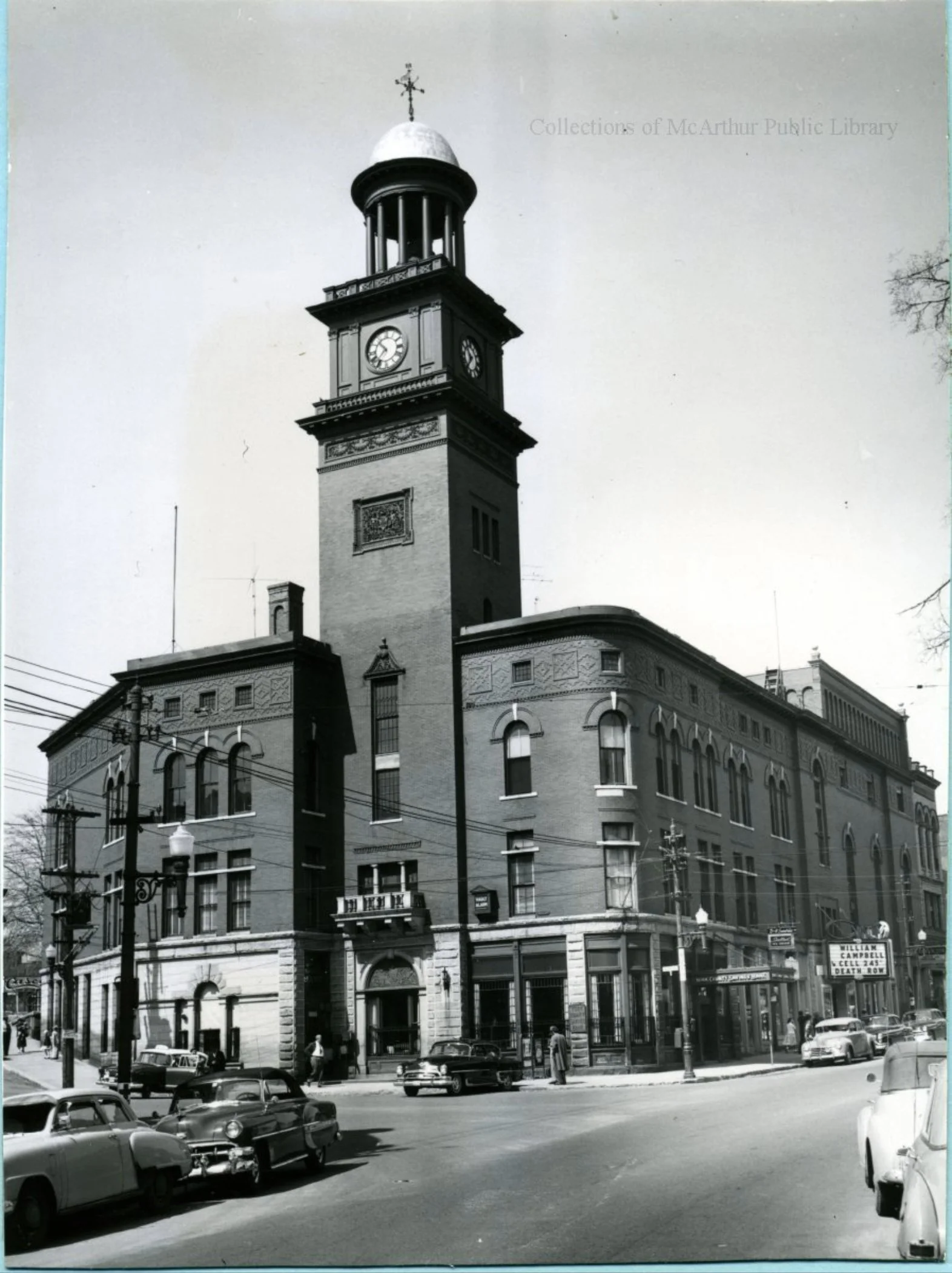
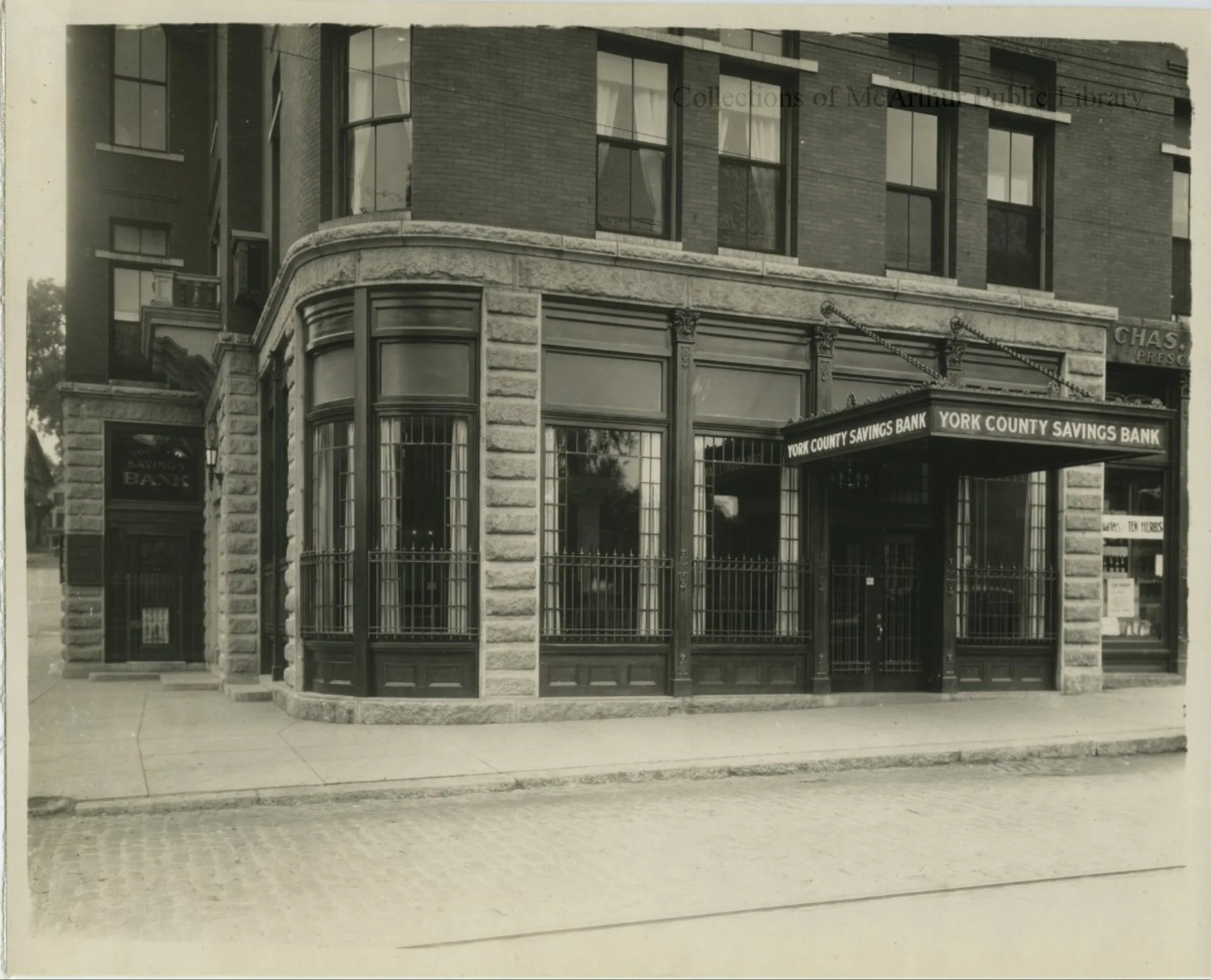
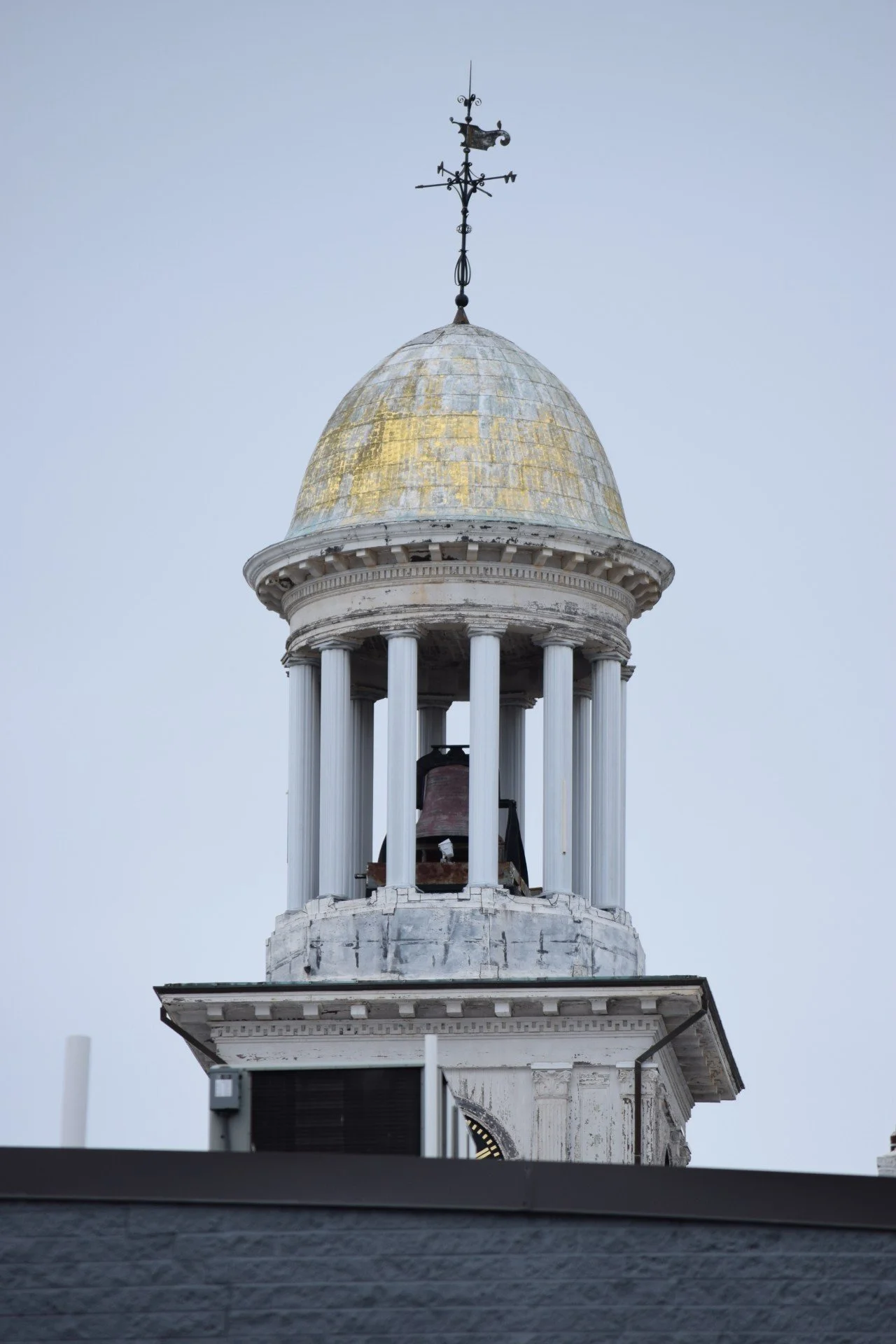
Biddeford’s original city hall was lost to a catastrophic fire on New Years Day in 1895. Architect John Calvin Stevens was commissioned to design its replacement. Using primarily brick and granite, Stevens executed the building in the Renaissance Revival style. The new 135-foot clock tower was outfitted with a cast bronze bell from the Black Bell Foundry Co. of Boston, while the gilded copper dome shined over the city. Along with housing the police department and municipal offices, the building has boasted the City Theater, York County Savings Bank, and a variety of stores and businesses over the last 130 years.  

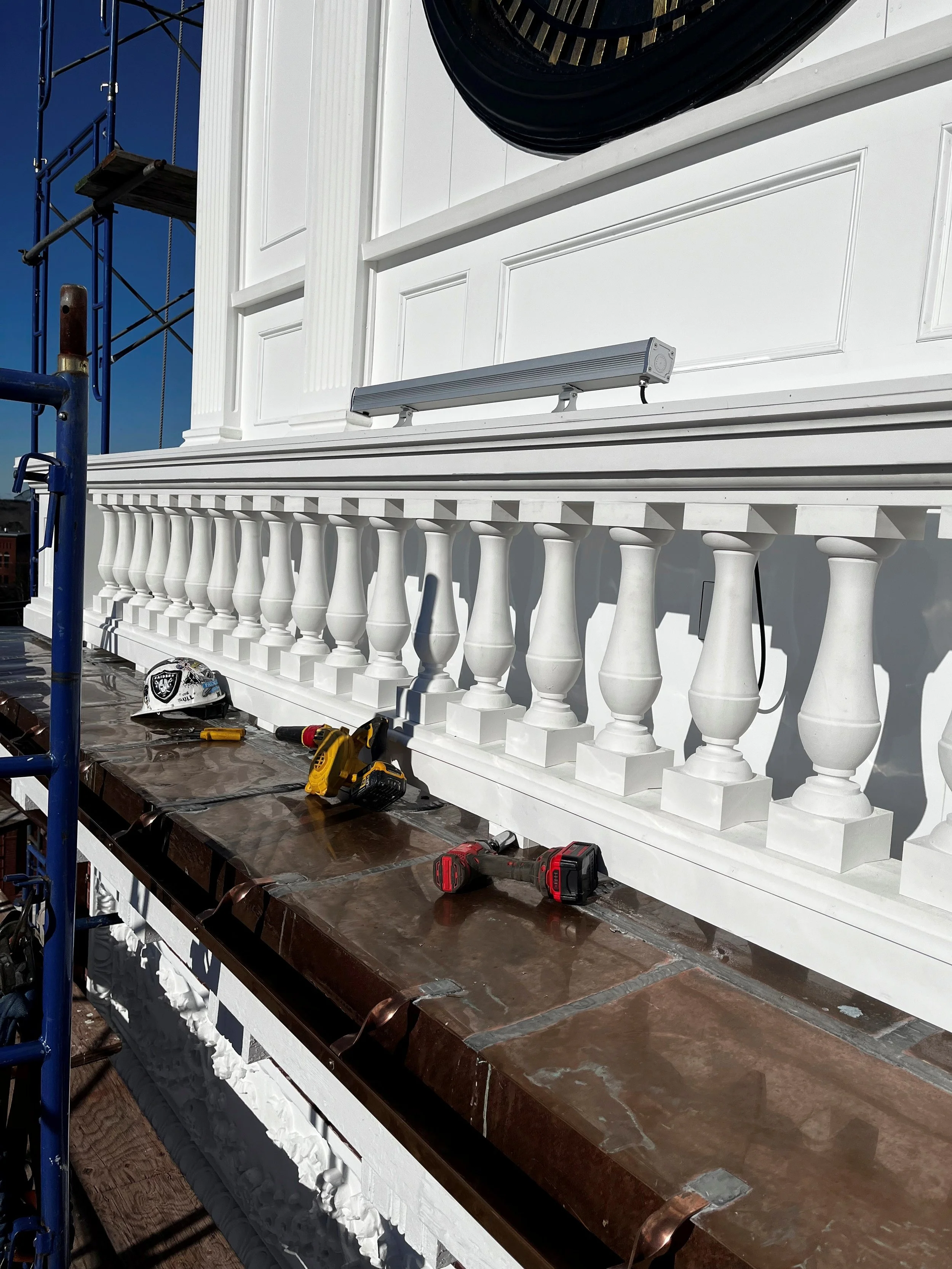
For decades, cosmetic repairs were prioritized over substantive maintenance. Weathering and water intrusion left the tower in severe disrepair. In 2007, a temporary wood frame was needed to support the bell after the original rotted through and a rubber membrane was added underneath to halt leaks. Time was quite literally running out–the clock was inoperable. Exterior balusters were removed after pieces fell onto the street, and the windows and wood paneling had failed. The copper on the dome was worn and the gilding dull.  

The weathered tower stuck out like a sore thumb as reinvestment in downtown transformed former mill buildings, attracted new restaurants and shops, and welcomed more visitors. Pressure was mounting for City Hall to set a better example. City leaders put the question of funding repairs to the voters in three separate referenda in 2007, 2012, and 2015.  

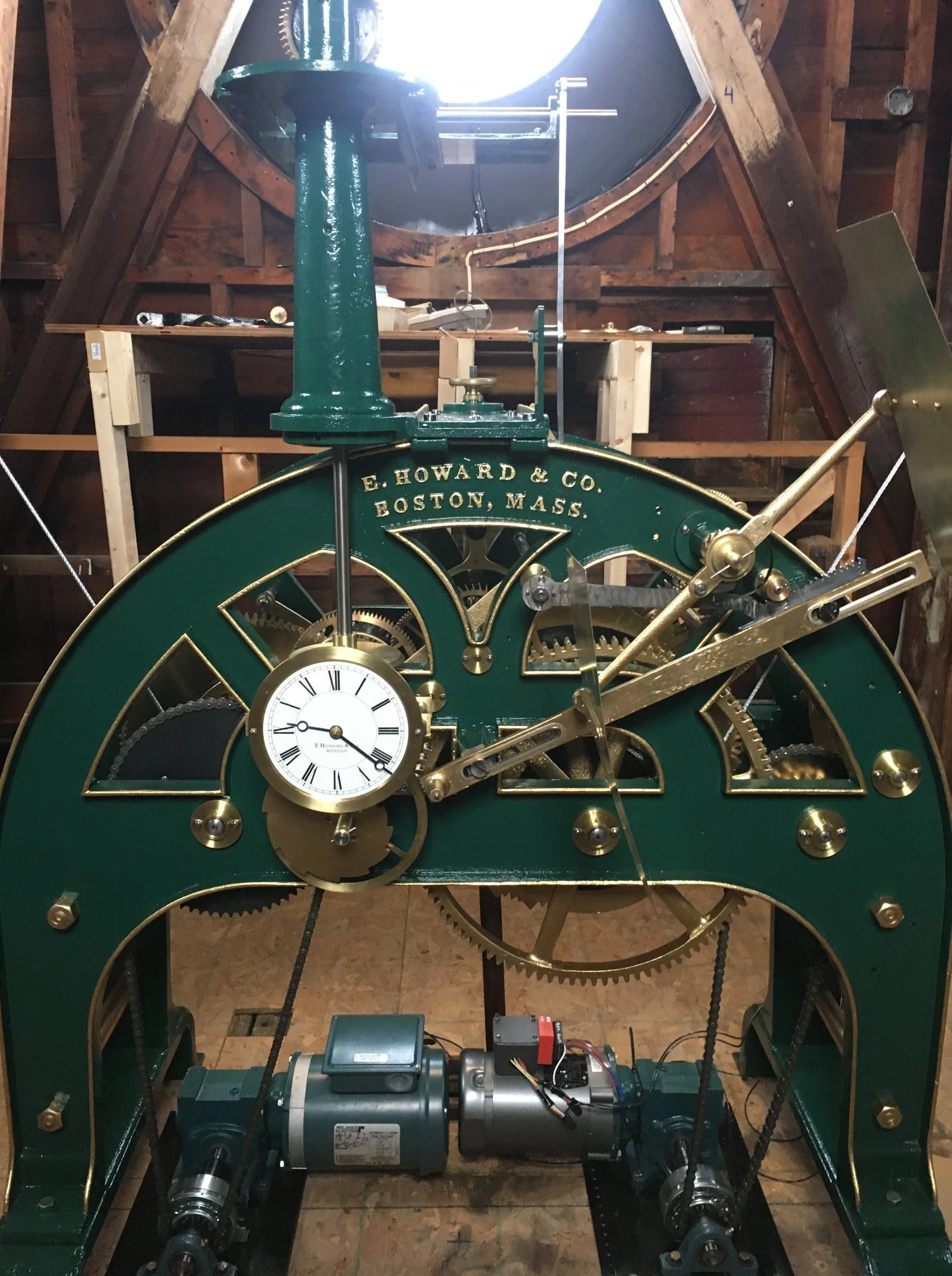
To strengthen their case, advocates successfully nominated the tower to our 2014 list of Most Endangered Historic Places. Then the city’s main street organization, Heart of Biddeford, entered and won a contest through the National Trust for Historic Preservation and American Express which resulted in a $150,000 grant. The funds paid for Balzer Family Clock Works to fix the clock mechanism, its four dials, and fabricate new hands of redwood and gold-leaf. With the boost of morale, voters approved a $3.75 million bond to support repairs to the clock tower and other city facilities two years later.  

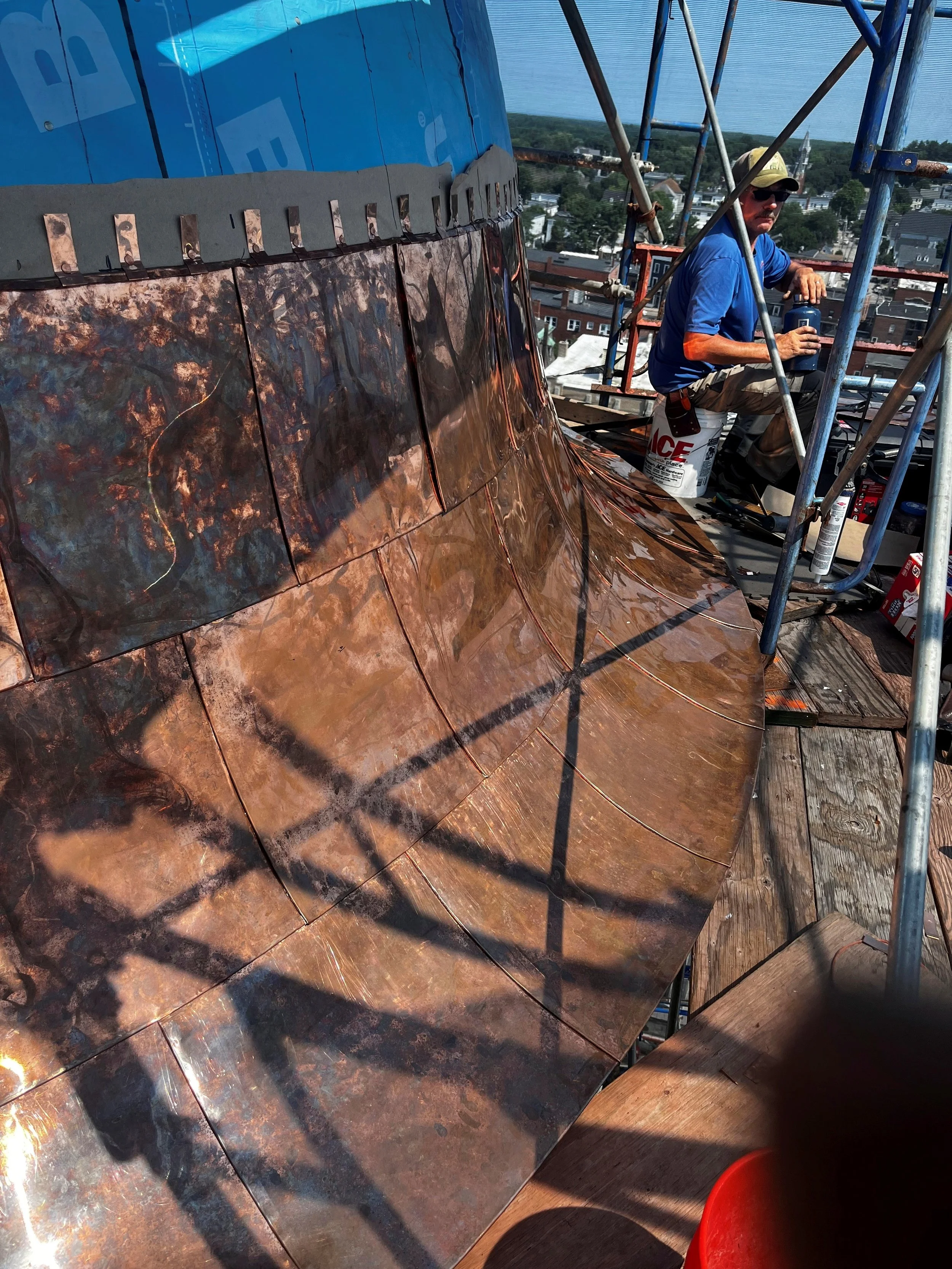
Artifex Architects & Engineers brought their preservation expertise to the project, with Colby Company serving as project engineer and Ducas Construction as the construction manager. The project scope stretched from the street to the sky and relied on the original blueprints. Gorham-based carpenter Tim Hill rebuilt the Main Street storefronts, and historically accurate wood windows were returned to the tower. Composite replicas of the capitals, pilasters, trim, and balustrades were chosen near the top of the tower given the significant loss of historic fabric and distance from the ground. Waterboro-based Heritage Co. replaced the copper and gilding on the dome and replicated the weathervane.  

Special recognition goes to the city’s long-time Director of Facilities, Philip Radding, who came out of retirement to serve as project manager. Radding had closely monitored the building for over a decade and continuously sought community buy-in and funding.  

The project was completed in 2024, a striking moment for both the skyline and the rebirth of downtown Biddeford. 

Project Participants:

  • City of Biddeford

  • Artifex Architects & Engineers

  • Colby Company

  • Ducas Construction

  • Heart of Biddeford

  • Jacobs Glass

  • The Heritage Co.

  • Balzer Family Clock Works

  • Masonry Preservation Associates

  • Tim Hill Fine Woodworking & Design Co.

  • Creative Glass Systems

Photo Credits: Heart of Biddeford, Artifex A&E, Balzer Family Clock Works, City of Biddeford, DLM Media, McArthur Public Library, Maine Historical Society, Phillip Radding 

Victoria Mansion, Portland 

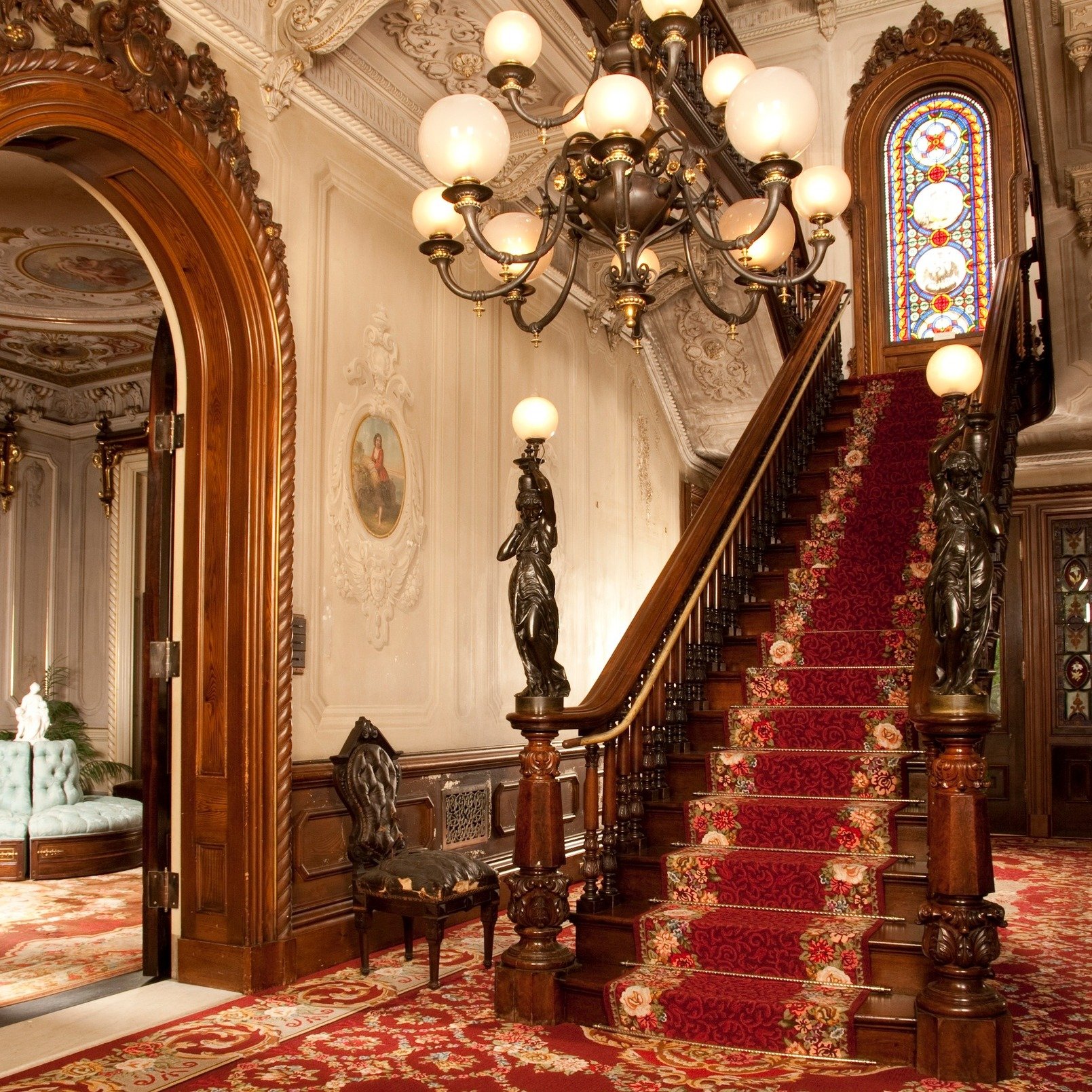
The confluence of traditional craft, technology, and dedication resulted in a restorative transformation of the Victoria Mansion, a National Historic Landmark and one of the best-preserved examples of a nineteenth century Italianate villa.   

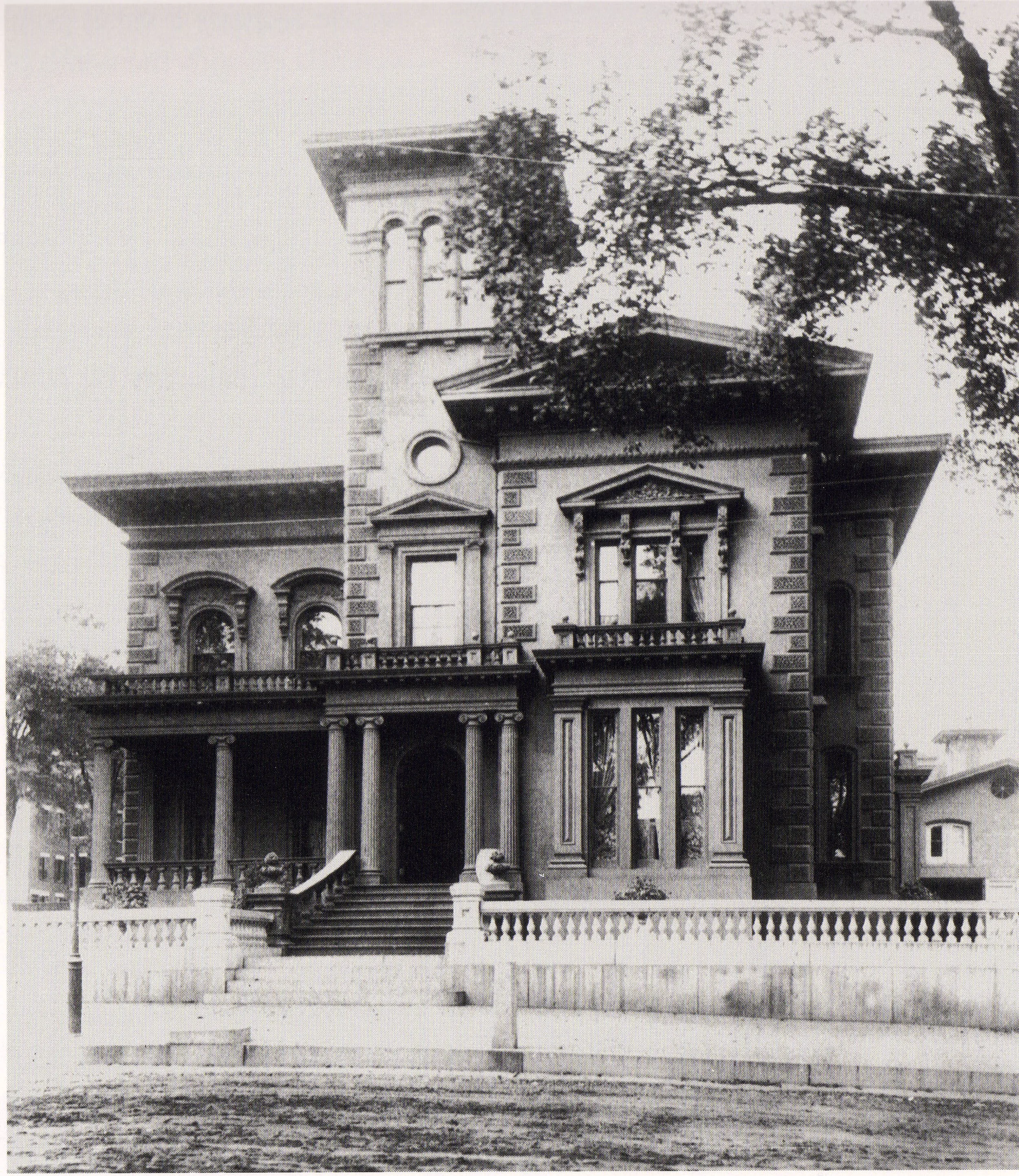
Victoria Mansion was built in Portland between 1858 and 1860 as a summer home for New Orleans hotelier Ruggles Sylvester Morse and his wife Olive Merrill Morse. The high-styled Italianate mansion was designed by Architect Henry Austin, with furnishings and interior appointments by decorator Gustave Herter and Italianate fresco-style painting by Giuseppe Guidicini. The house was later owned and preserved by the Libby family and ultimately saved by William Holmes in 1941. It has since been open to the public as a museum. 

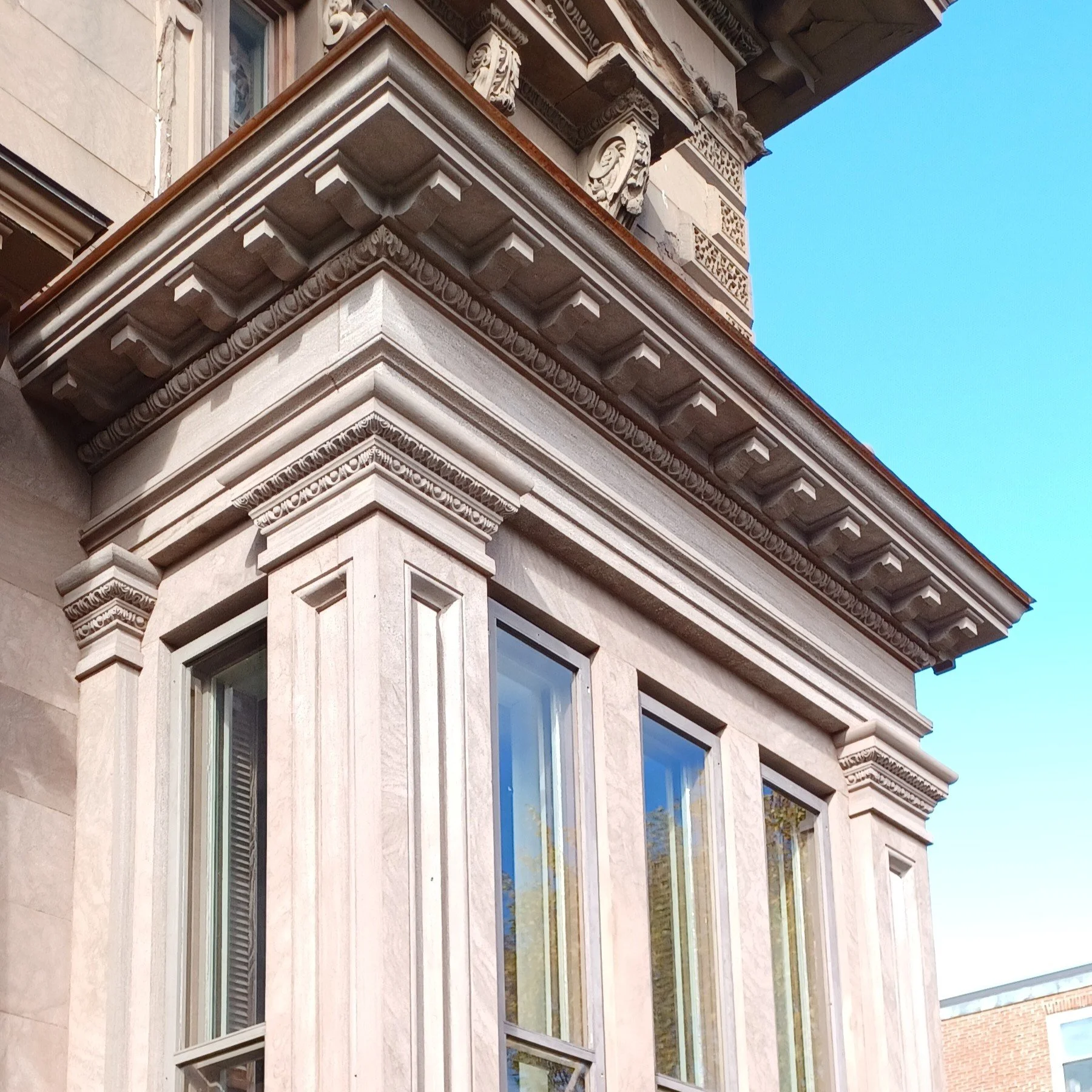
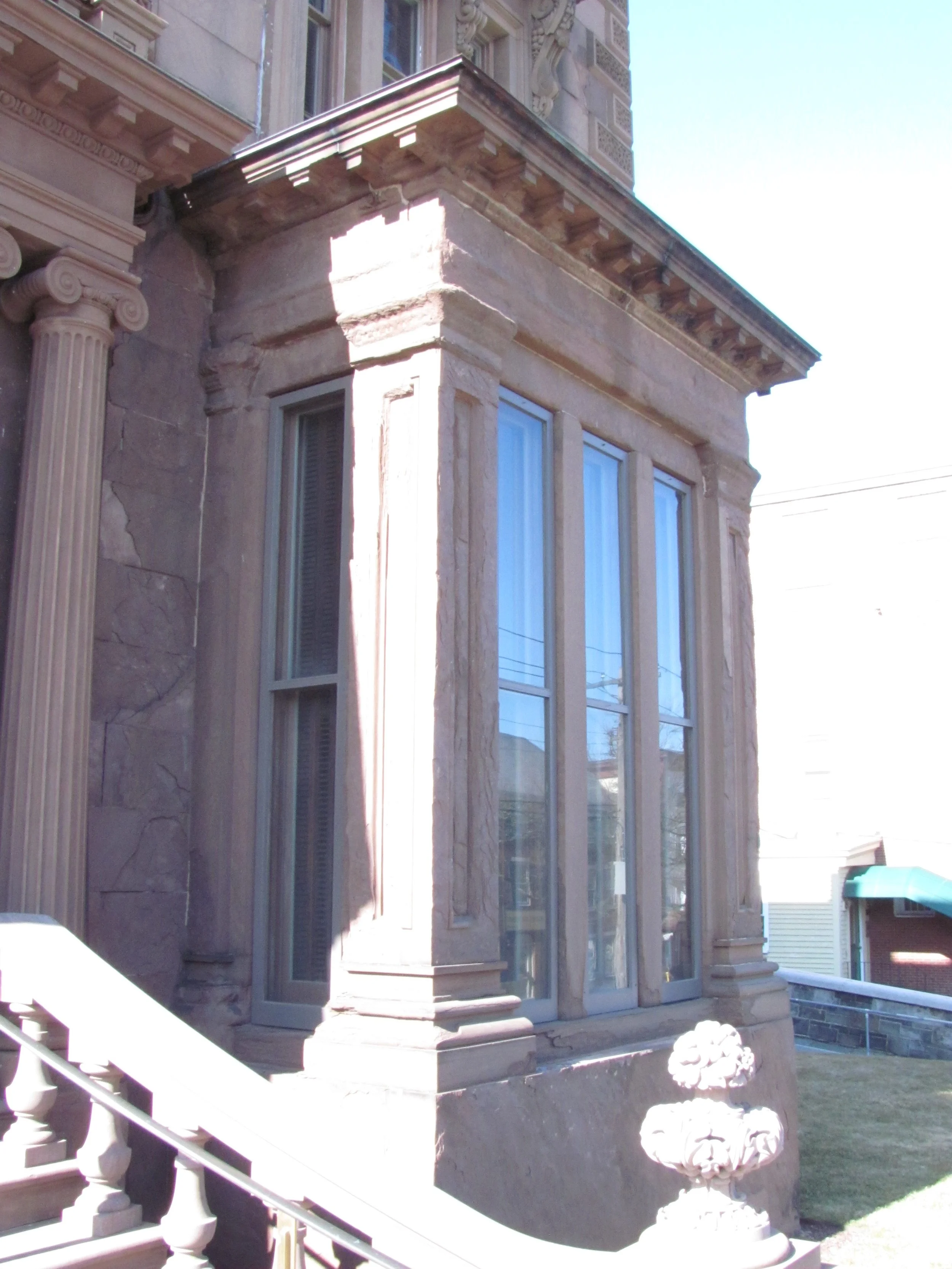
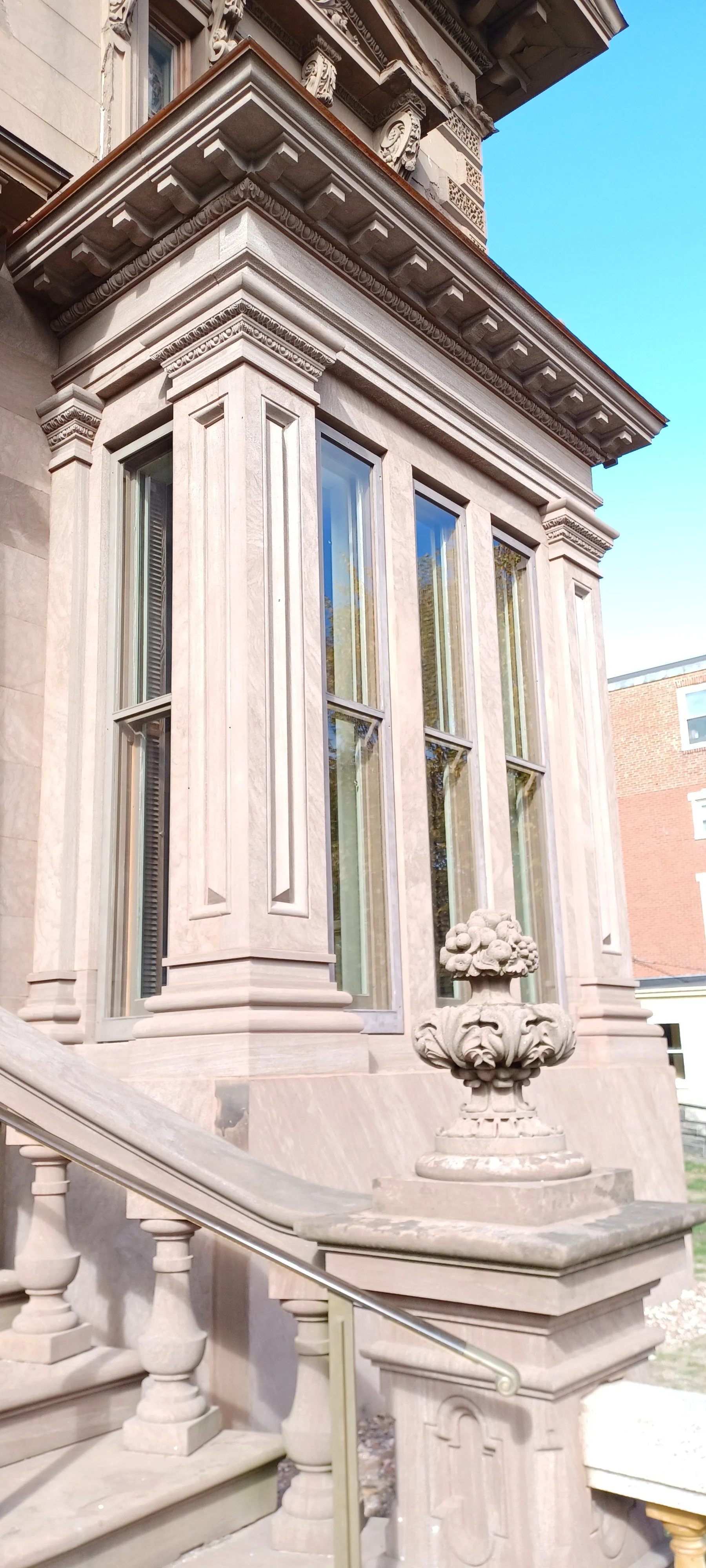
Between the elaborate interiors and fragile brownstone, serious and sustained maintenance and restoration work has been ongoing since the 1970s. The mansion’s front bay–unshielded by overhanging roofs–became the greatest source of concern. Beyond erosion and loss of the carved ornamentation, it was feared that moisture would infiltrate and damage the decorated interiors just inches behind the building envelope. While brownstone is the ideal material for elaborate carving, the porous sandstone is notoriously prone to spalling and water damage. When it fell out of favor at the turn of the twentieth century, the quarries shuttered.   

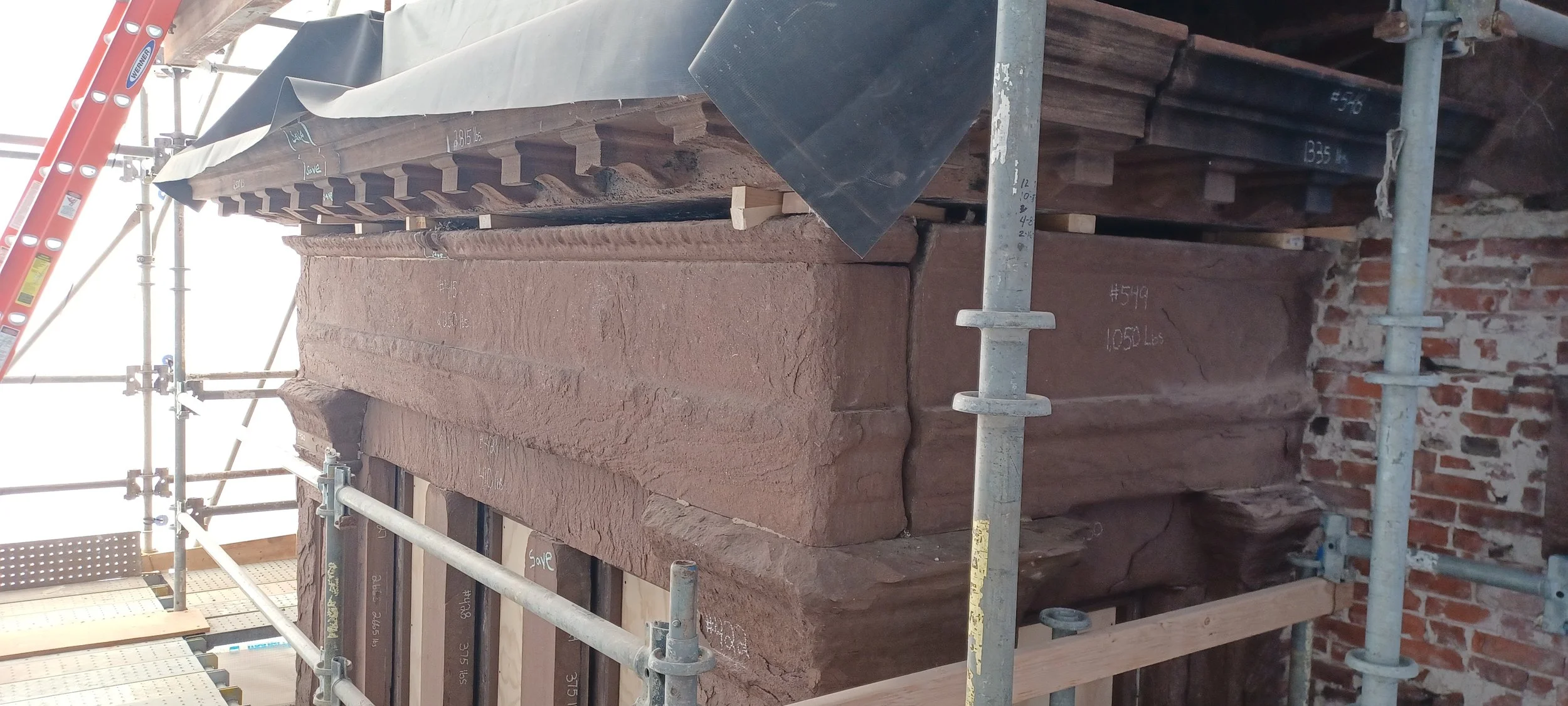
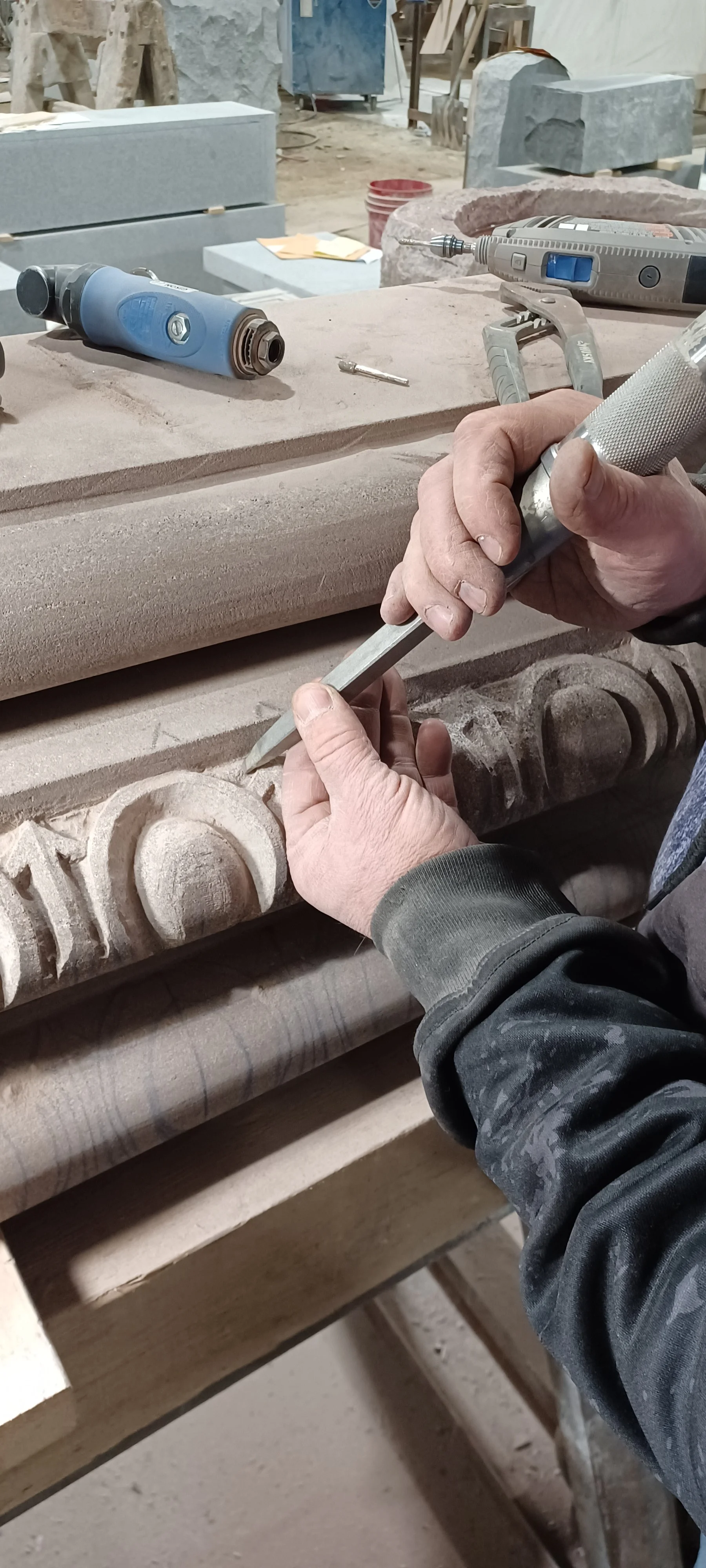
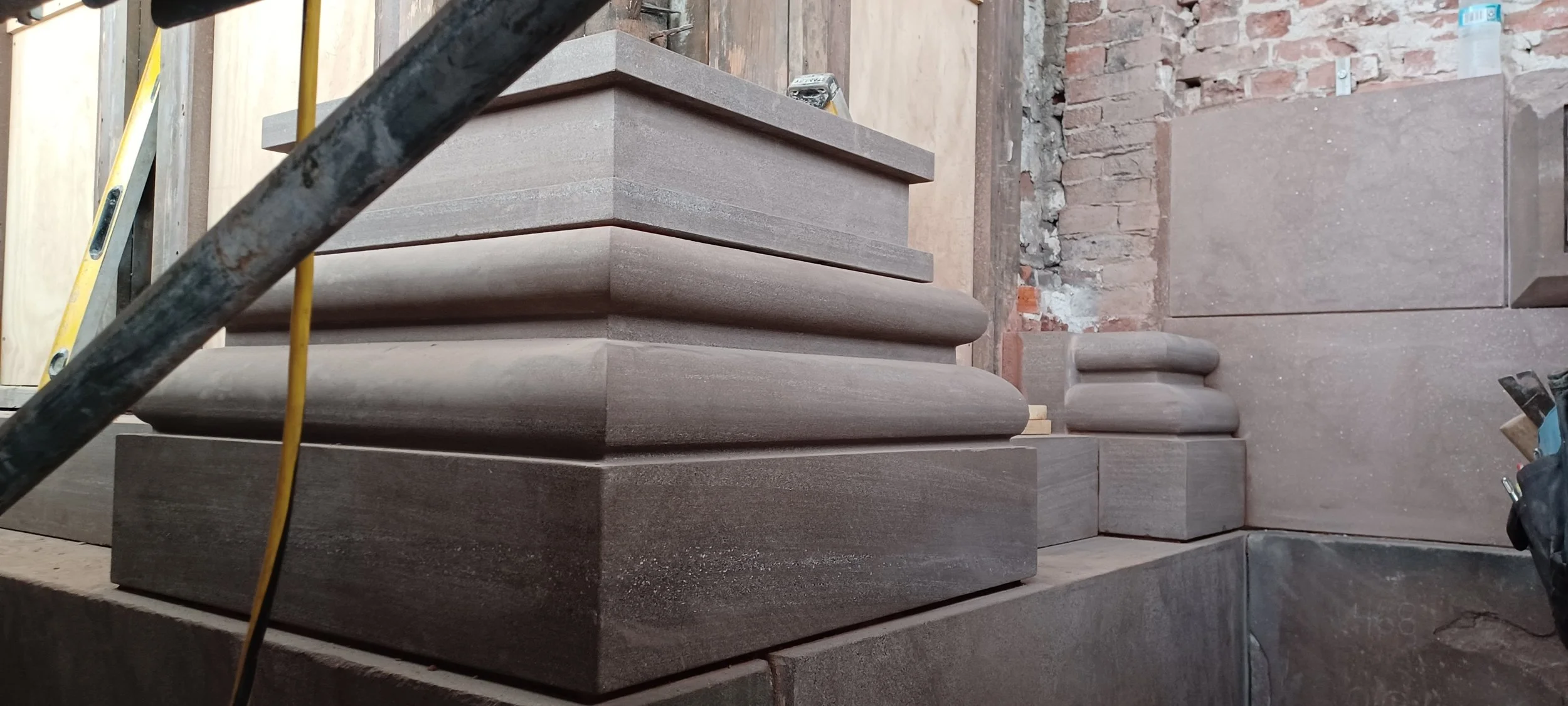
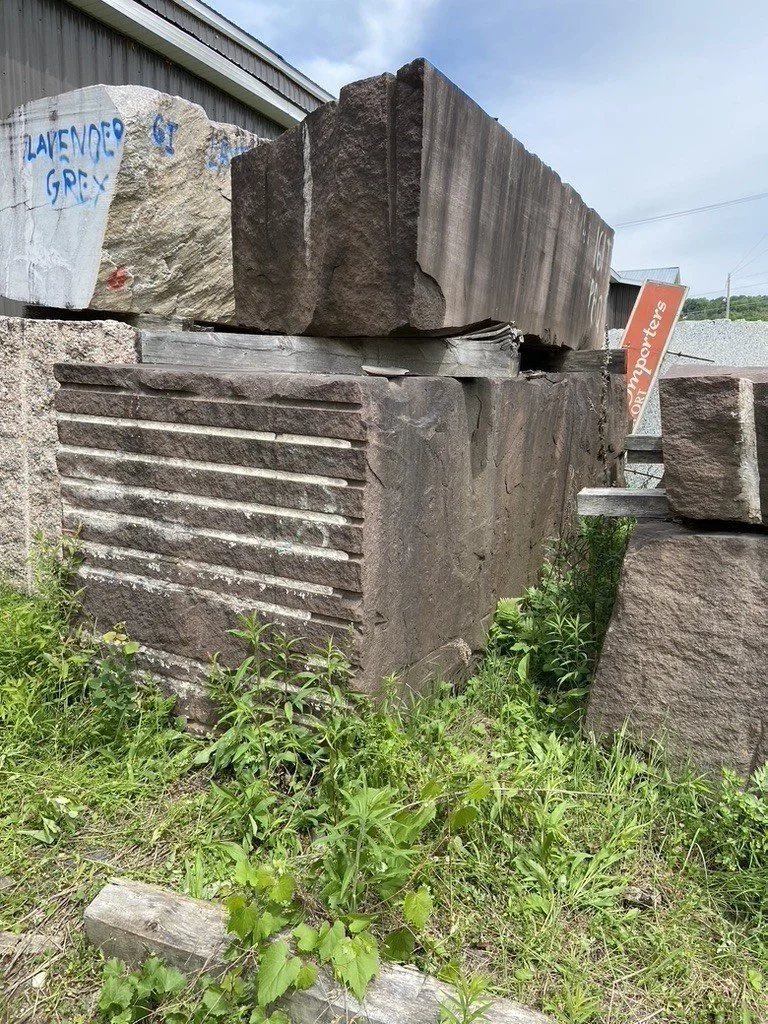
Restoration of Victoria Mansion’s front bay was only possible thanks to the discovery of a rare cache of Portland Brownstone (from Connecticut), a material that is no longer quarried and rarely available on the market. The museum jumped at the opportunity. Renowned conservator Ivan Myjer of Building and Monument Conservation was brought in to oversee what would likely be the last large-scale restoration campaign at Victoria Mansion.  

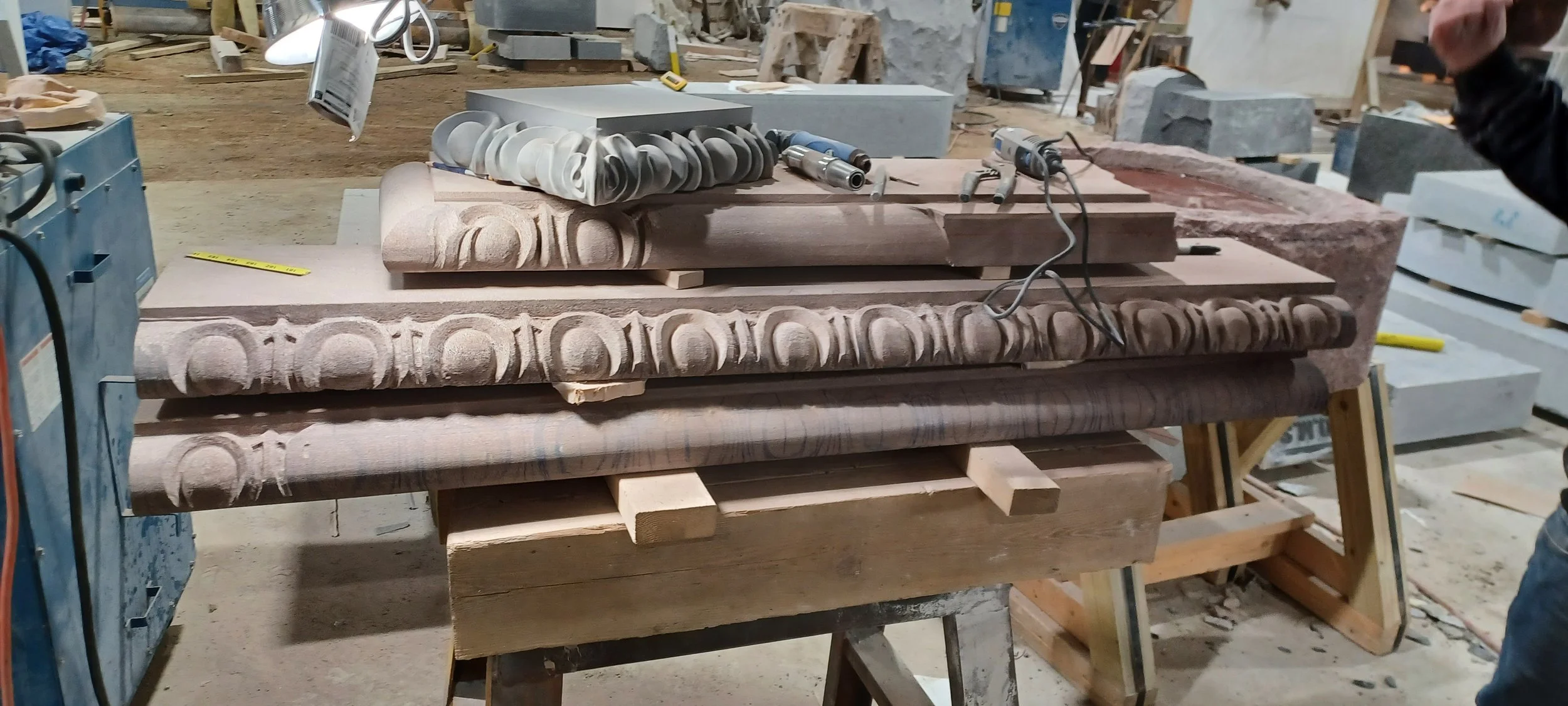
Perfectly matching brownstone was cut and carved by Granite Importers in Barre, Vermont. The project team went to great lengths to ensure that the details of the restored bay were as faithful as possible to original features, drawing on physical and photographic evidence. The latest technologies in 3D drafting and modeling from the team at Vertical Access helped guide the hand carving by Sylvain Metivier.  

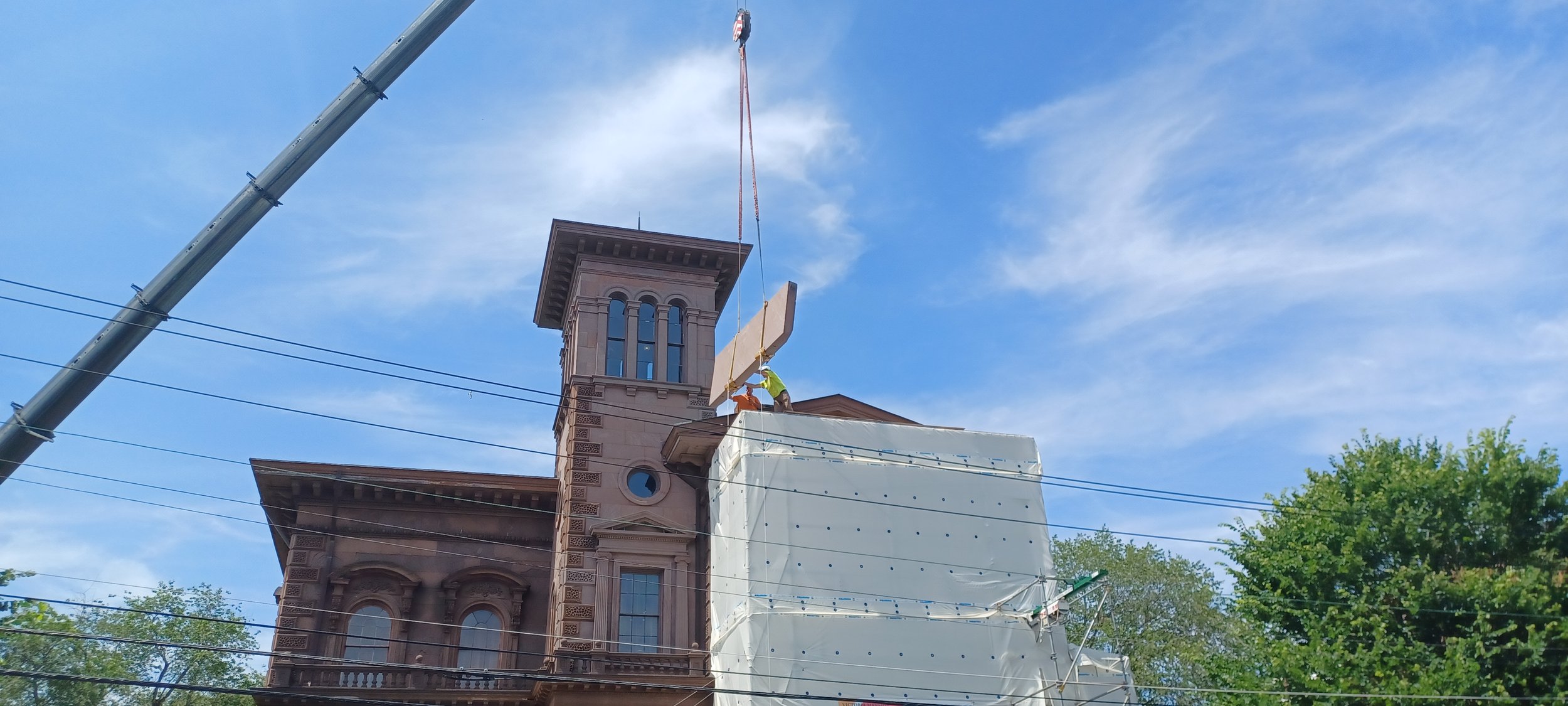
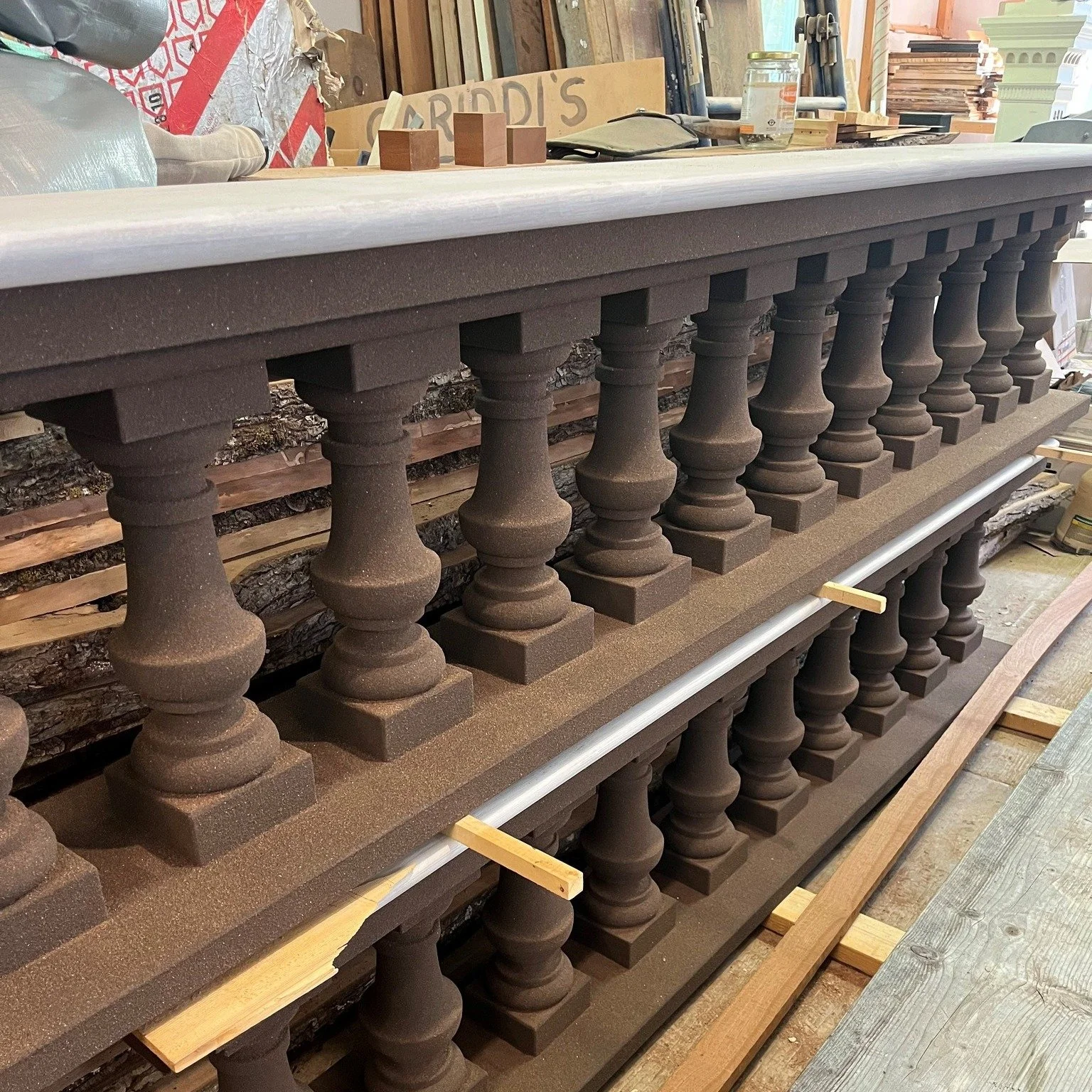
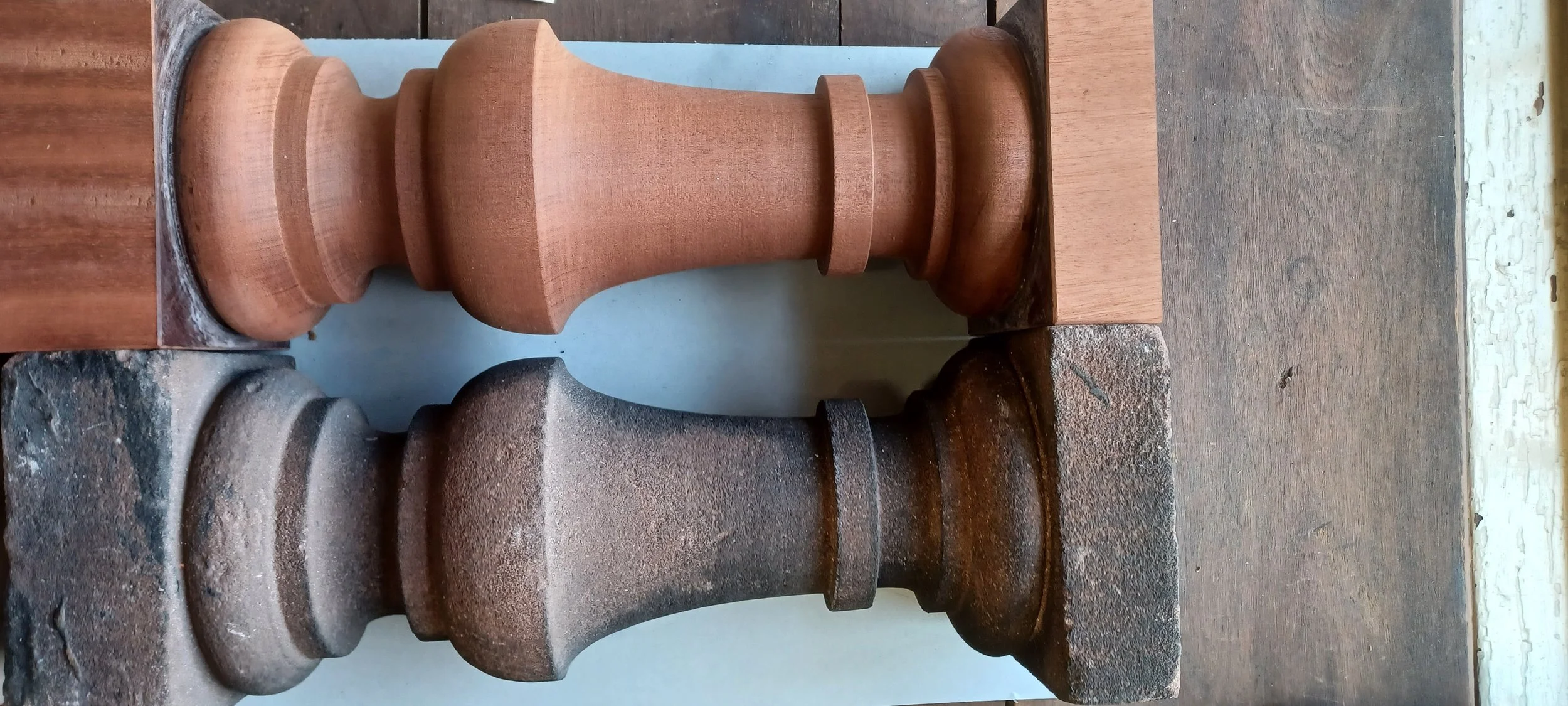
The finished stone was shipped to Portland and carefully hoisted and positioned by Massachusetts-based Stone & Lime Historic Restoration Services. The project also afforded the opportunity to replace ashlar masonry flanking the bay and reinforce it with steel. The project capstone was the restoration of the rooftop balustrade in sand painted wood, which had been missing from the building since the 1950s. The balusters were hand turned by R. Cariddi Fine Woodworking of Buxton.  

Tom Hinkle, longtime Chair of Victoria Mansion's Restoration Committee, and Executive Director Tim Brosnihan ushered this decade-long, million-dollar project towards its successful completion. Maine-based funders included The 1772 Foundation in cooperation with Maine Preservation, The Davis Family Foundation, the Elsie and William Viles Foundation, the Morton Kelly Charitable Trust, and the Peter L. Sheldon family. 

Today, the bay displays the beautiful graining and lively mica sparkle of Portland brownstone, visible to passersby and the house’s 30,000 annual visitors.  

Project Participants:

  • Victoria Mansion

  • Building and Monument Conservation

  • Stone & Lime

  • Structures North

  • Granite Importers

  • Sylvain Metivier

  • Vertical Access

  • R. Cariddi Fine Woodworking

Photo Credits: Victoria Mansion, Ivan Myjer 

Wood Island Life Saving Station, Kittery 

The historic lifesaving station in Kittery was itself in distress and in need of rescue–those who answered the call accomplished something extraordinary.  

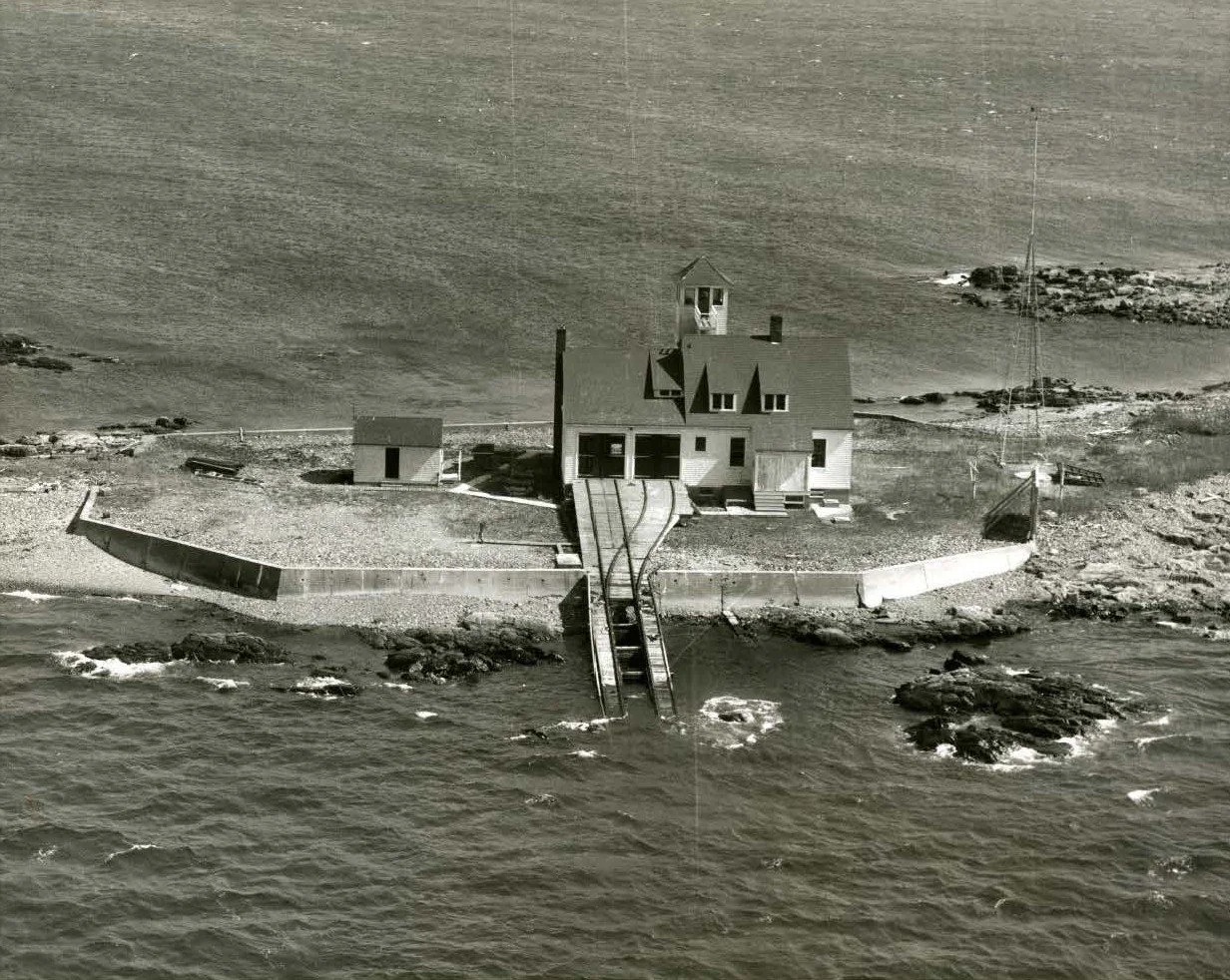
The United States Life Saving Service constructed the station on Kittery’s Wood Island in 1908. During its four decades of service at the mouth of the Piscataqua River, the station’s “surfmen” carried out more than 60 major rescues and saved hundreds of lives. The US Navy assumed control of Wood Island during World War Two to bolster defense of the Portsmouth Naval Shipyard. The station was decommissioned in 1948 and ownership was eventually transferred to the Town of Kittery in 1973.  

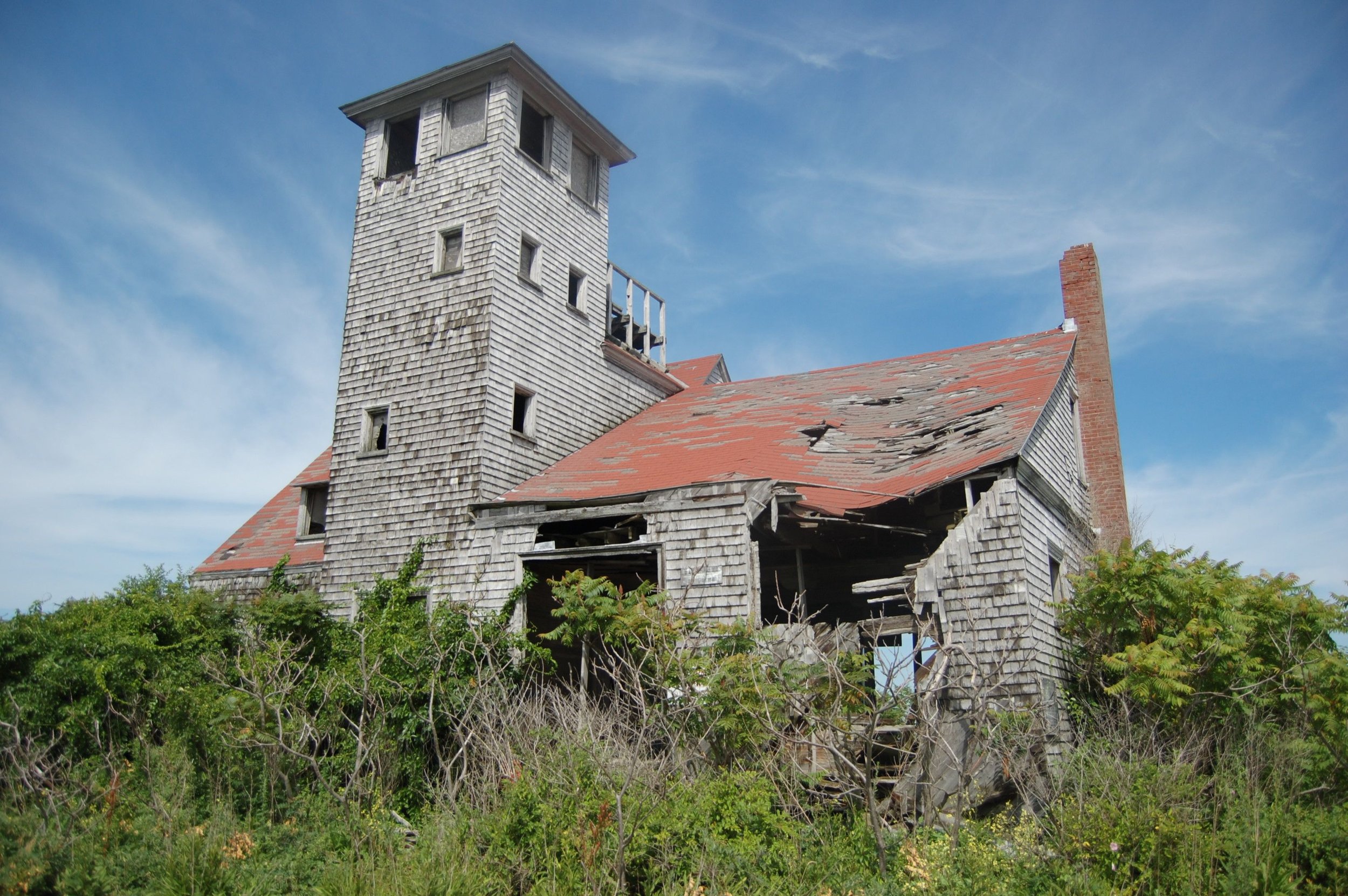
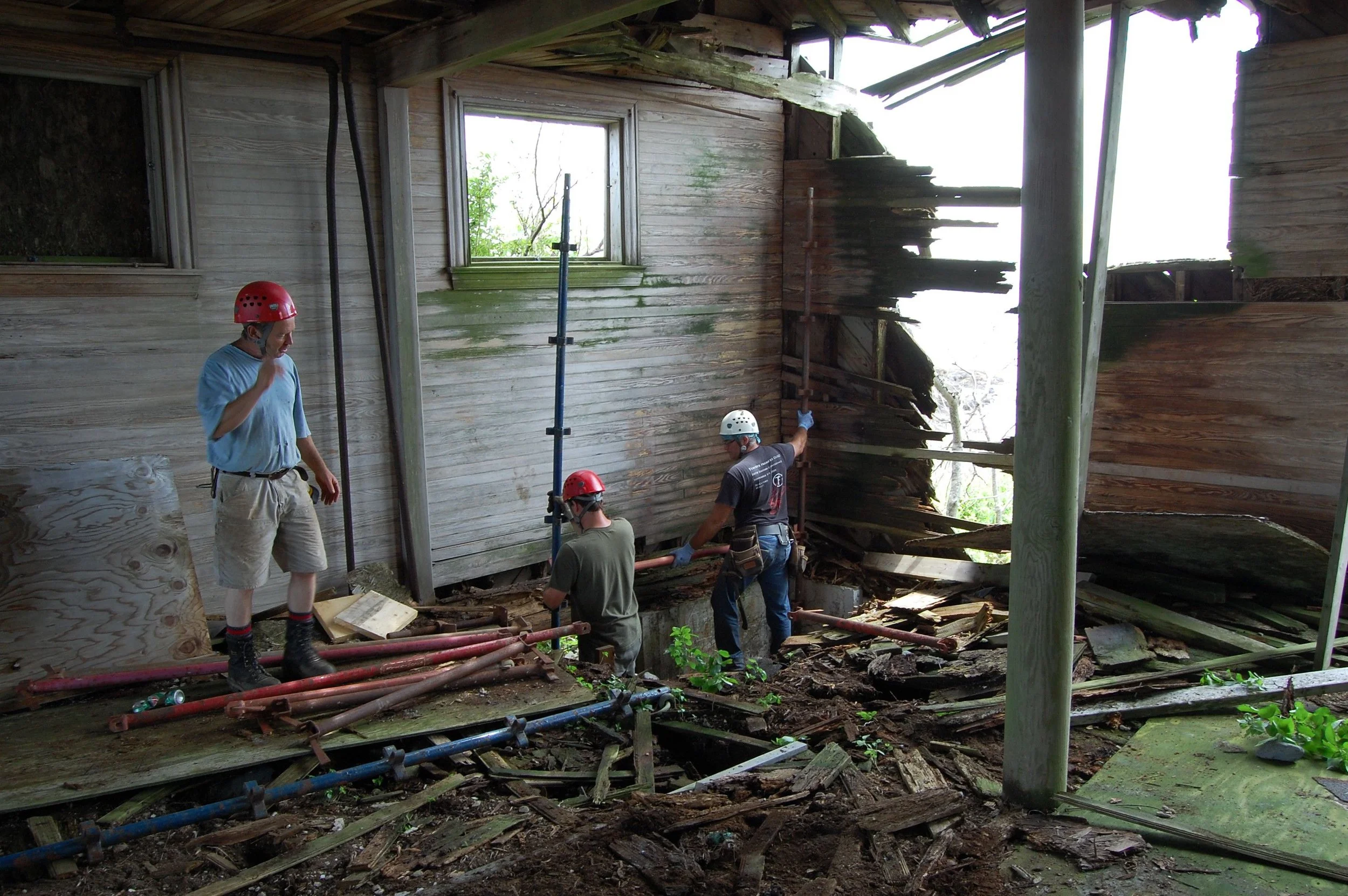
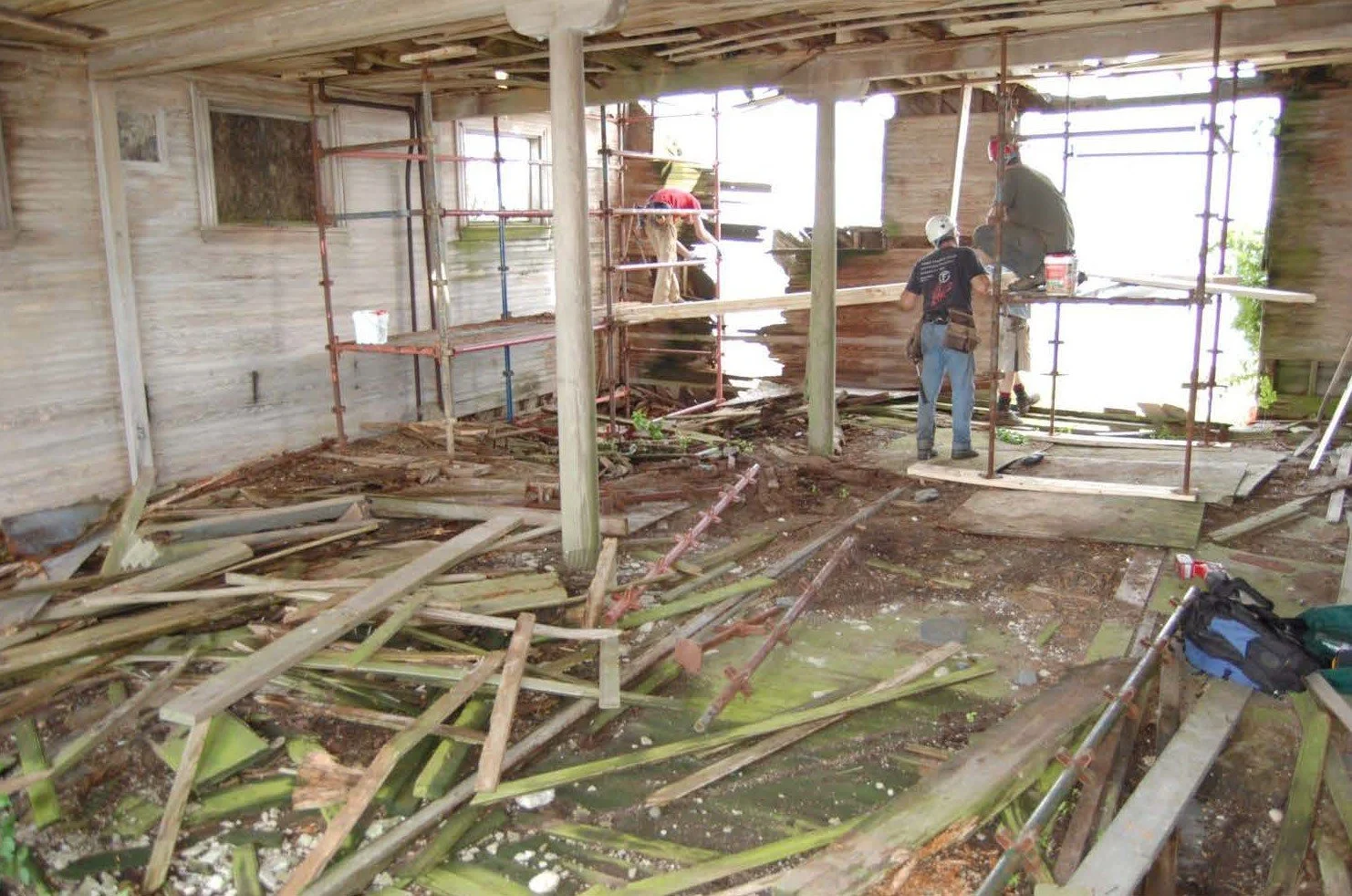
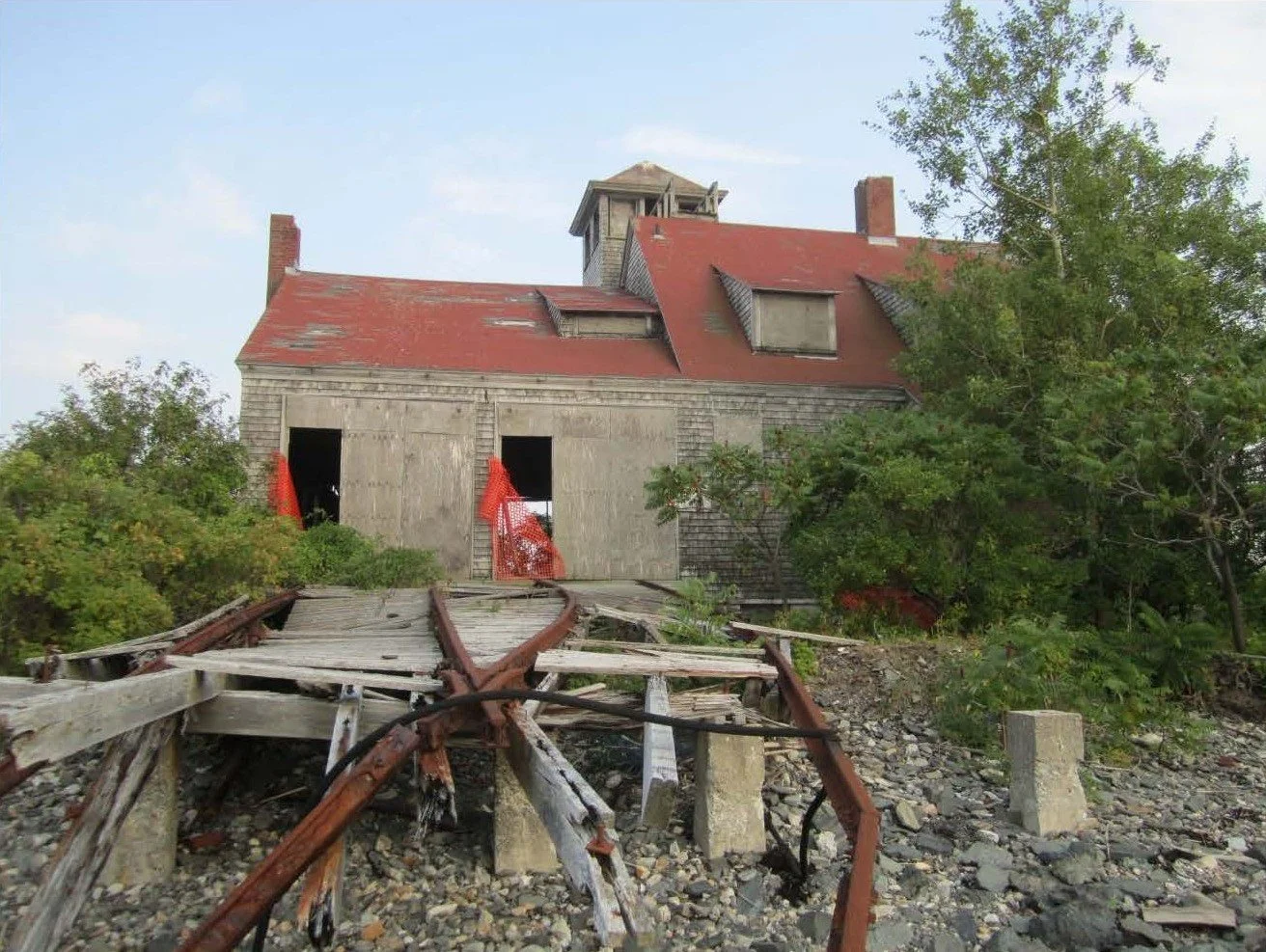
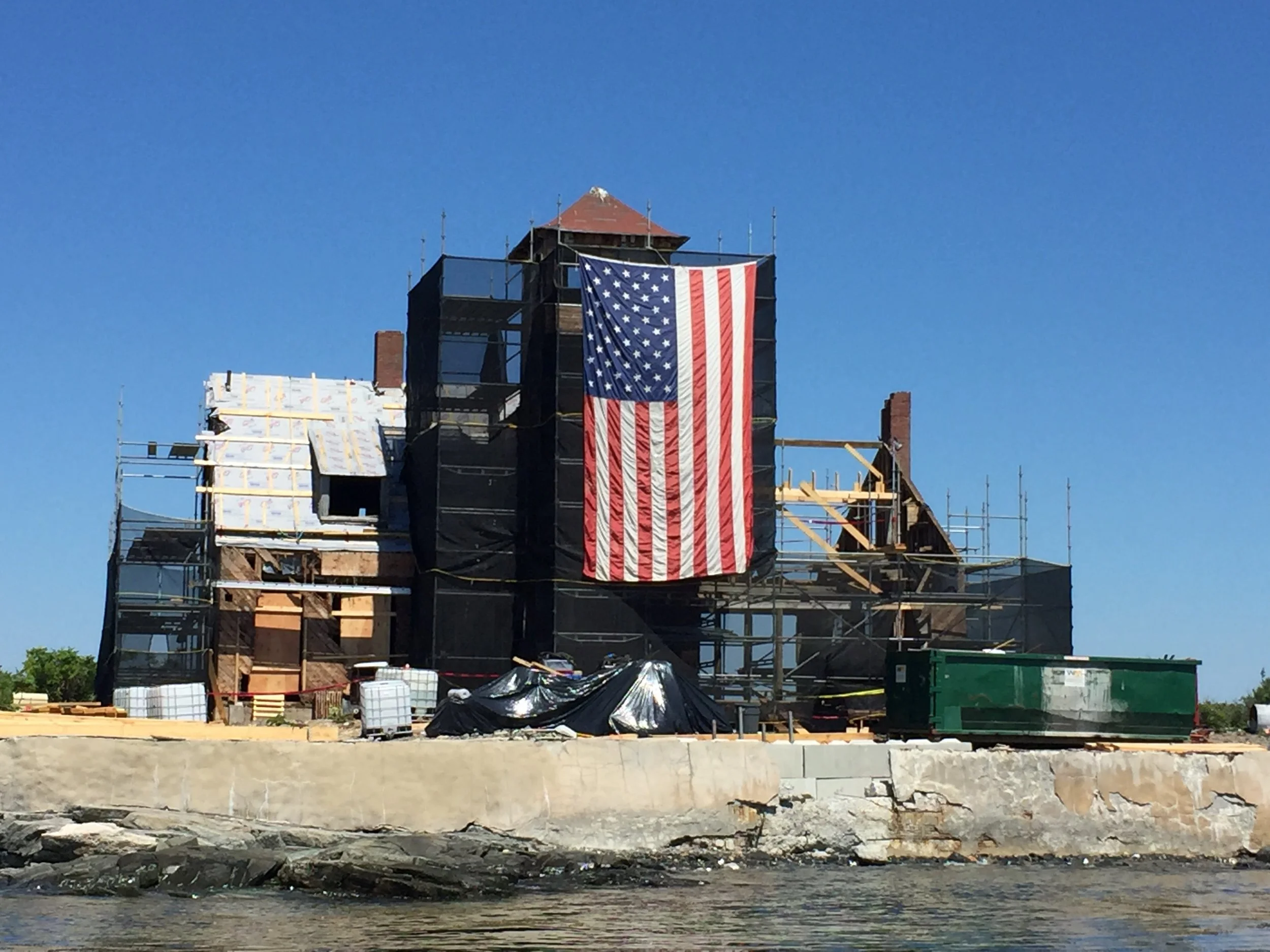
Years of disinvestment coupled with extreme weather conditions left the station in ruins and unsafe for visitors. The building was near collapse, devoid of windows and doors, and a popular hangout for birds. In 2008, a town-appointed committee determined the best course of action was to pursue demolition. Thankfully, the price of abating environmental hazards in preparation was cost prohibitive.  

The Town instead put out a call for proposals in 2011. The lone submission came from the newly formed Wood Island Life Saving Station Association, or WILSSA. The untested nonprofit negotiated with the town for five years to secure a final agreement, a period which included renewed calls for demolition by the town and citizen-led petitions to counter. The turmoil landed Wood Island on our list of Most Endangered Historic Places in 2012. The final restoration agreements were signed in 2016.  

Meanwhile, temporary staging was installed to stabilize the structure. Intact interior features were documented while historians confirmed Wood Island was one of only 12 remaining Duluth-type lifesaving stations and the only one with a surviving marine railway used to launch rescue craft into the water. The compelling case for its significance secured eligibility for listing in the National Register of Historic Places in 2015, which helped unlock a $200,000 National Maritime Heritage grant, a match from the state legislature, and allowances to meet building codes.   

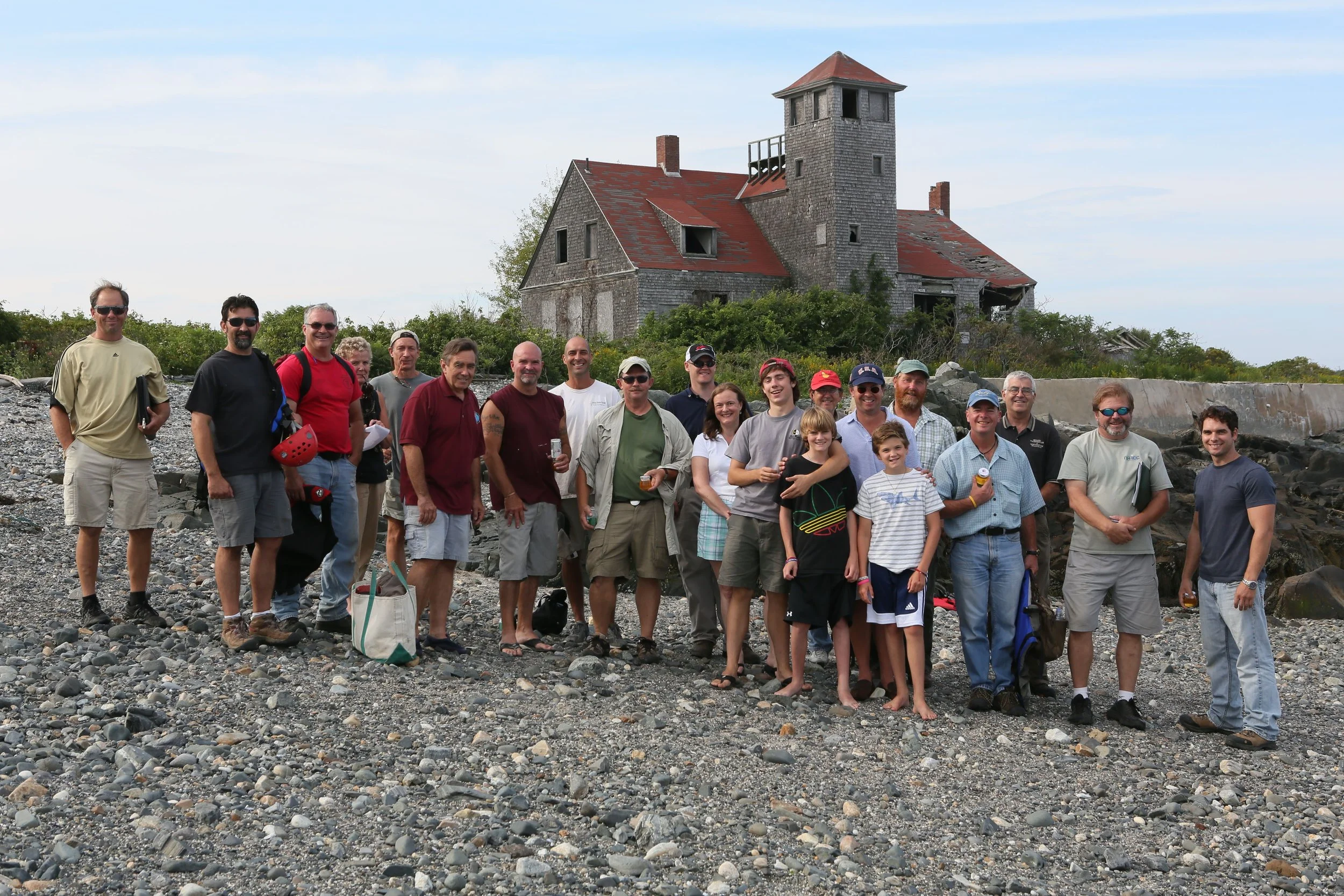
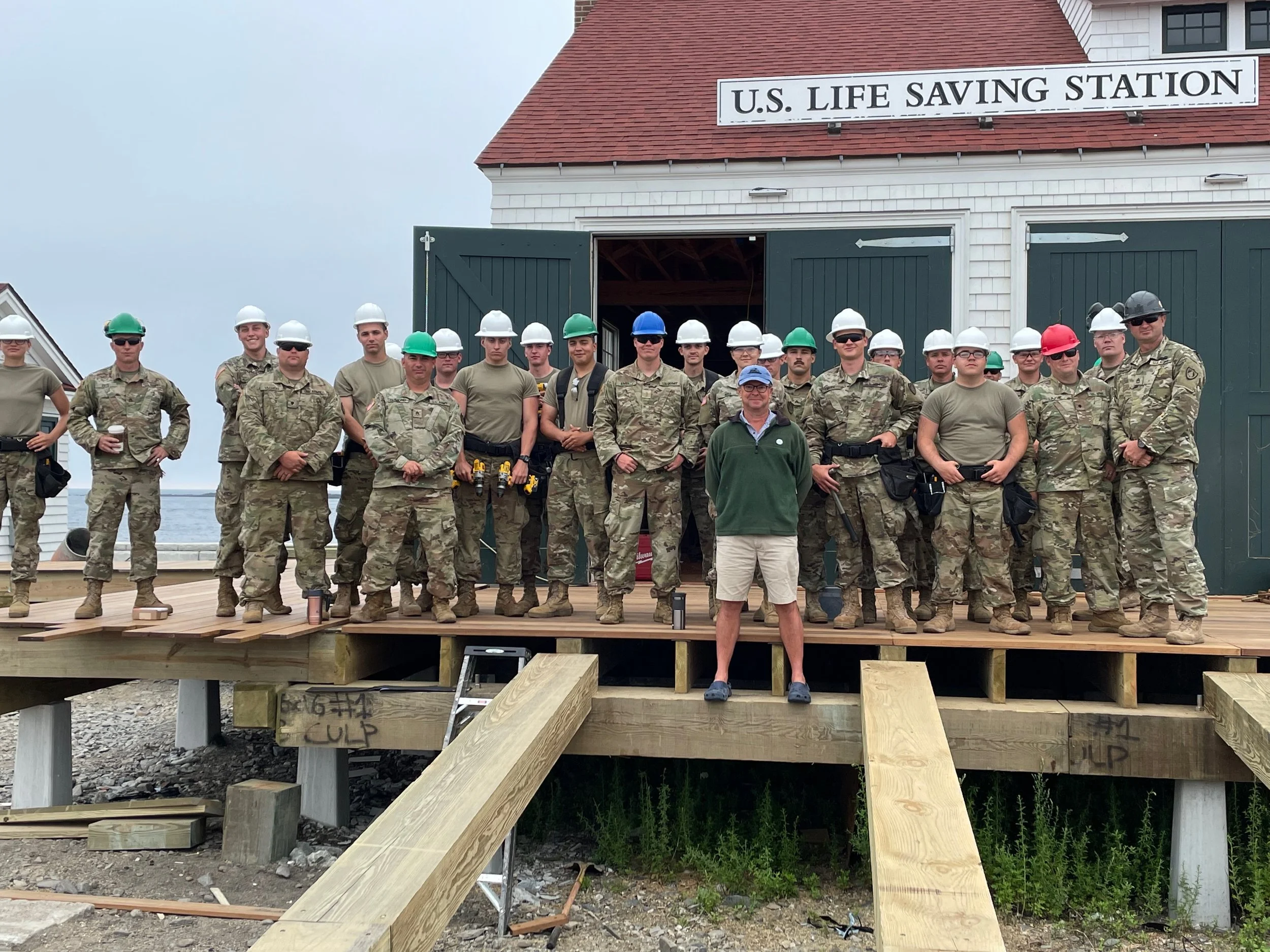
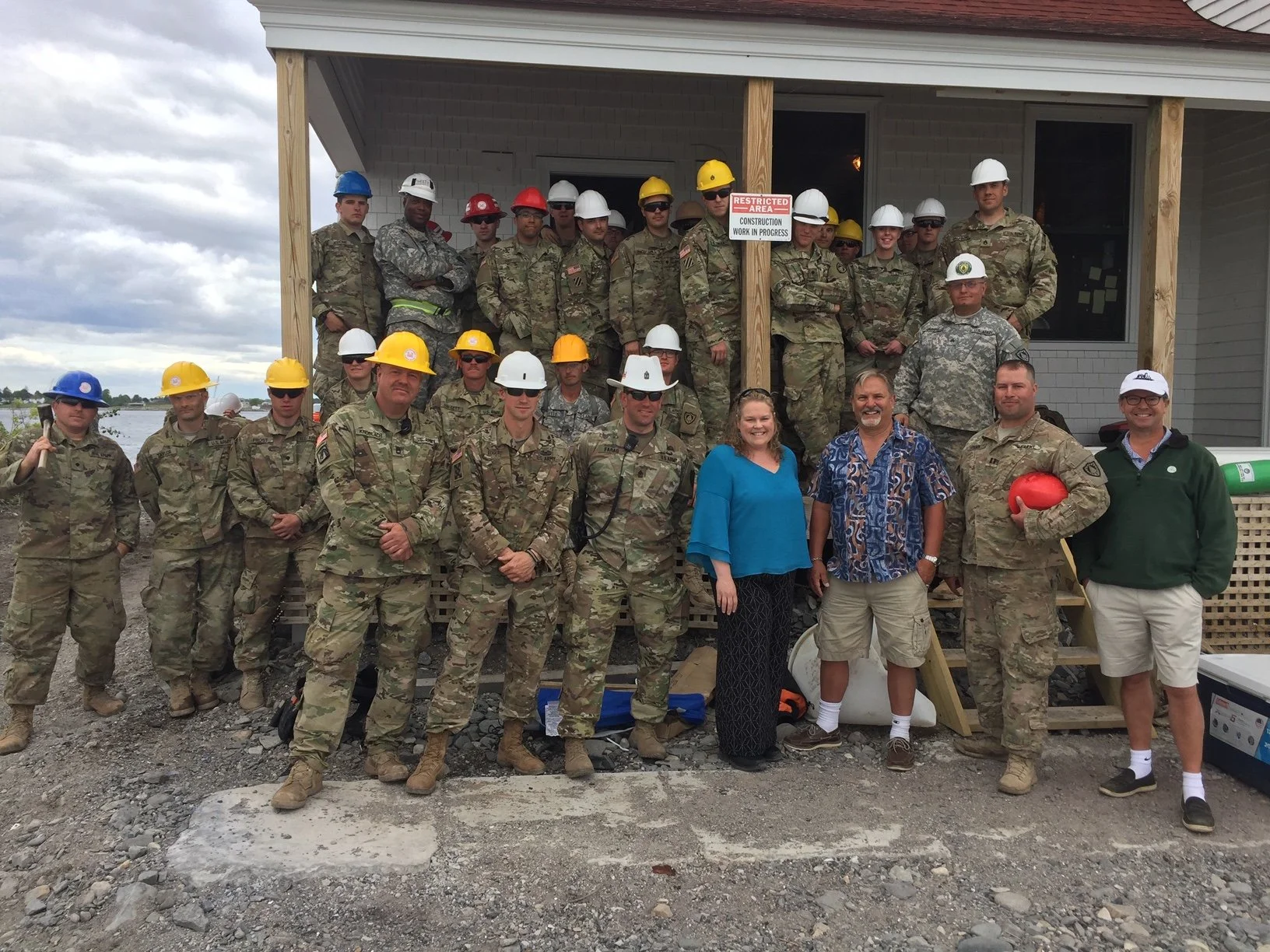
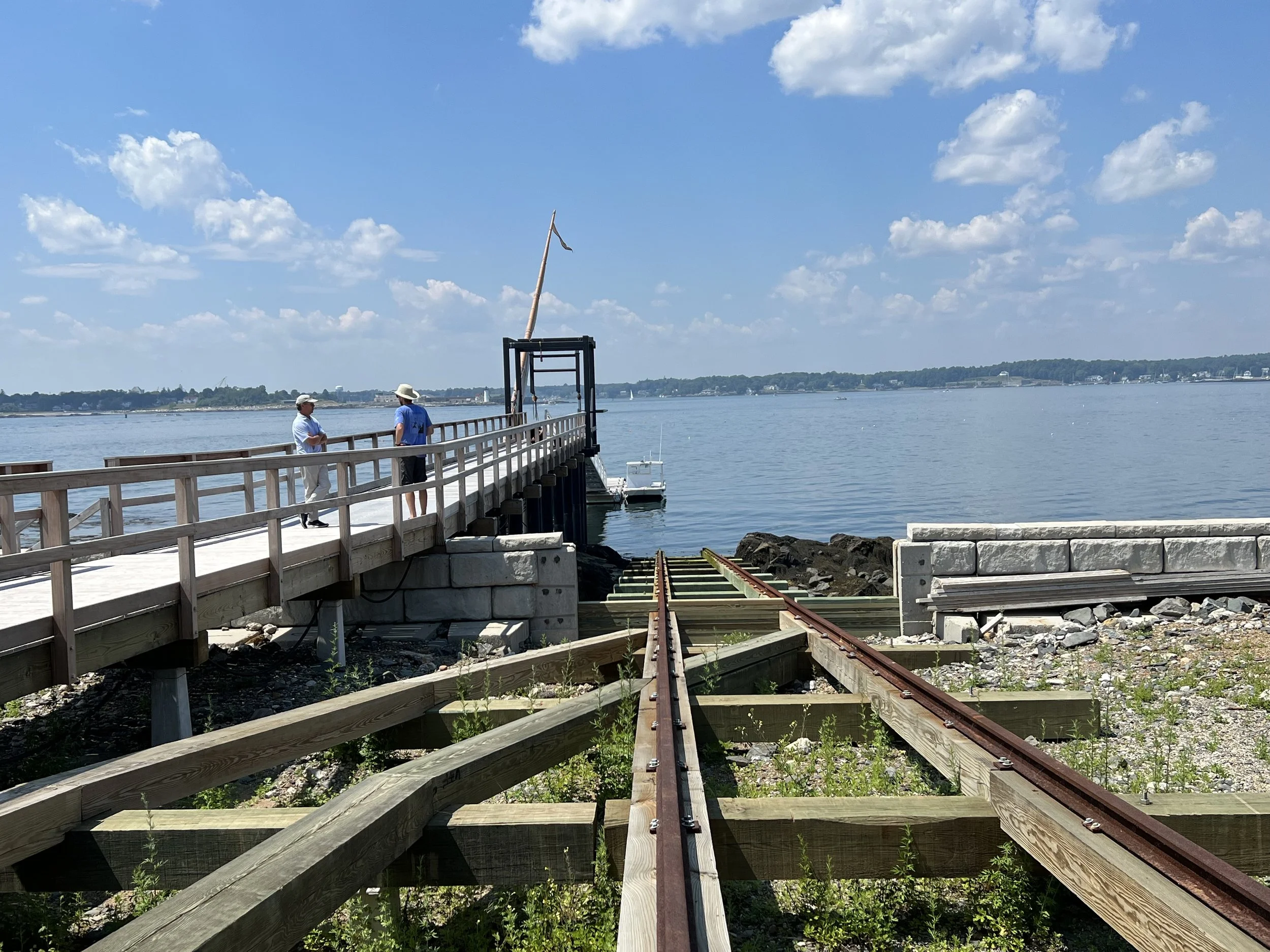
In a dynamic move, WILSSA quite literally called up the National Guard. As part of its “Innovative Readiness Training,” the Maine Army National Guard brought 100+ soldiers to rebuild the sea walls and the station’s shed, construct an accessibility ramp, and install temporary electrical and plumbing systems. Pepperrell Cove Marine rebuilt the marine railway and constructed a new 120-foot pier to enhance public access.  

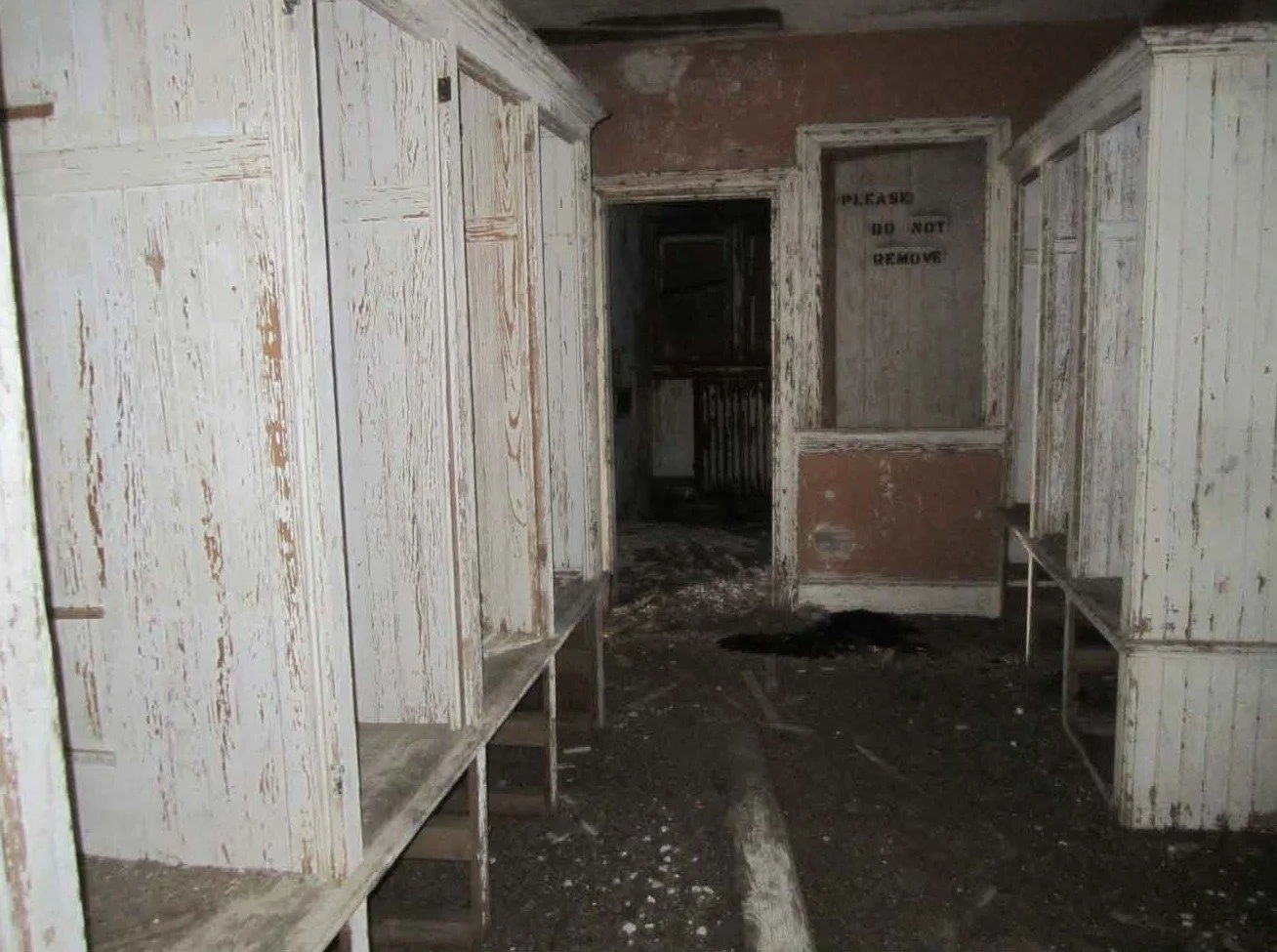
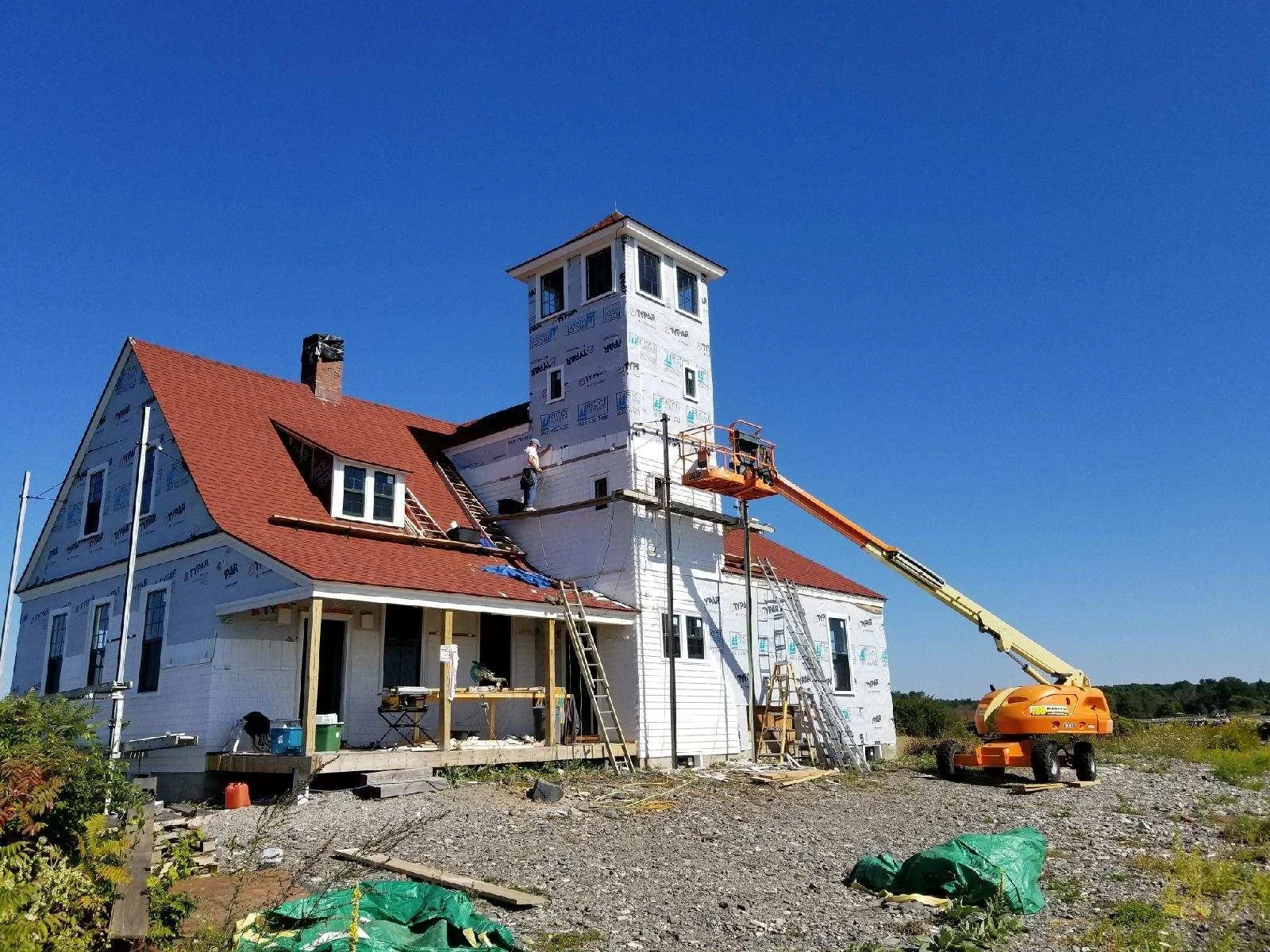
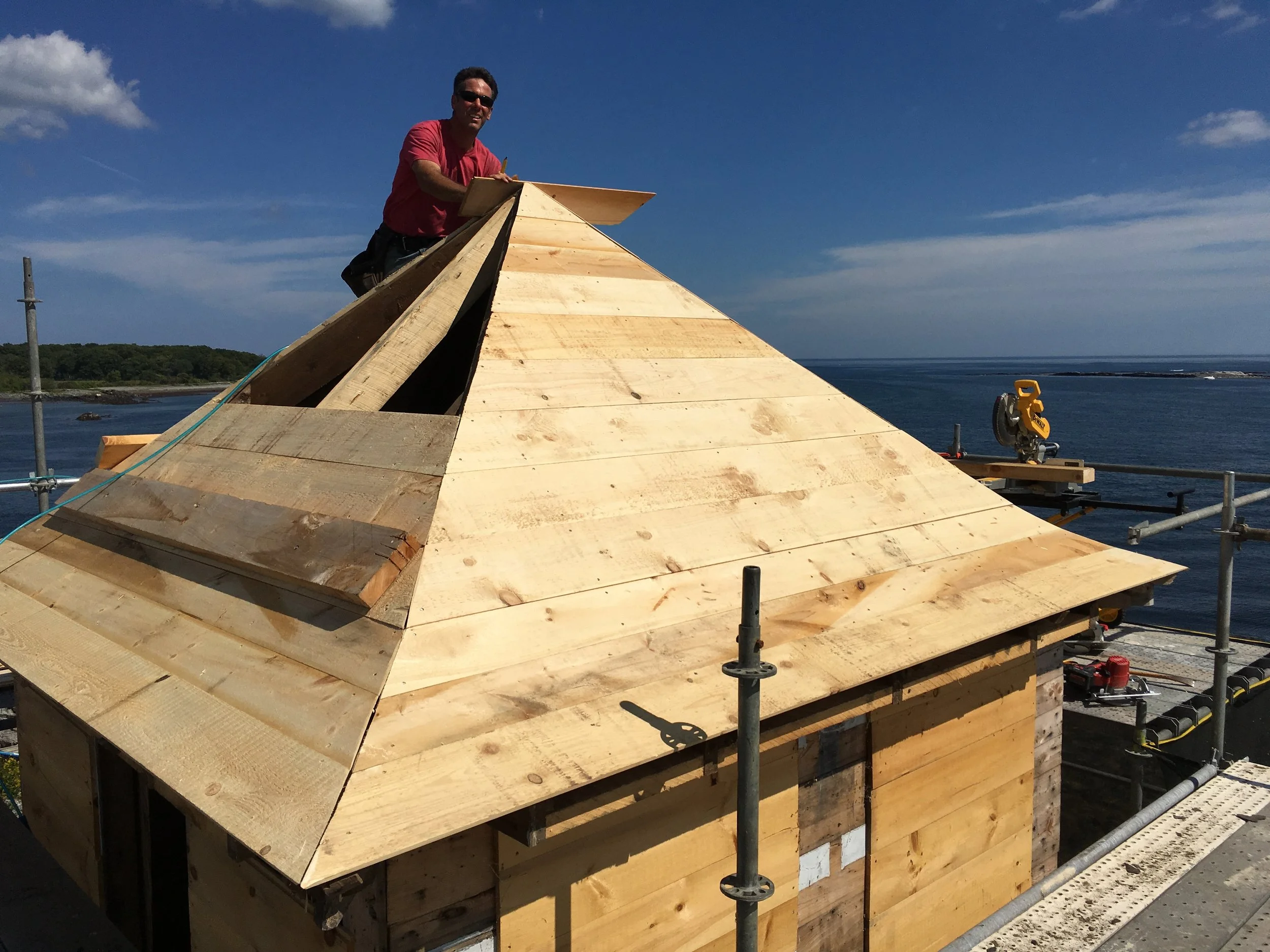
State and federal grants funded cleanup of asbestos, bird waste, and lead paint. Nearly 100 tons of material was removed including original features like trim, beadboard, and flooring that would be either abated and reinstalled or used as patterns to fabricate replicas. Berwick-based Preservation Timber Framing followed behind the clean-up to repair the structure, install a new roof, and secure the building envelope with shingle siding, doors, and hurricane-proof windows. 

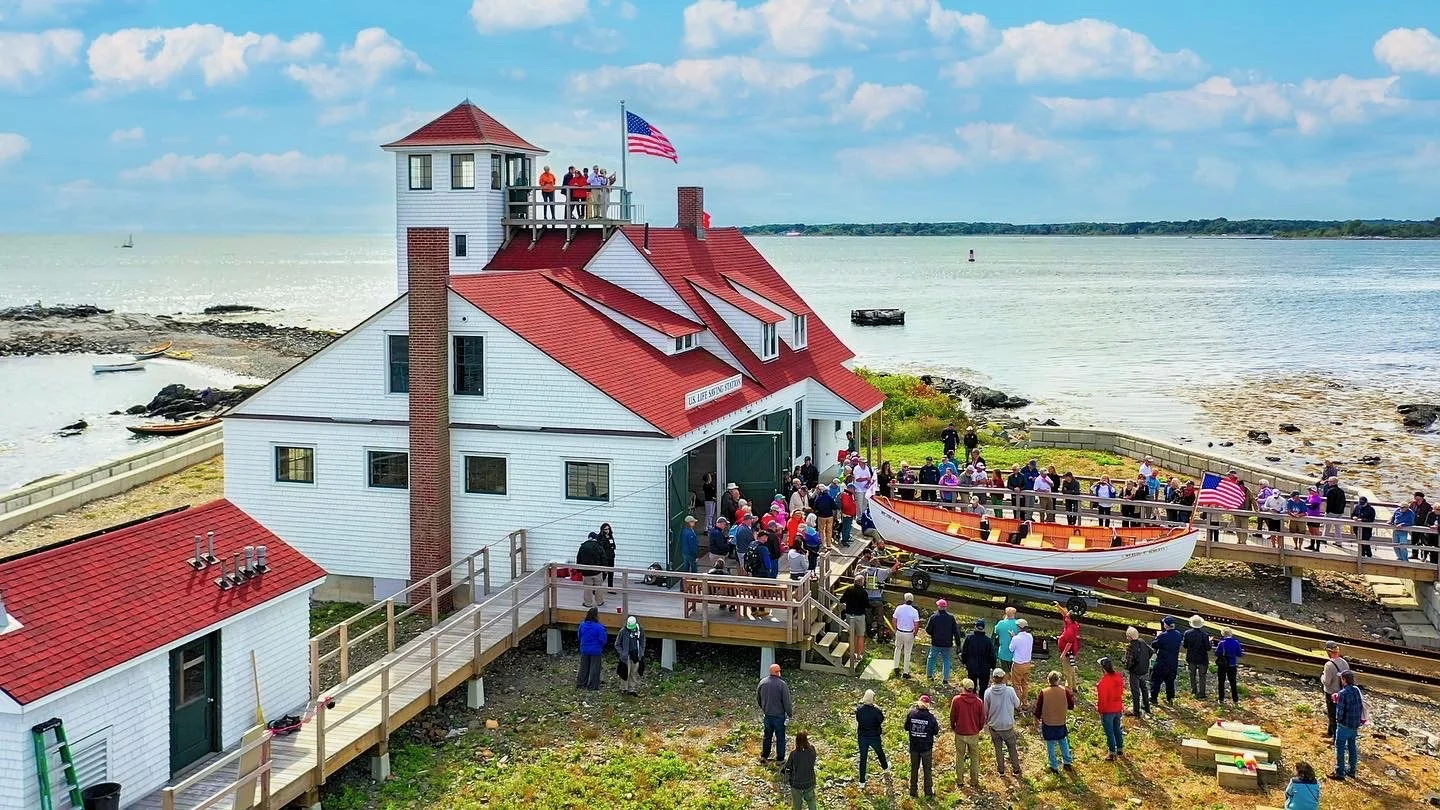
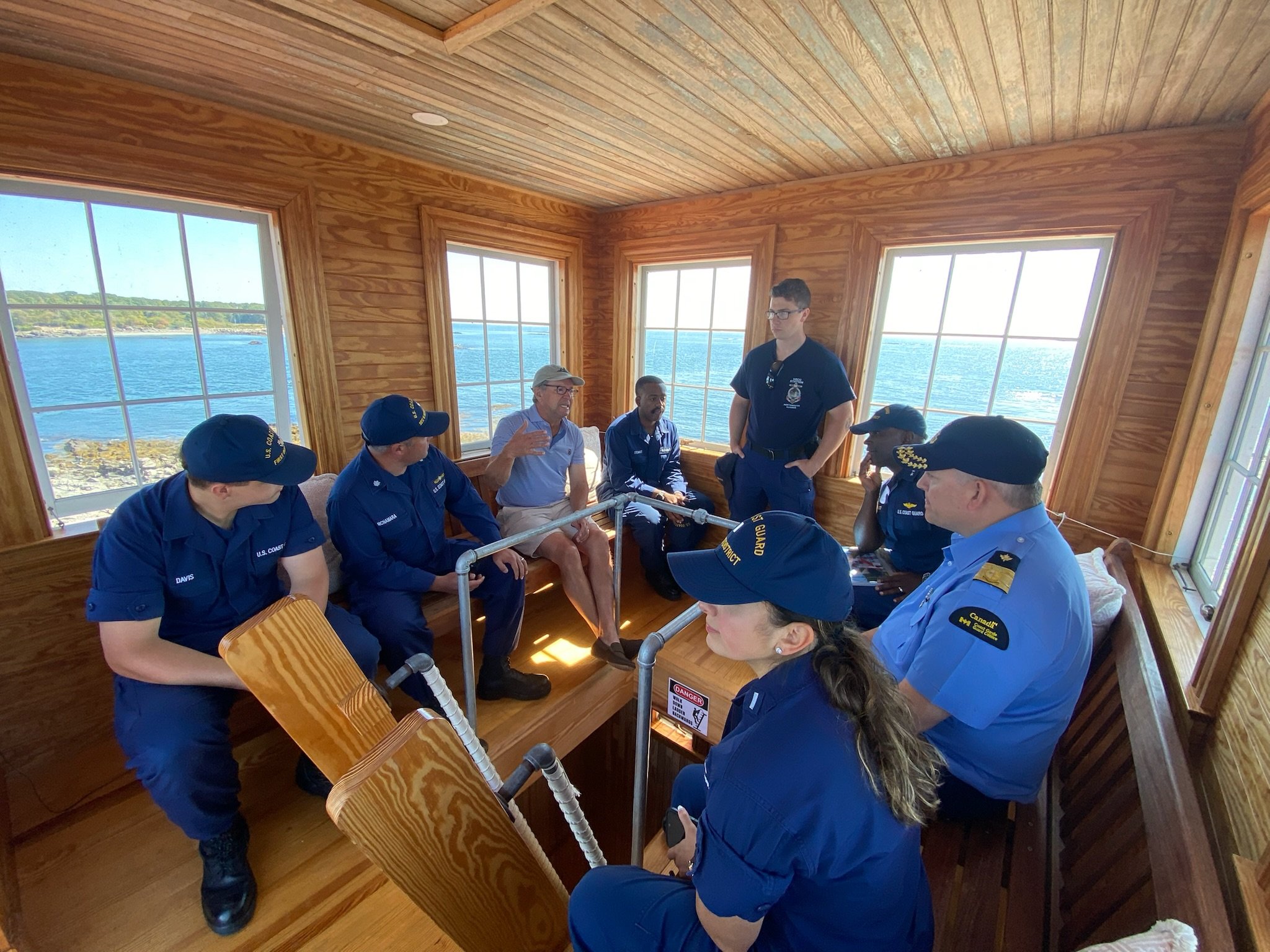
Careful restoration of the interior included the return of salvaged and replicated woodwork, new plaster walls, and beautifully reconstructed tower stairs by Roe G. Cole. The project included rebuilding of a rare eight-oared rescue boat from the 1930s, called the Mervin Roberts, that now puts the rebuilt marine railway back in use! 

The project would not have been possible without Samuel Reid, the President of WILSSA. Sam led with a smile, exhibiting pure determination and fortitude that resulted in thoughtful planning, effective partnerships, and to date, raising $7.2 million to make this project a reality. Calling on the legacy of the surfmen, WILSSA also pays it forward through its “Helping Others, Then and Now” initiative that has raised $150,000 in support of other charities. 

The museum opened in August 2024, offering a range of educational programming, space for corporate events, and even overnight stays! 

Project Participants:

  • Wood Island Life Saving Association

  • Preservation Timber Framing

  • Roe G. Cole Custom Design and Construction

  • Pepperrell Cove Marine

  • Maine Department of Environmental Protection

  • Maine Historic Preservation Commission

  • Maine Department of Economic and Community Development

  • National Park Service

  • Environmental Protection Agency

  • United States Coast Guard

  • United States Navy

  • Maine Army National Guard

  • Town Of Kittery

  • Portsmouth Herald

Photo Credits: Wood Island Life Saving Association, Jim White  

The Tiller Project, North Anson

Maine has an abundance of old homes in dire need of repair. The Tiller Project is the story of one of them and the two self-described “renovators long on enthusiasm and somewhat less long on expertise” who set out to fix it.  

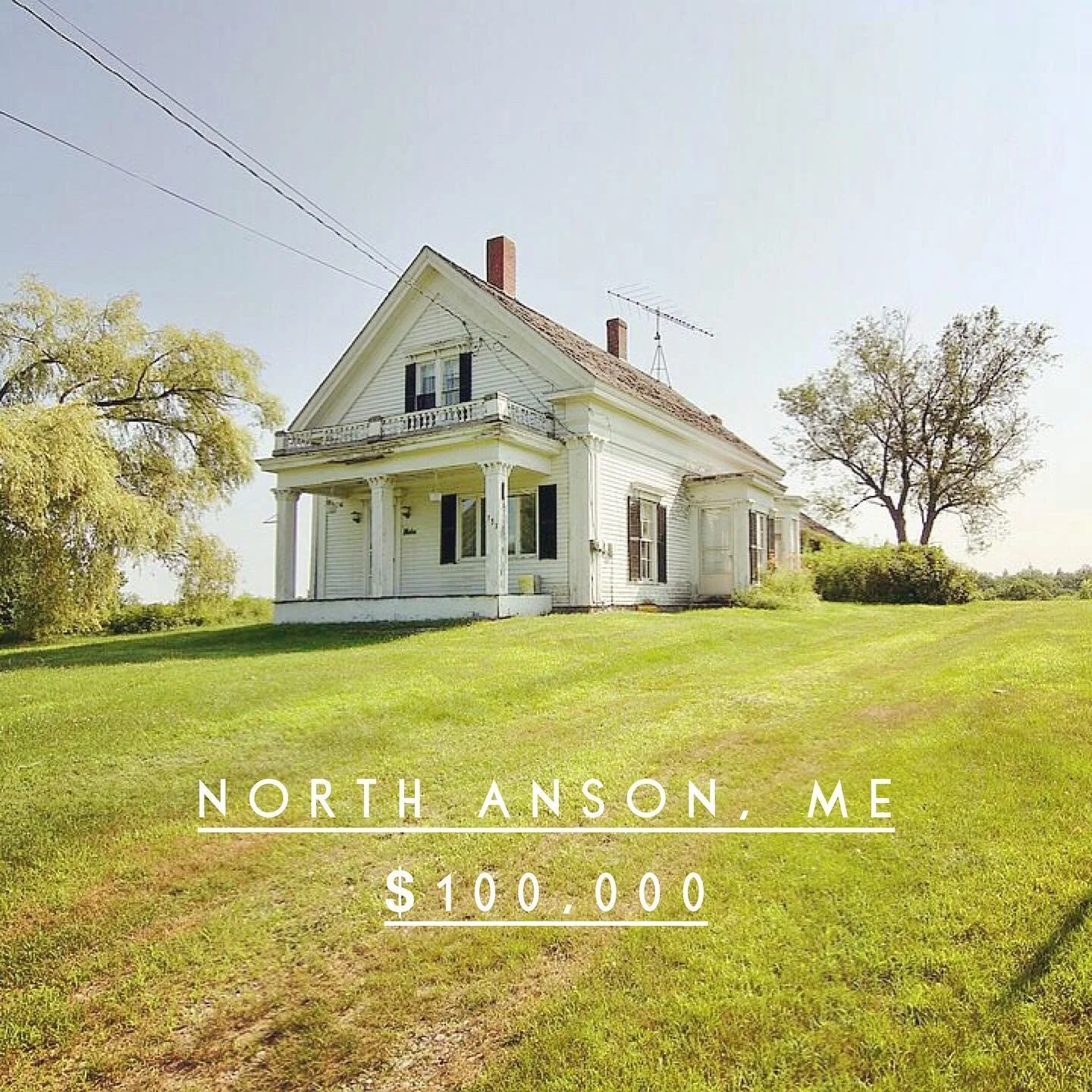
Hallie Flint Gilman and her husband Ned long sought a rural retreat from their urban life in Portland. Their search ended in 2019, when a farmhouse in North Anson featuring 10 acres along the Kennebec River slipped into their Instagram feed via the account, Cheap Old Houses.  

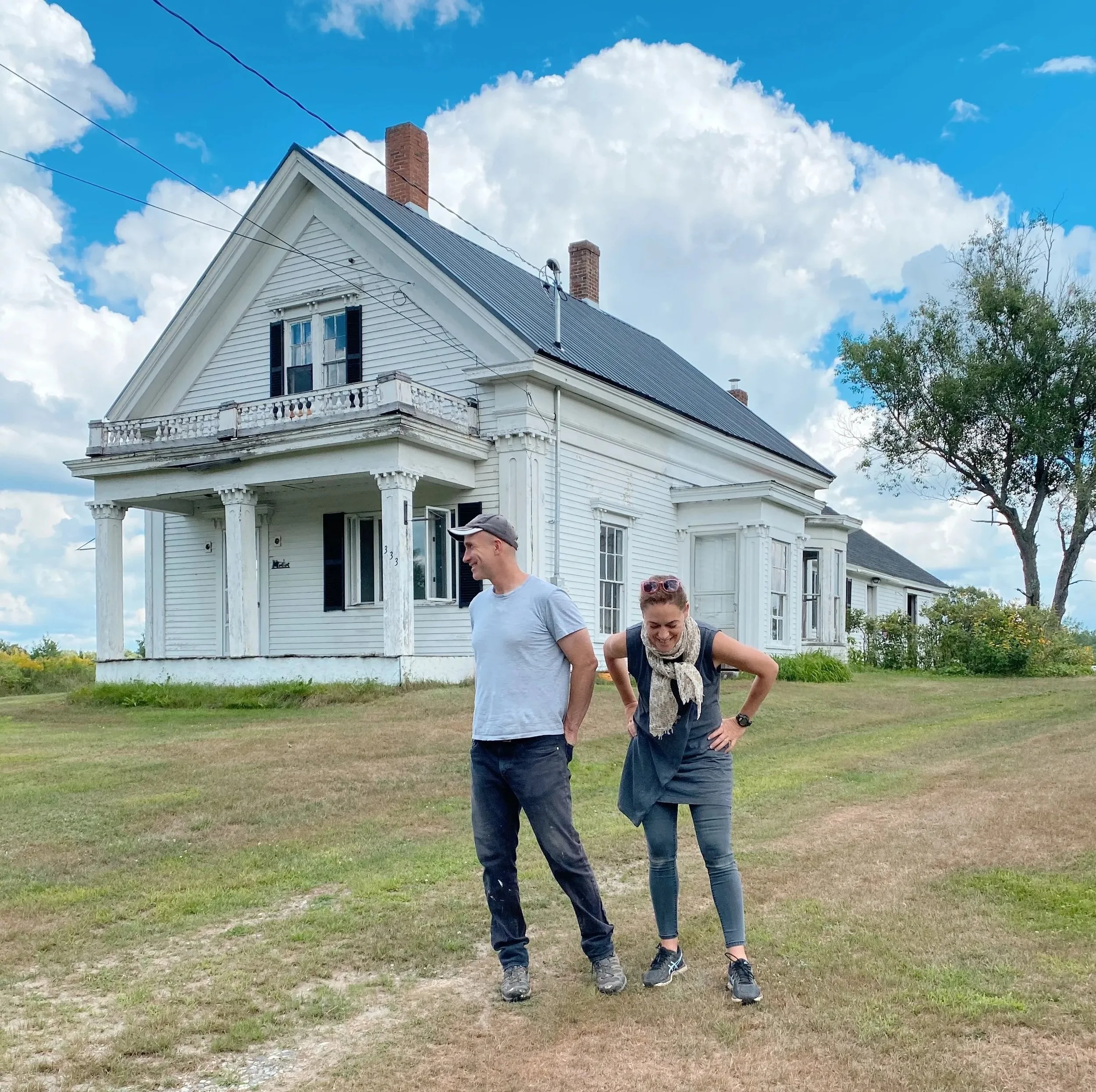
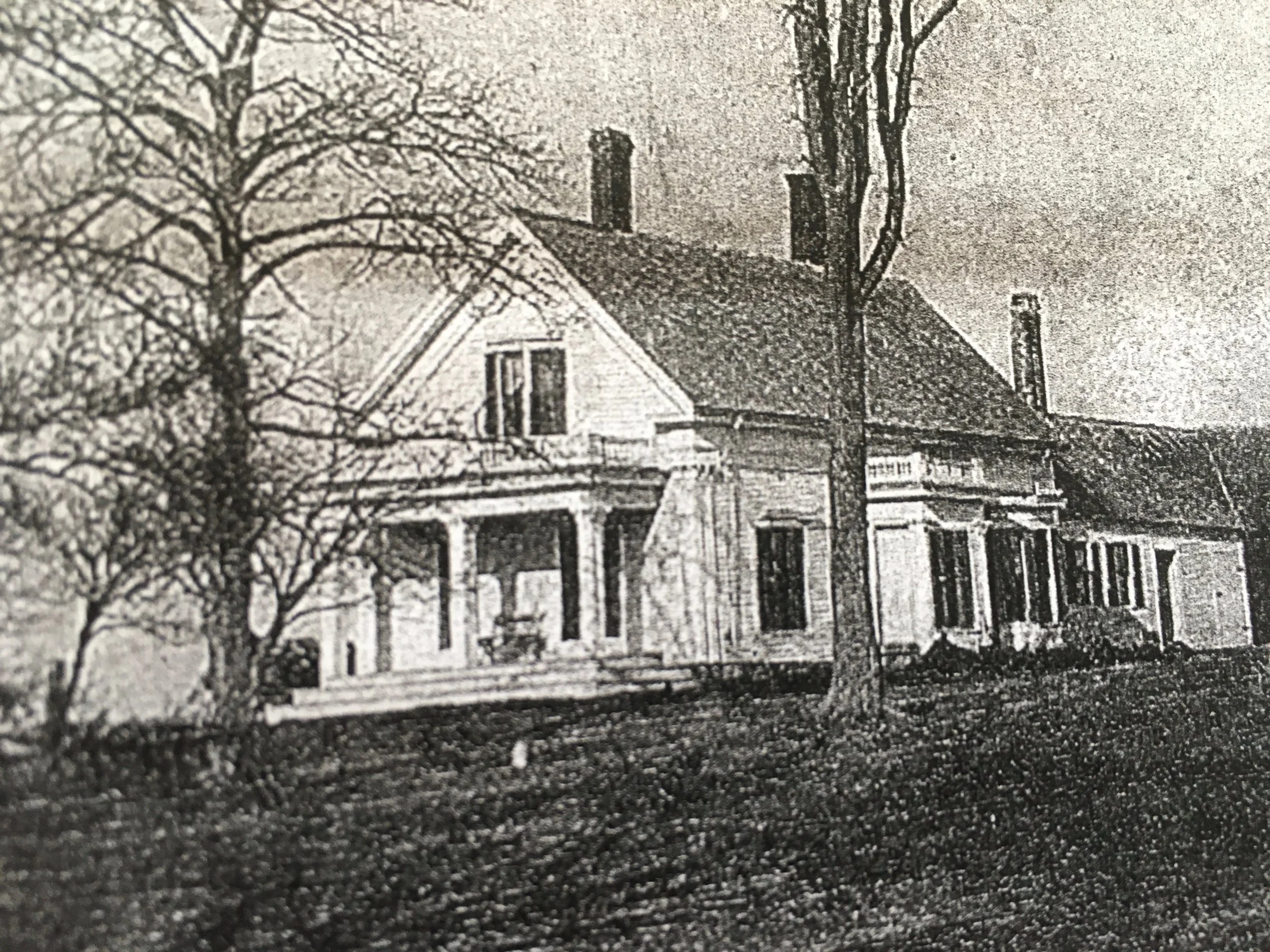
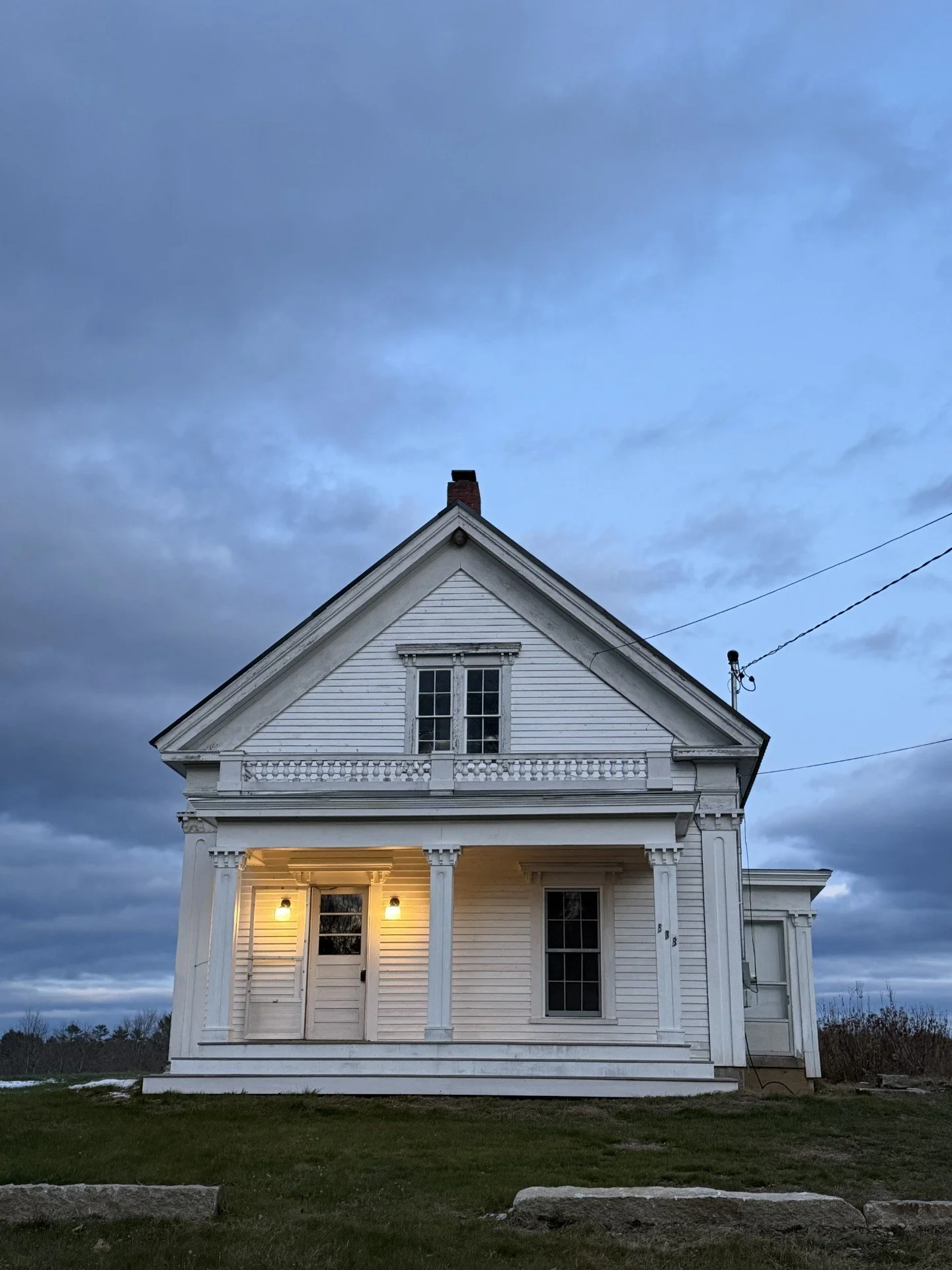
The circa 1856 Greek Revival-style farmhouse is locally referred to as “The Dunphy Place” or “Nana Tana’s,” and more formally called the N.W. Spaulding House. Partial credit for its construction is given to a young Nathan Weston Spaulding, who etched his name in the wallboards before heading west to seek gold in California. Joe and “Nana” Edna Tantish were the last owners, Edna outliving Joe and becoming a beloved character in town. 
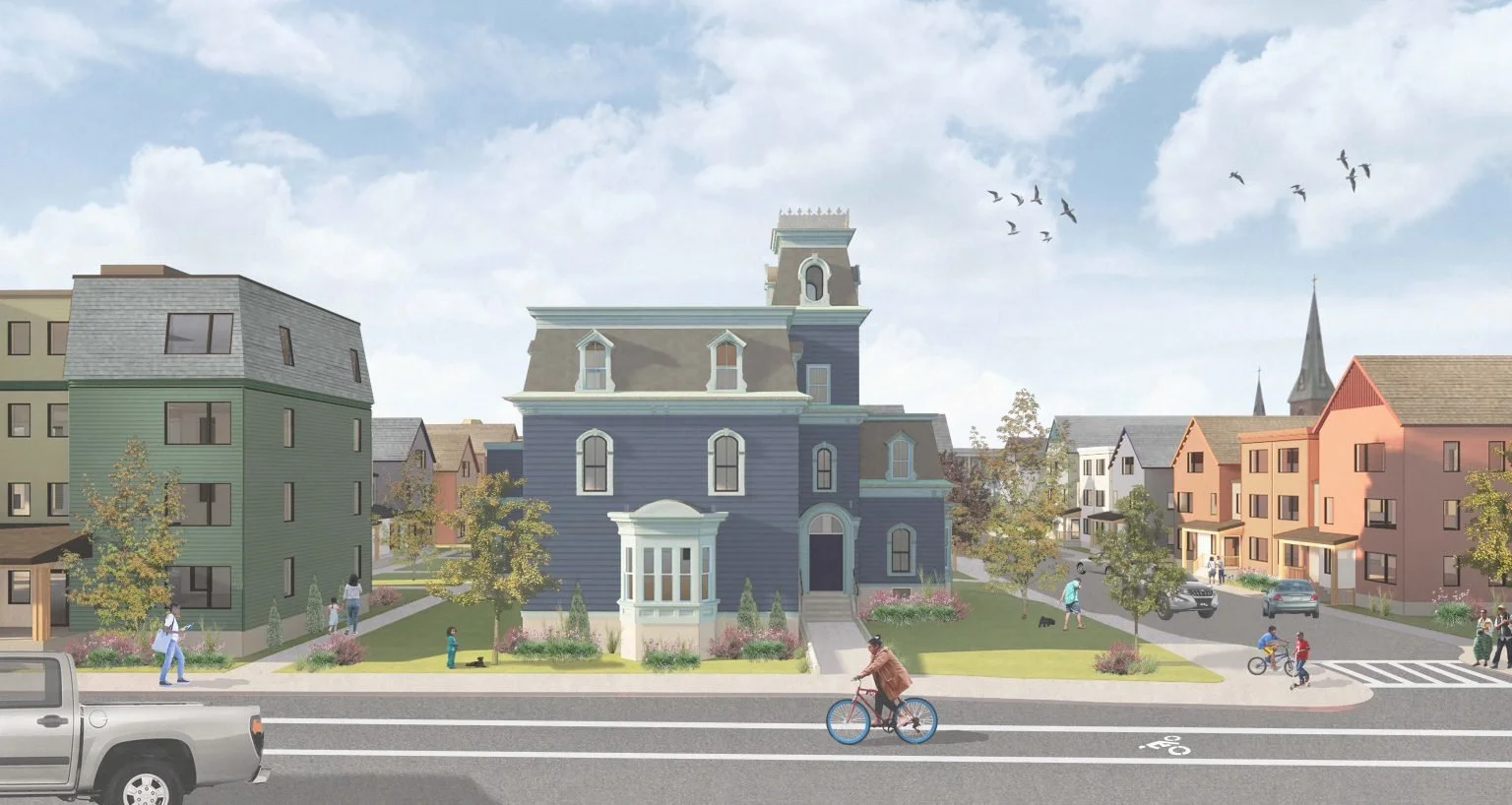
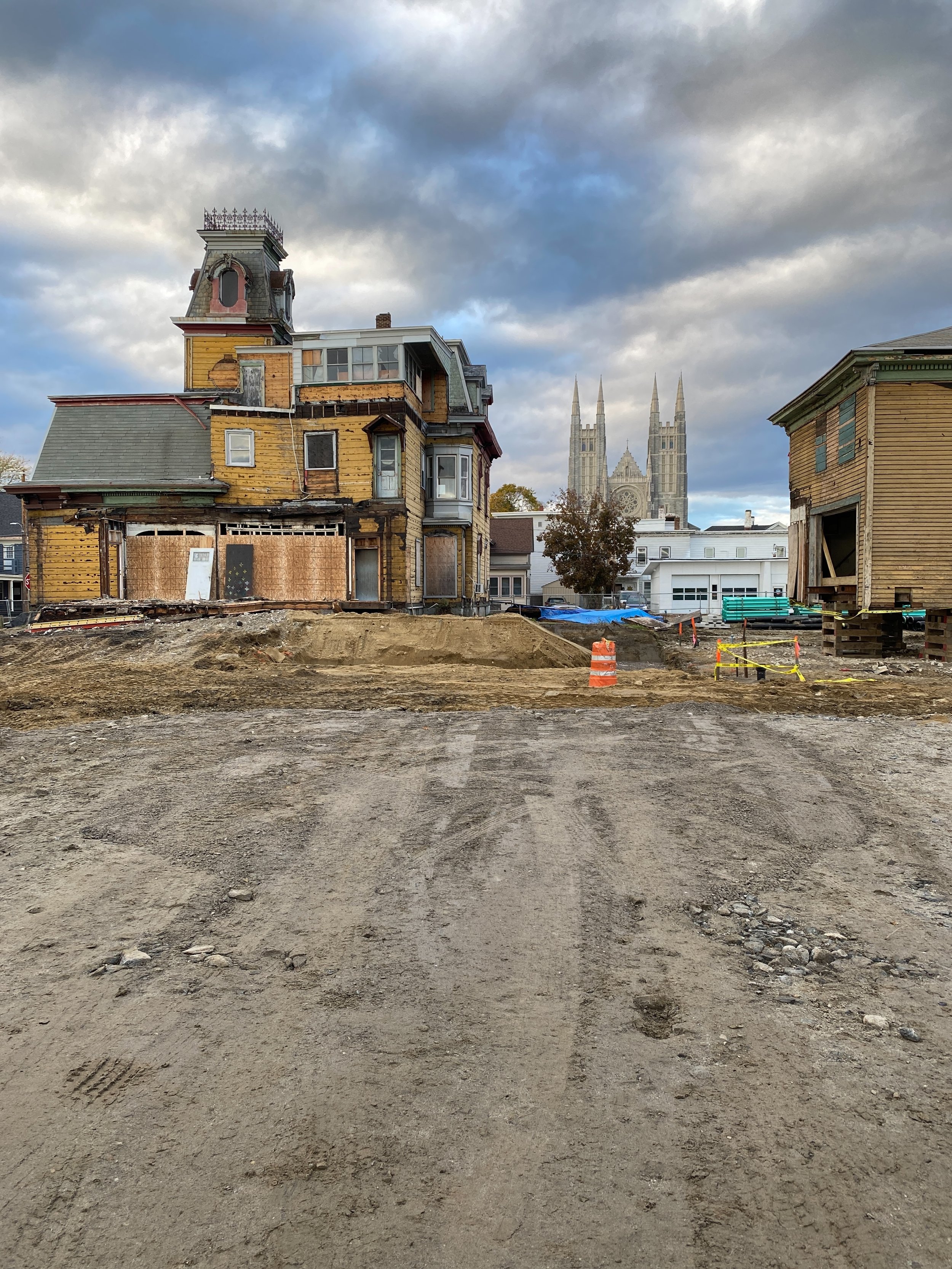
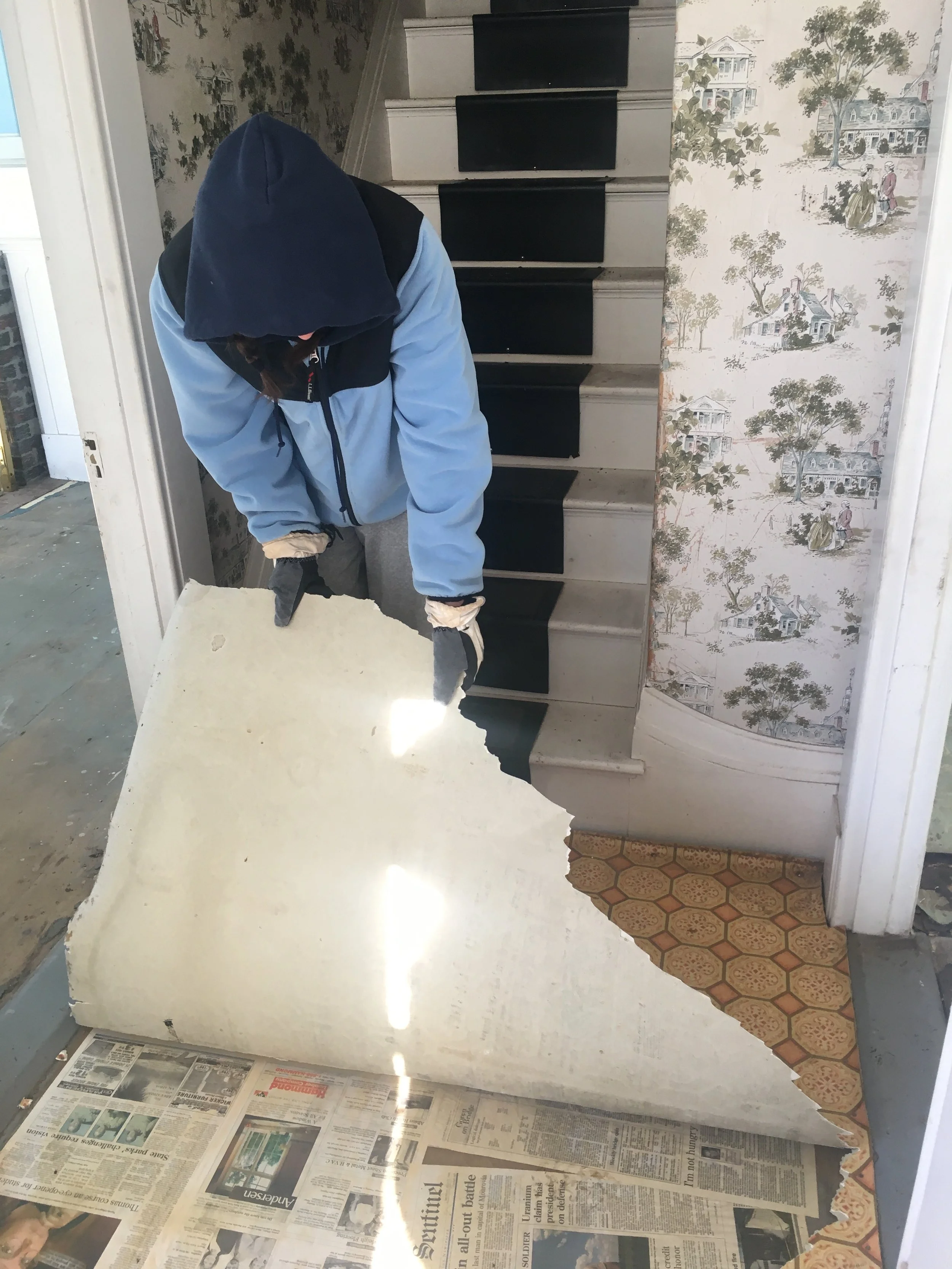
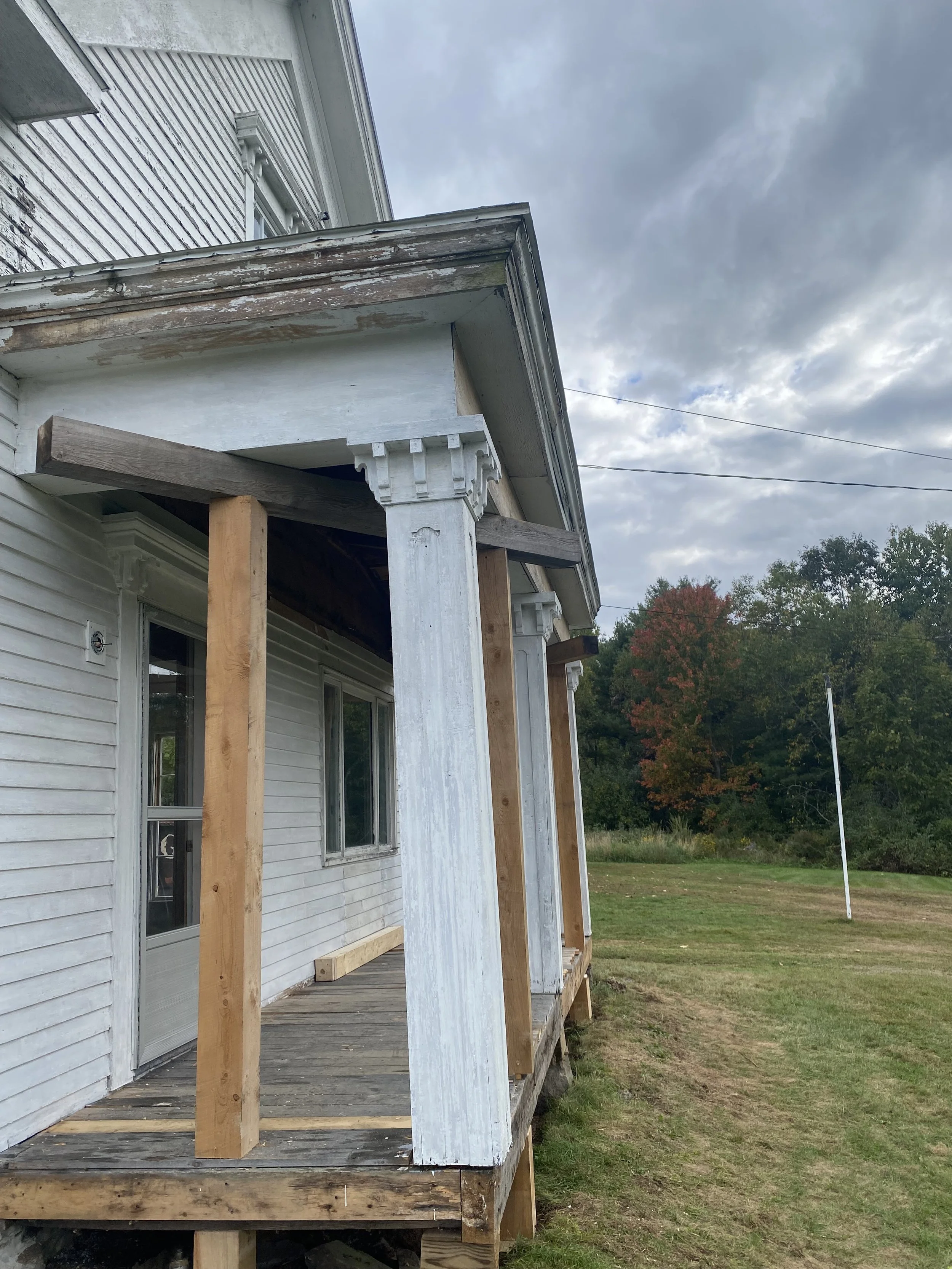
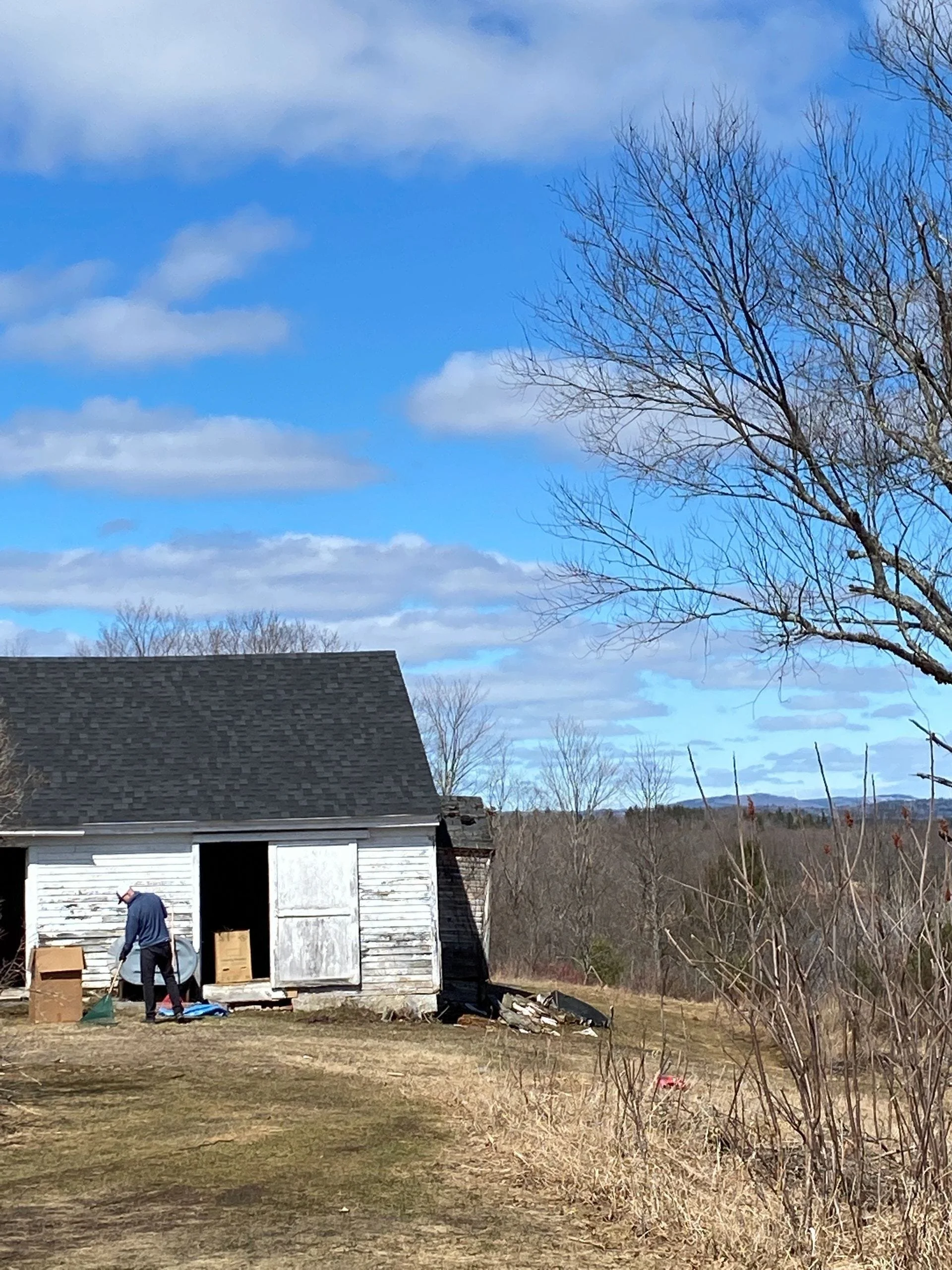
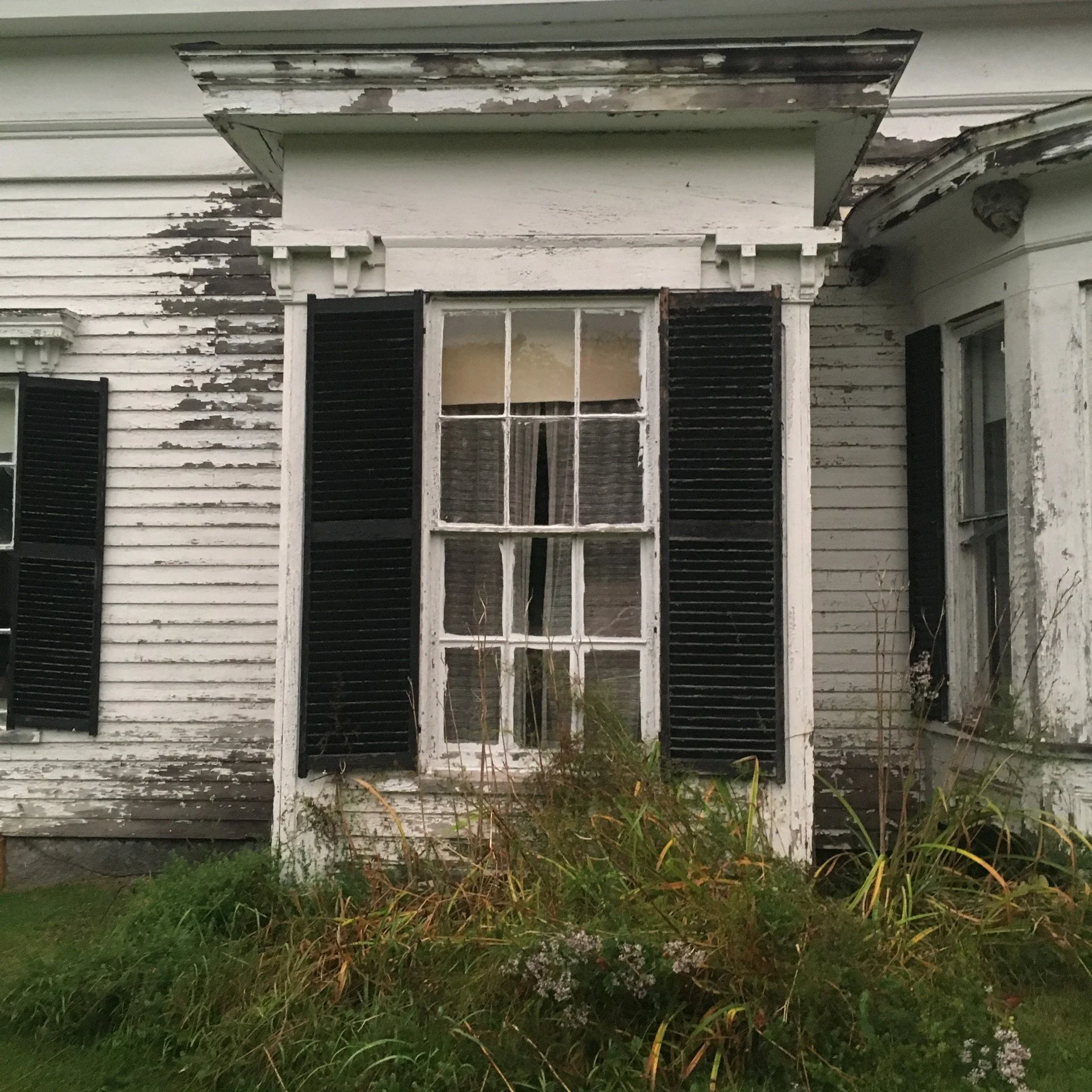
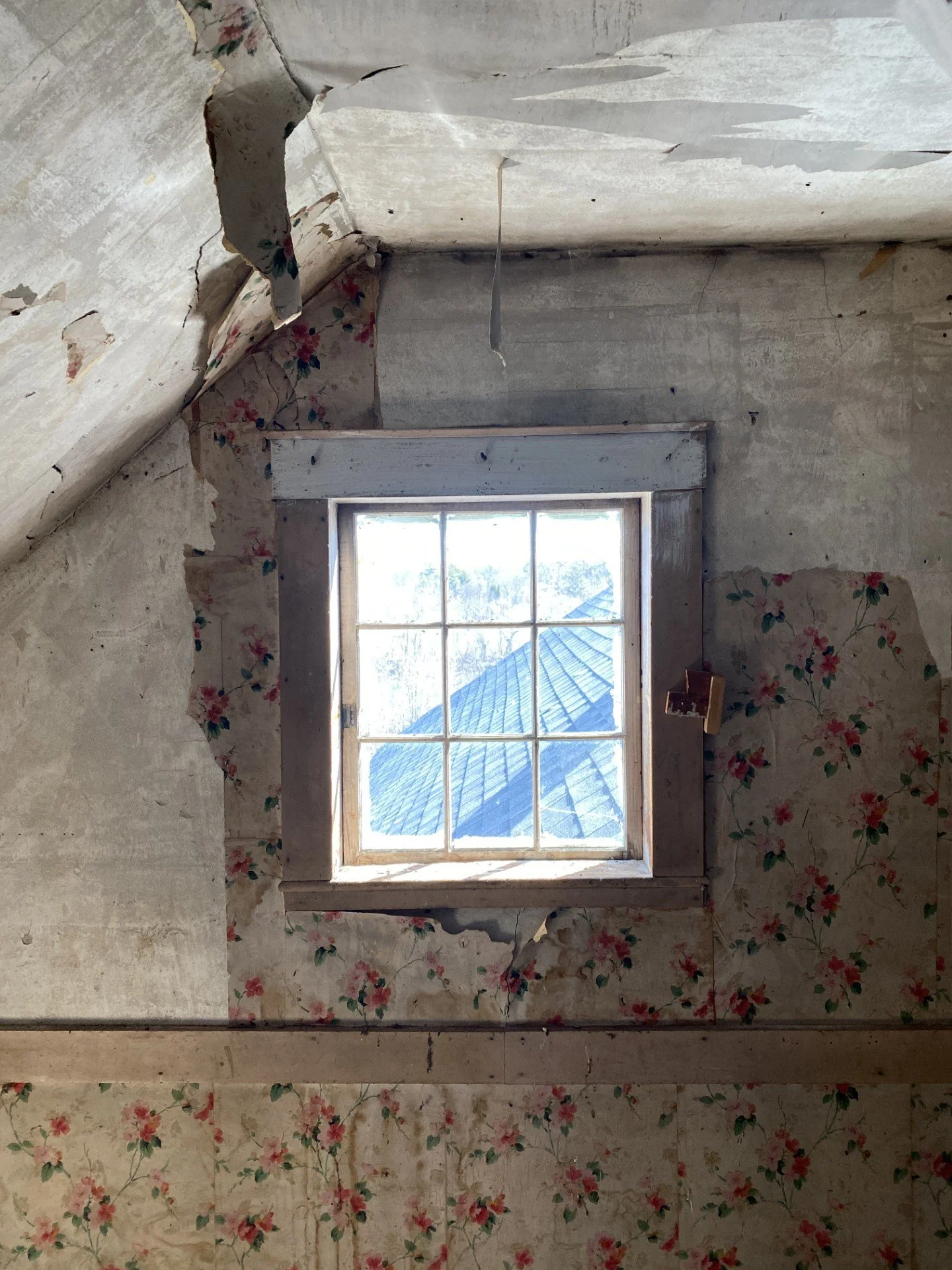
The house had been vacant for over a decade and had not been updated since the 1960s. The chimneys leaked, many of the windows were broken, and the wallpaper was peeling. The floors were covered in ancient linoleum, which they hoped concealed hardwood, but they waived inspection and crossed their fingers for the best. The front porch decking was so spongey they entered the house by traversing the center joist like it was a balance beam, dismounting through the front door.  
Hallie and Ned thought they would lure friends and family to visit and help with renovations, but then Covid struck. The pandemic benched their volunteer workforce and they ventured on mostly alone, documenting the slow progress in a series of newsletters called the Tiller Project, a nod to the tools they used to navigate the process. Between Substack and Instagram they gained 3,000 followers. Dispatches like “That Smell” and “Who Knows, Maybe May” exposed the surprises and uncertainty of opening up an old house, while others explored the stories of past residents and Nana’s famous Date Bars.   

From cleanout to buildout, reviving the farmstead became a labor of love. It also necessitated a horde of tradespeople who were quickly entranced by the spirit of the project. Ben Hitchcock and Élise Bolduc from general contractor and architectural design firm, Hitchcock & Co. immediately clicked with Hallie and Ned when they met in 2023. Together they developed a finish line to run towards.   

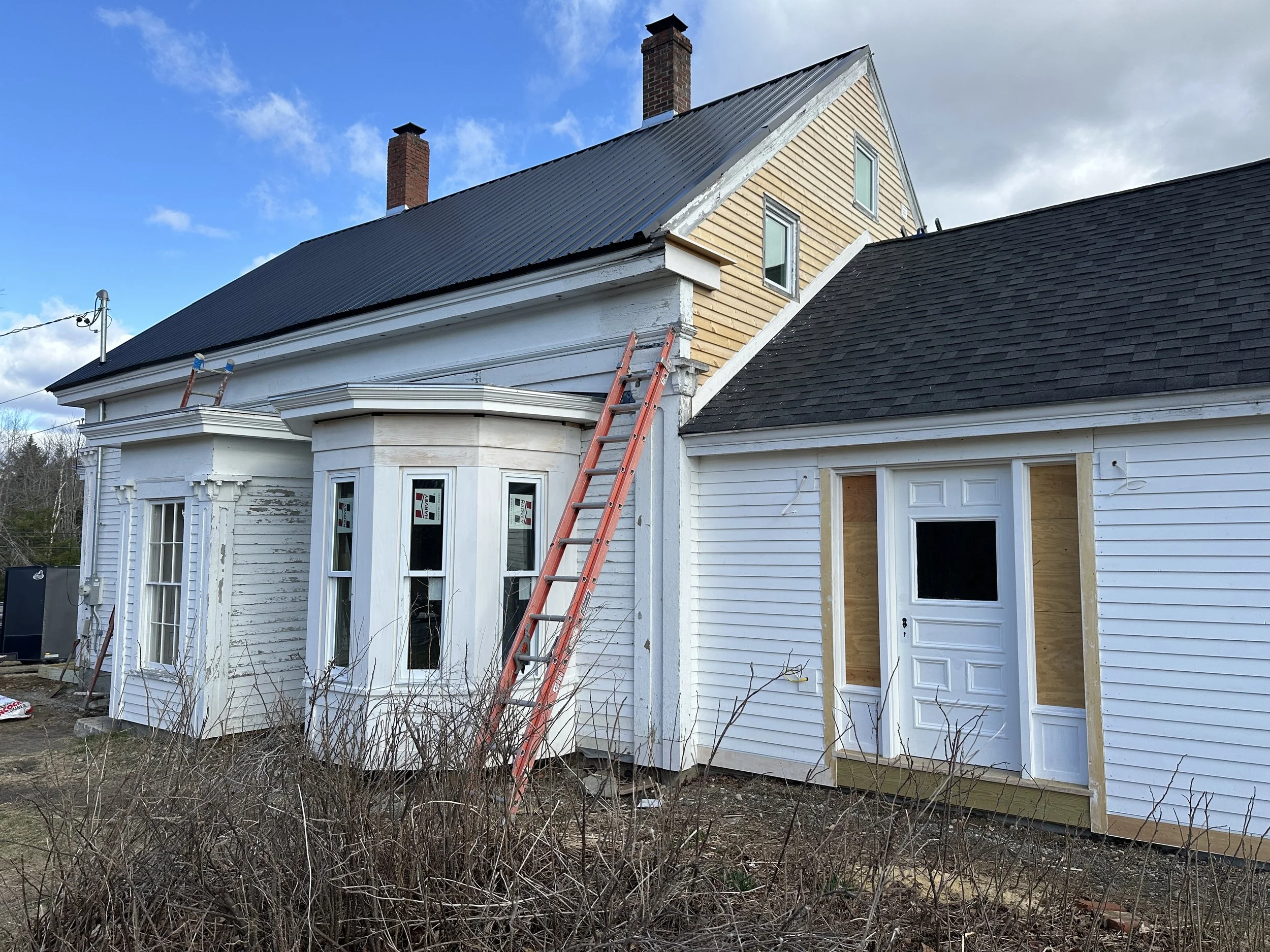
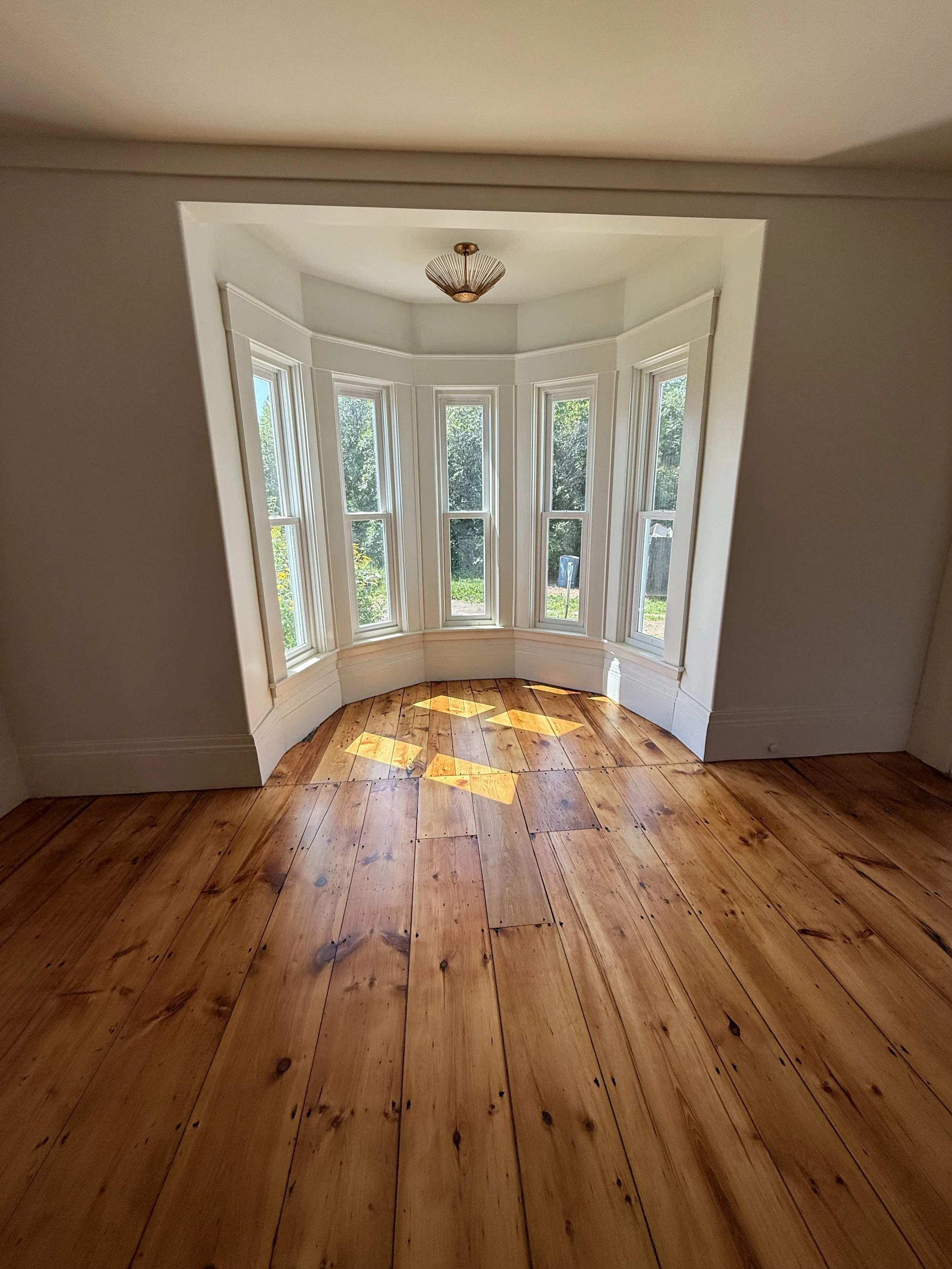
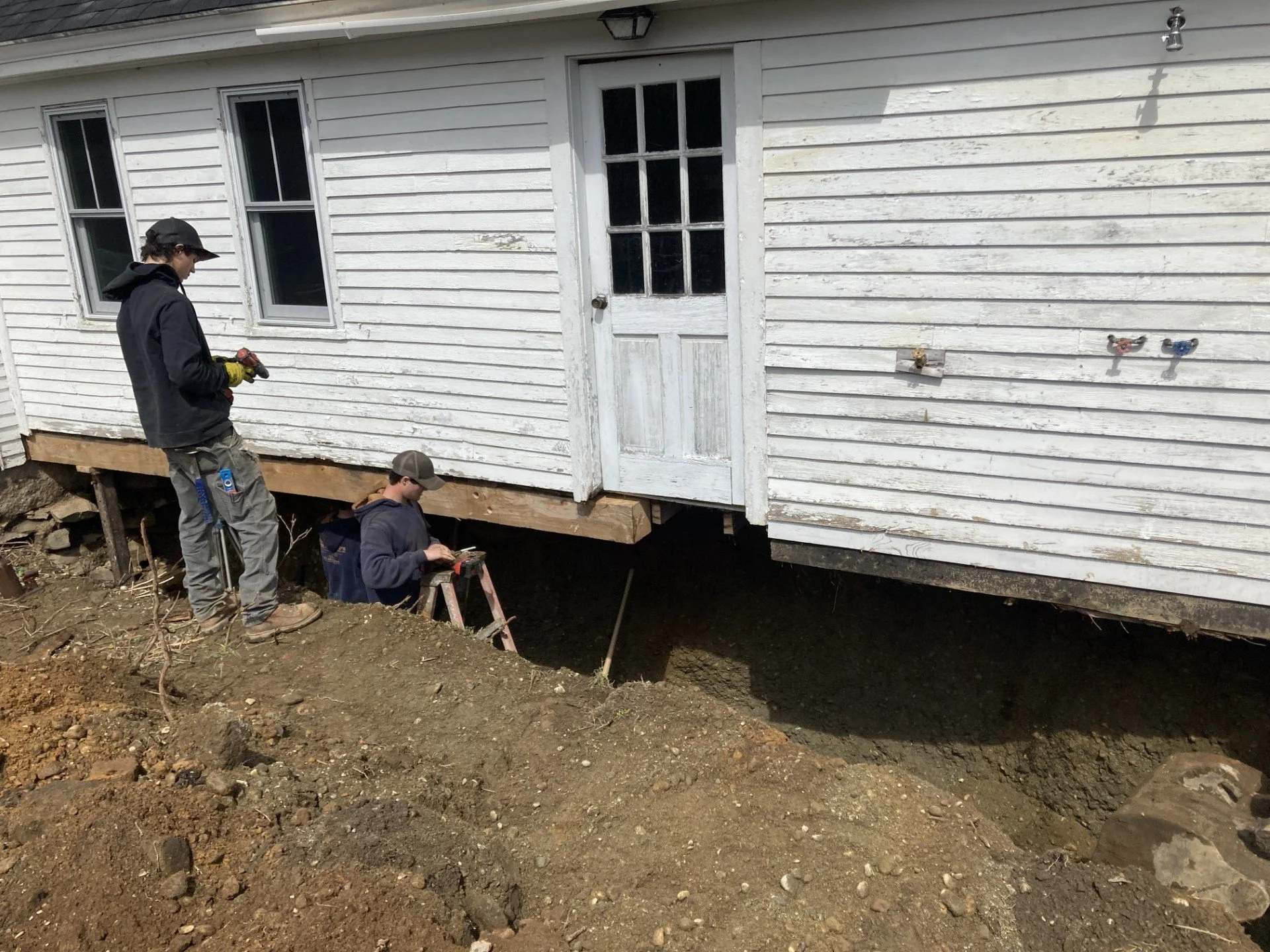
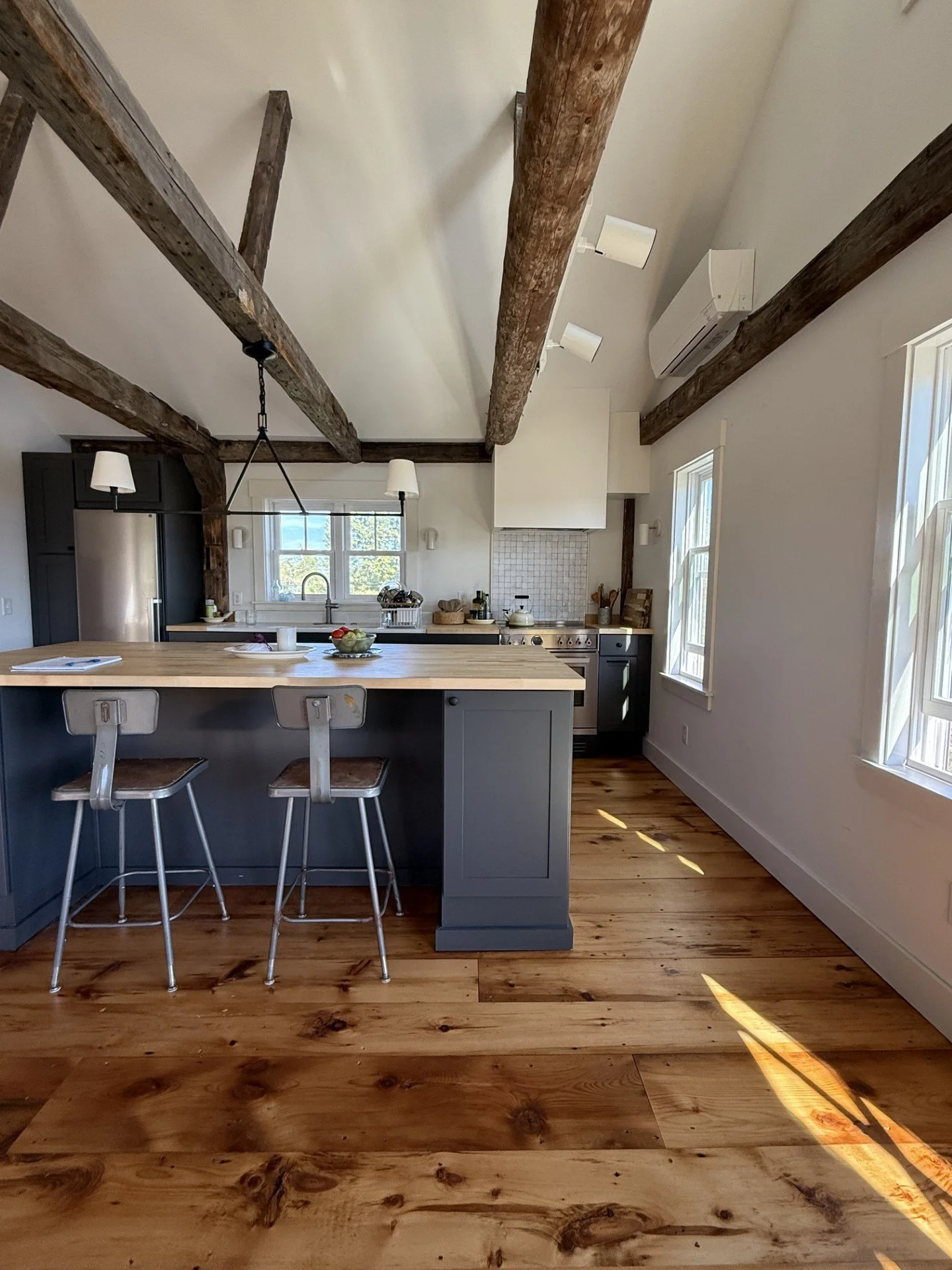
The priority list included a new roof, repair and replacement of siding, and restoration of chimneys. Wraparound steps and a replicated balustrade restored integral elements to the front portico, thanks in part to a family member who turned 50 wood spindles to replace those that had rotted. Historic windows were restored with assistance from Bagala Window Works, while the team tackled the never-ending punch list of restoring doors, hardware, trim, and wall plaster. Mushero’s Jacking & Moving and T&T Construction replaced failing floor joists in the house and set the ell on a new foundation. Reuse of the ell allowed for a modern kitchen and dining room with views of the river. Original beams were framed in with drywall by Paul LeMar and Falcon Flooring painstakingly refurbished the hardwood floors. Conversion of the attic space into a bedroom and bathroom added space for hosting guests. 

With the Tiller Project now habitable year-round, Hallie and Ned look forward to more time, community, and adventure in their beautiful corner of Maine.  

 Project Participants:

  • The Tiller Project

  • Hitchcock & Co

  • Bagala Window Works

  • Quality Electric

  • Mushero's Jacking & Moving

  • Drywall by Paul LeMar

  • Falcon Flooring Company

  • Partridge & Kids Construction

  • T&T Construction

  • Somerset Disposal

  • AB Heating Cooling & Electrical

  • JMM Plumbing

Photo Credits: The Tiller Project, Hitchcock & Co. 

Carla Haskell, Ellsworth

Carla M. Haskell attributes her early interest in old buildings to growing up in history-rich New England, a love of high school drafting classes, and the encouragement of family to pursue architecture and design. Despite this calling at a relatively young age, her passion remained in the background until after earning a degree from UMASS Amherst in 1982, marriage, and the arrival of her children. Carla finally pursued an architecture degree at what is now Boston Architectural College in 1999. Realizing her dream would take nine years of commuting from her new home in York County, Maine, and multiple internships with Maine-based architecture firms. In 2005, Carla co-founded Design Group Collaborative, which is now based in an adapted carriage house in Ellsworth. Her firm participates in the 1+ program, which challenges designers to dedicate 1% or more of working hours to nonprofits–but it’s clear that 1% is the floor. 

Carla’s work pushes people to see architecture and its embedded histories in a new light, embracing original materials and craftsmanship. And to not simply observe these old buildings, but to actively tend to them and keep them relevant for current and future generations. 

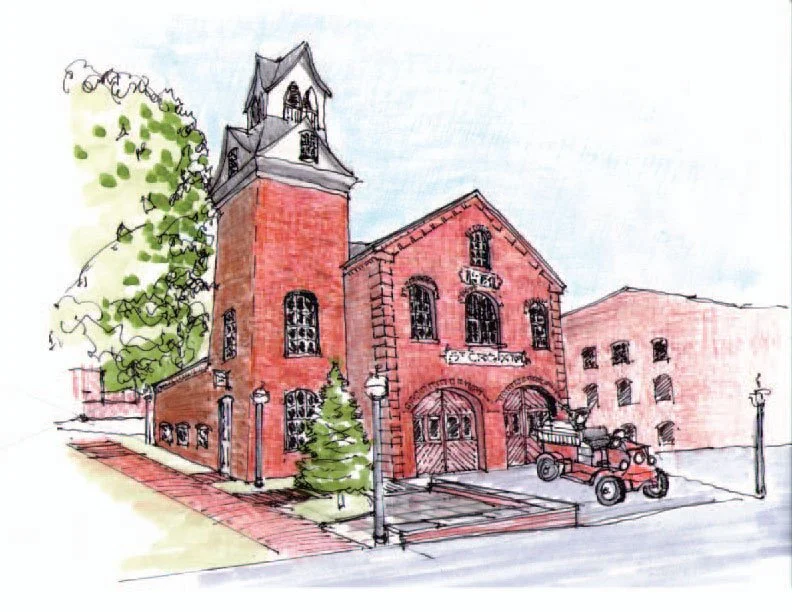
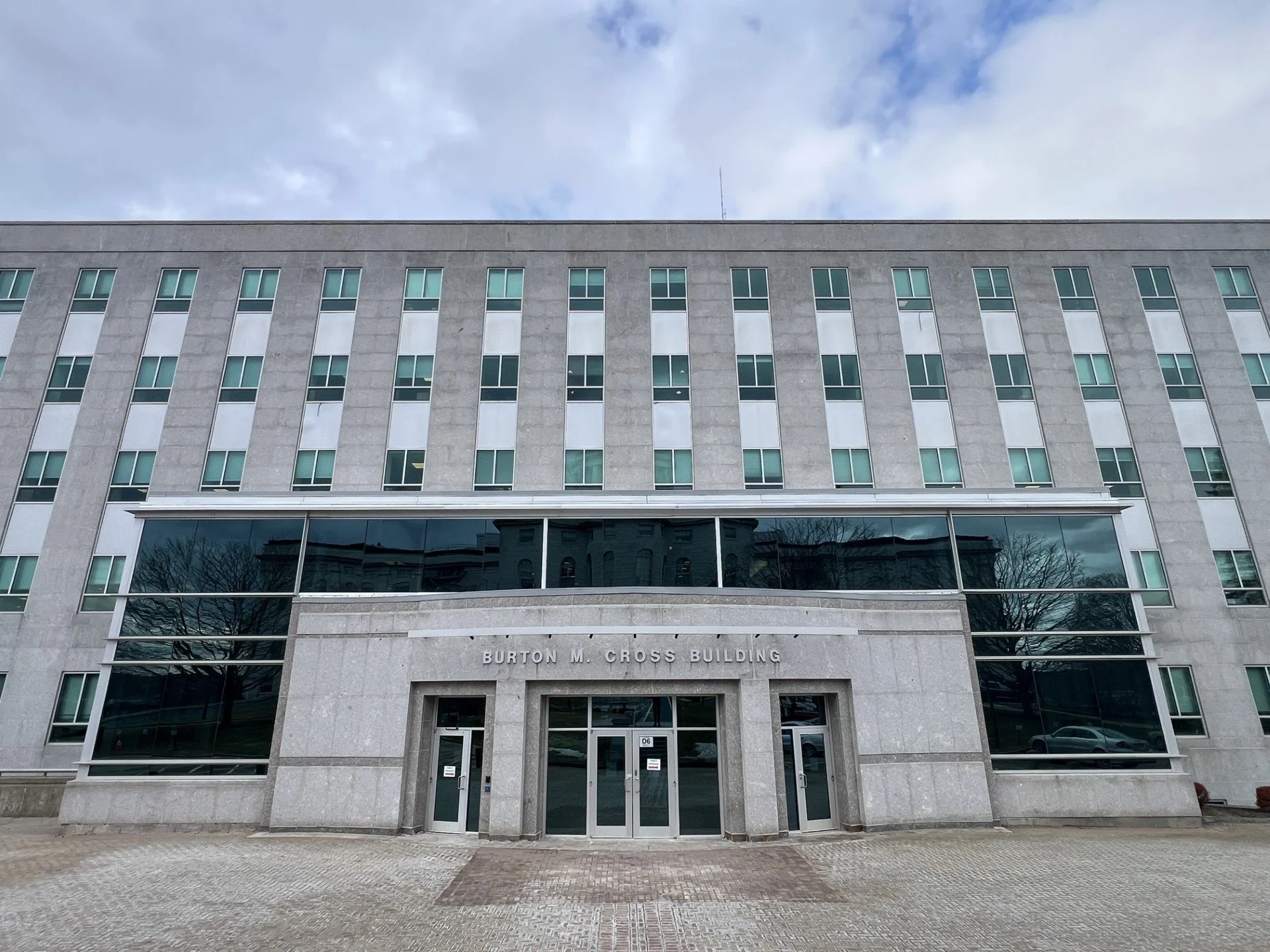
Carla’s professional imprint extends across Maine, including the St. Croix No. 1 Firehouse in Calais, the Burton M. Cross State Office Building in Augusta, York Middle School, and numerous projects closer to home on Mount Desert Island for Acadia National Park, Jackson Laboratory’s High Seas, Grey Rock Inn, and the Claremont Hotel. From 2012 to 2023, she served on the Advisory Committee for the Maine Community Foundation’s Belvedere Fund, which directed financial support to preservation projects statewide.  

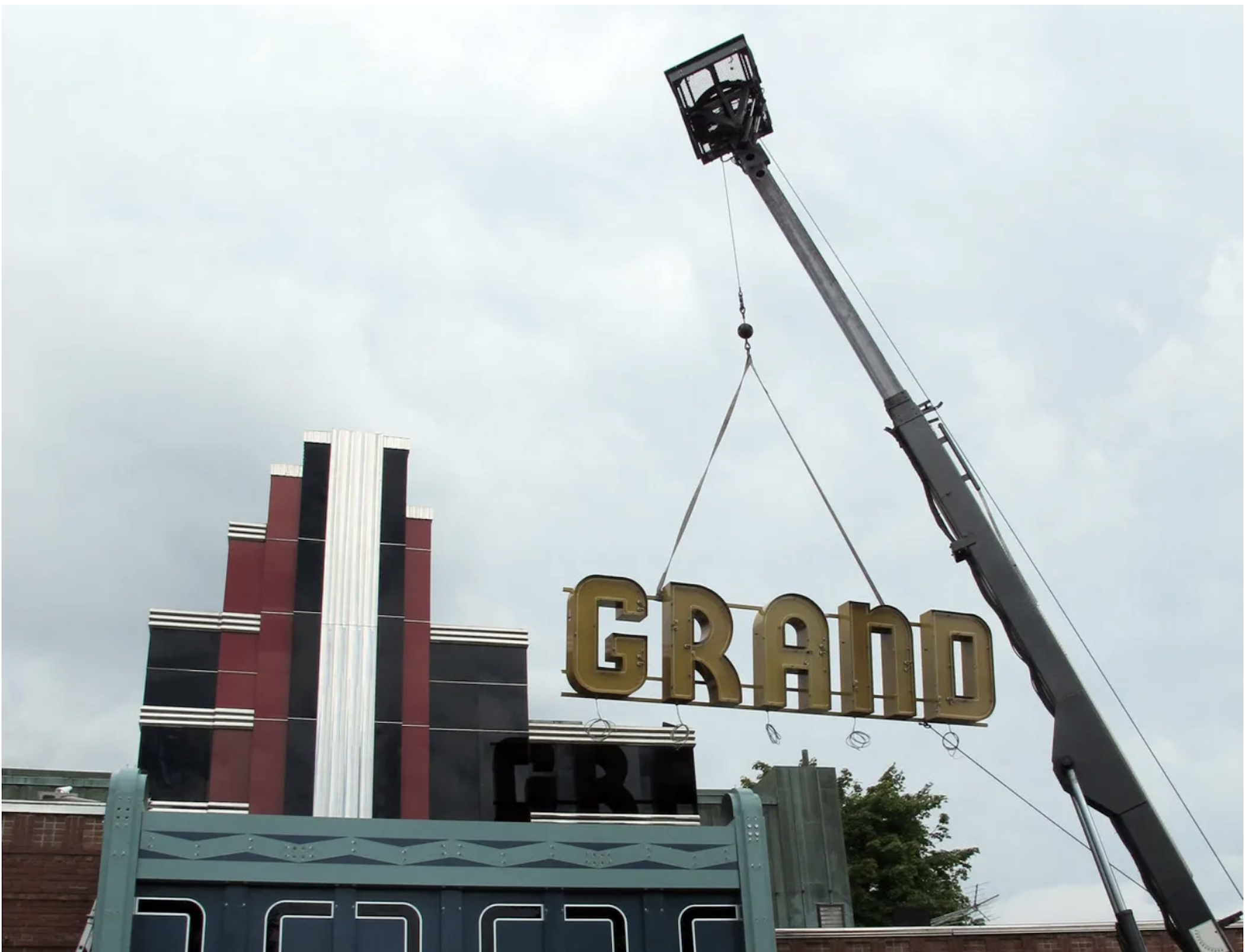
As a member and president of The Grand Theater board, Carla assisted in adding the theater to the National Register of Historic Places in 2012. When the theater was shuttered during the Covid pandemic, Carla doubled down on Ellsworth’s cultural infrastructure and led efforts to restore the Art Deco marquee and lobby, instilling hope that this gathering space would welcome people again.  

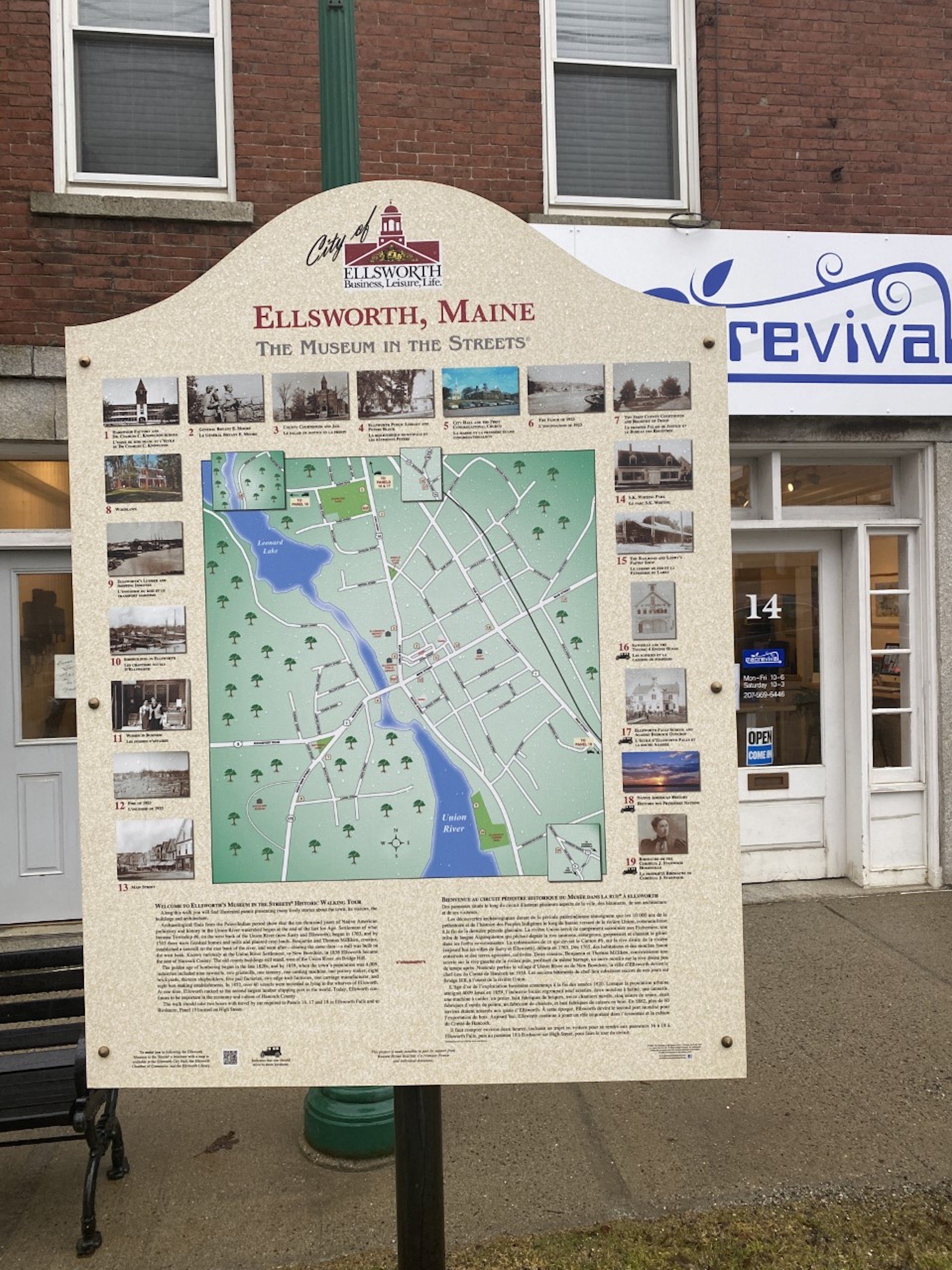
Carla demonstrates how preservation can function as a catalyst rather than a constraint. For 12 years, Carla served on the Ellsworth Historic Preservation Commission which safeguards the city’s historic downtown. Her experience later translated to mentoring small businesses and property owners developing façade improvements that would be reviewed by the Commission through the Heart of Ellsworth’s “Bricks & Clicks” program. This work came full circle when Carla reviewed those same plans as part of a committee administering façade improvement grants. Carla also helped research and create 19 interpretive panels comprising the “Museum in the Streets” installed downtown. This research contributed to the successful nomination of a 50-building historic district to the National Register of Historic Places.  

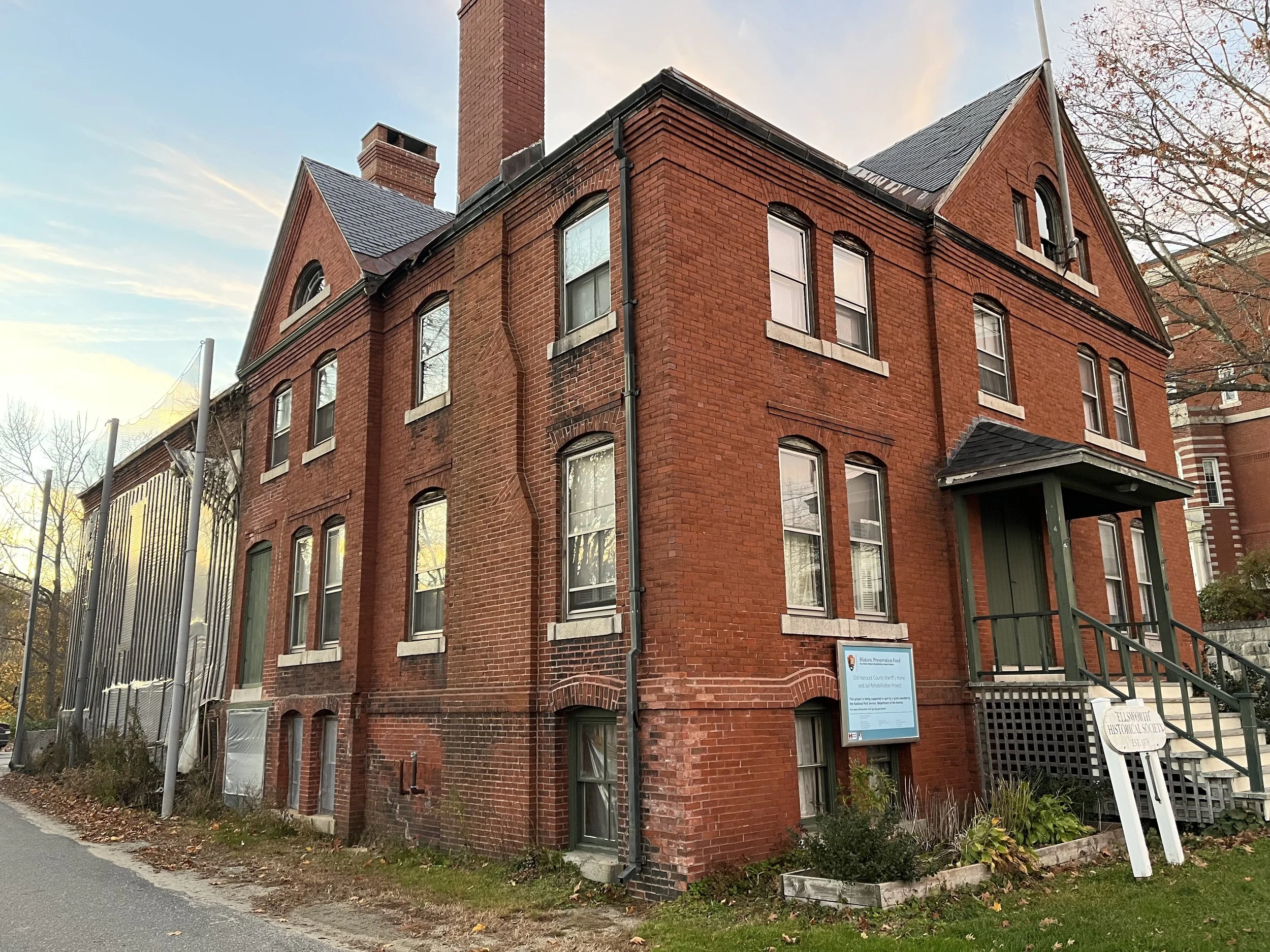
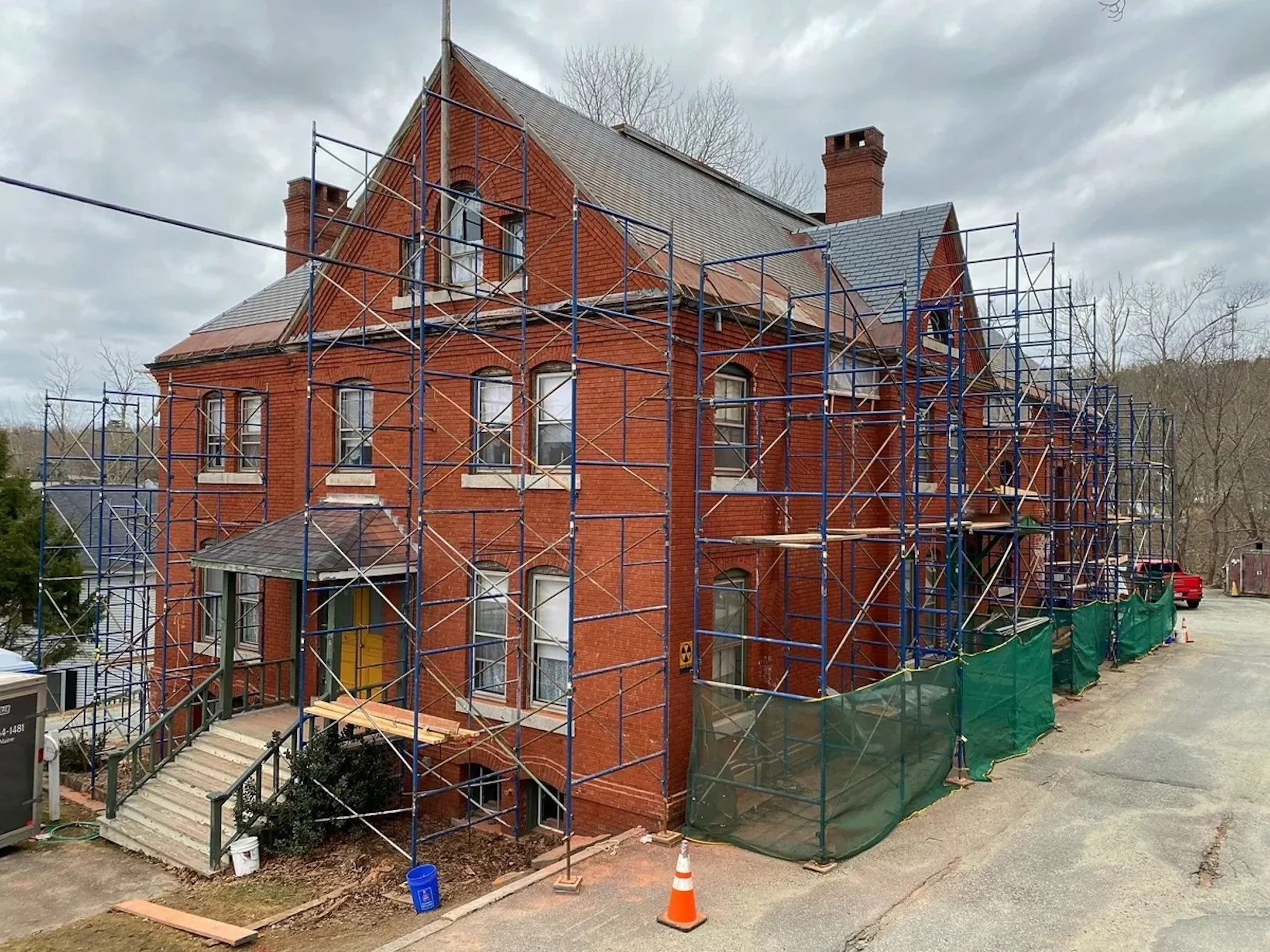
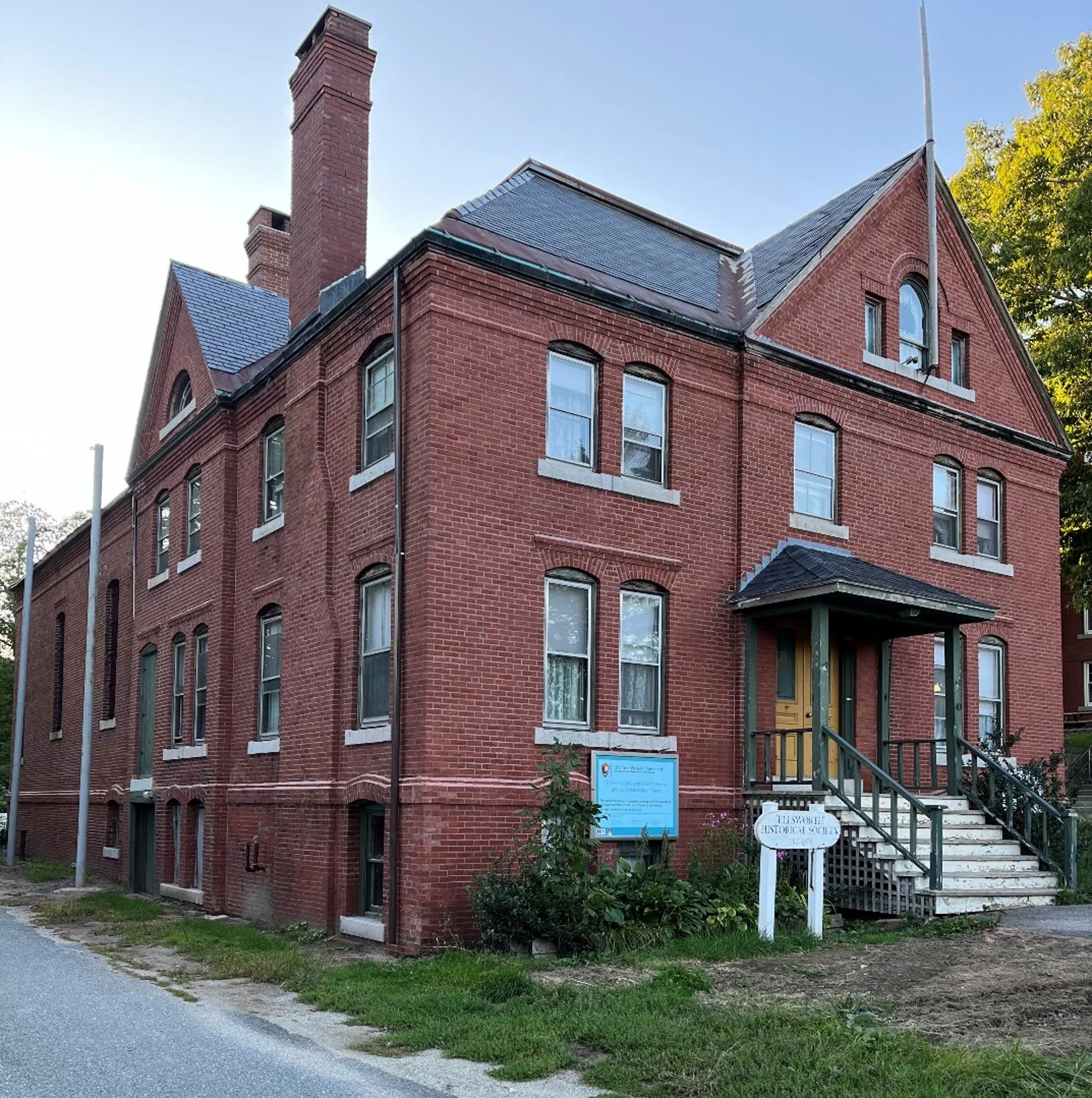
When the Hancock County Sheriff’s Home and Jail was on the verge of collapse and eyed for a parking lot, Carla emerged as an informed, focused voice. The Ellsworth Historical Society acquired the property in 1976, but years of deferred maintenance and failing load-bearing masonry walls, landed it on our 2007 list of Most Endangered Historic Places. In 2021, Carla organized and led volunteers to prevent its ruin and chart a responsible path forward. Entrusted as the Chair of the Society’s Old Jail Preservation Committee, Carla garnered $1 million in grants and donations and managed a critical four-month brick repointing project that stabilized the structure. Work continues to transform the eyesore into a regional cultural heritage center. Her vision is quickly becoming a reality.  

Architect Carla M. Haskell is a tremendous ambassador for preservation, exemplifying its virtues through her professional work and civic leadership in Ellsworth, Hancock County, and across Maine. 

Photo Credit: No Umbrella Media; Bill Trotter, Bangor Daily News; Matt Cosby, Maine Home + Design; Letitia Baldwin, Ellsworth American; Ellsworth Historical Society