
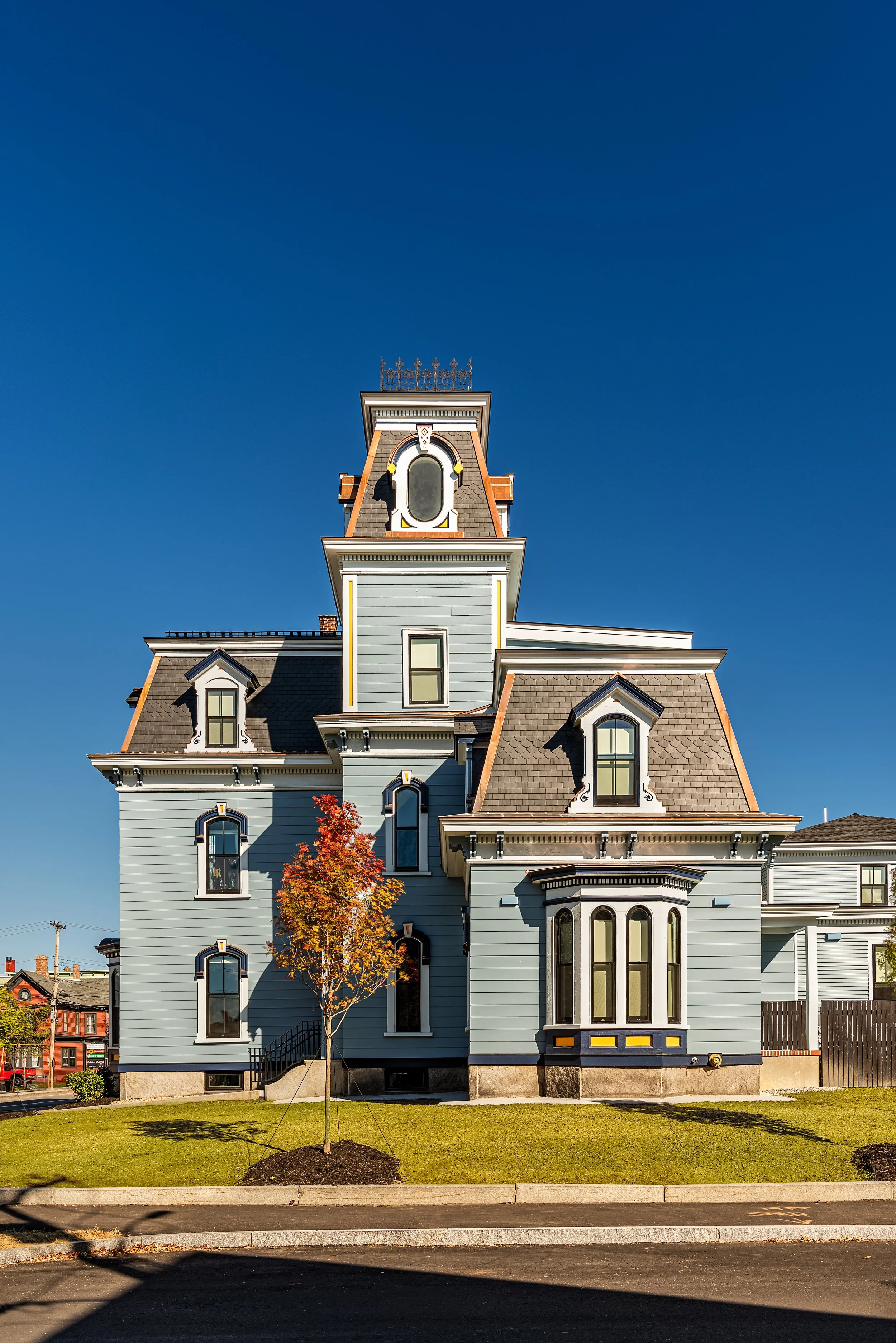
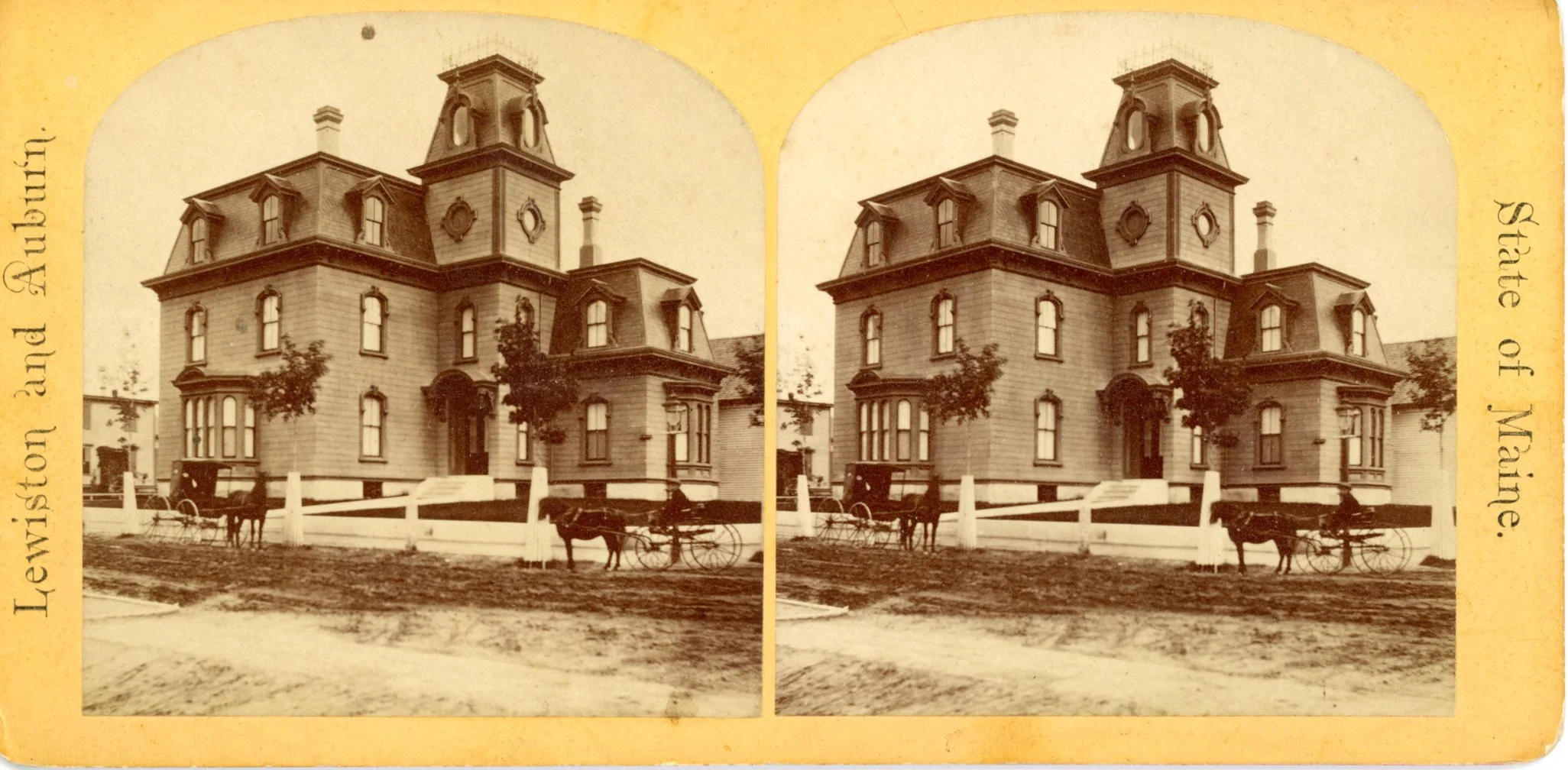
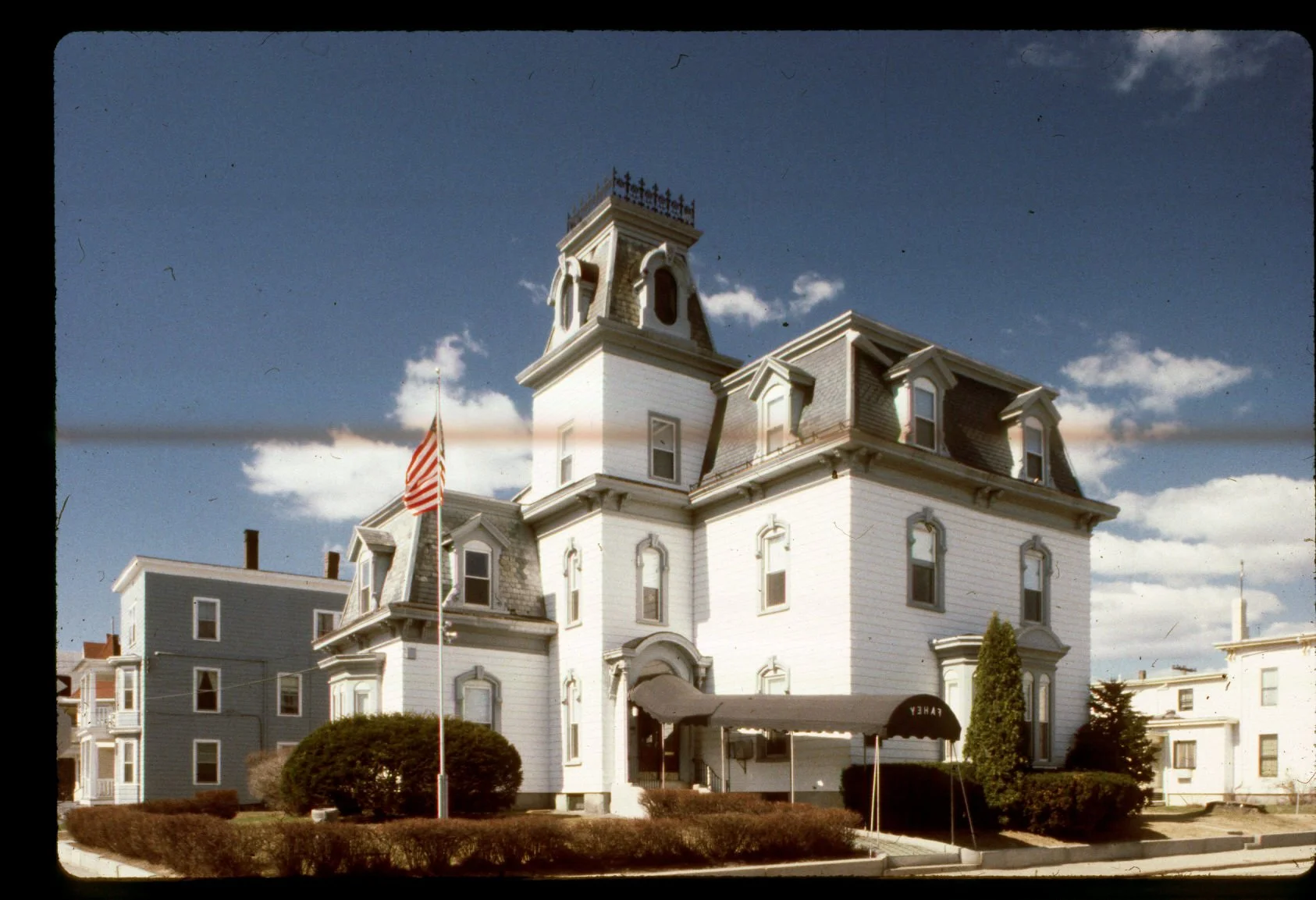
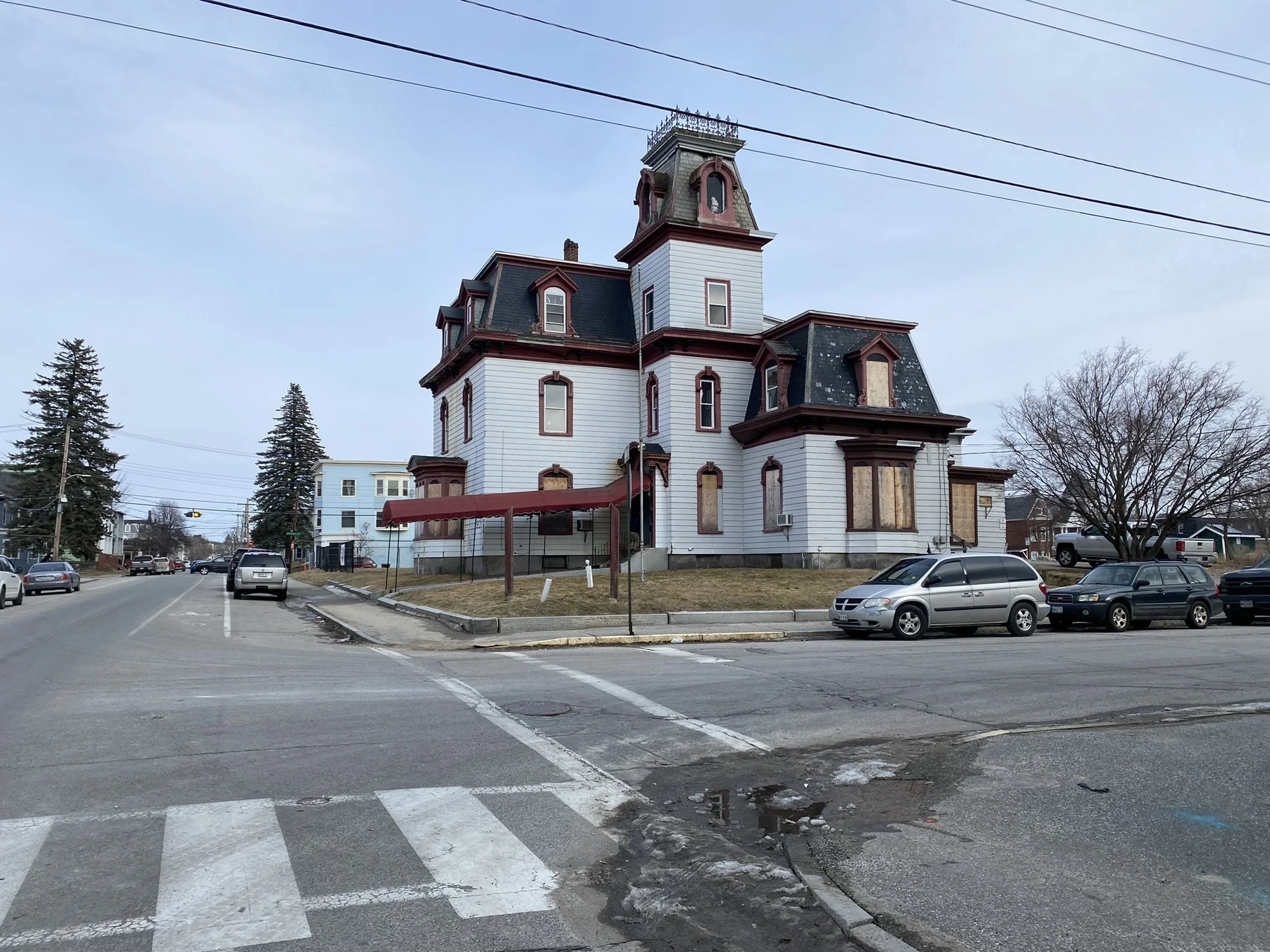
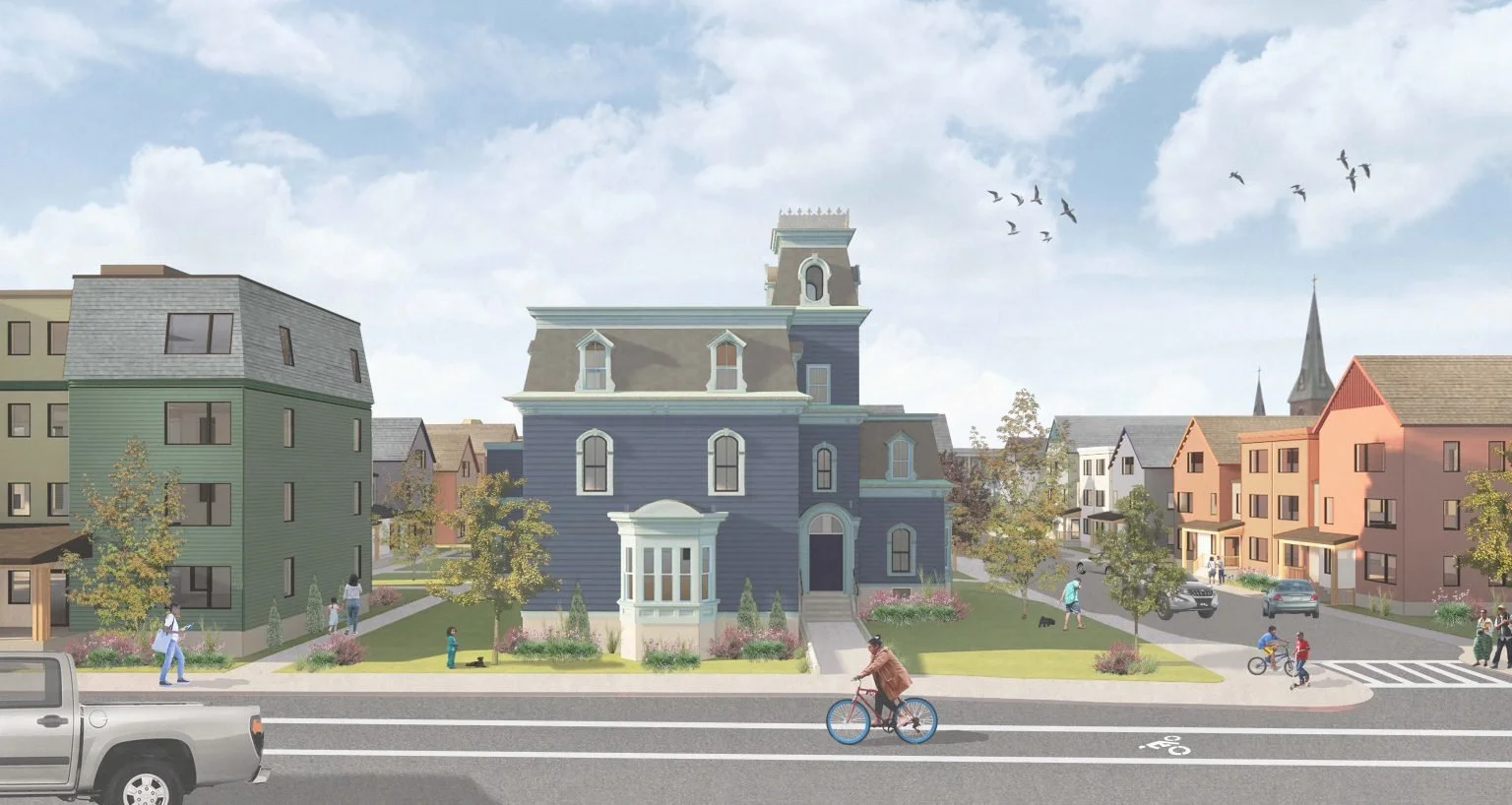
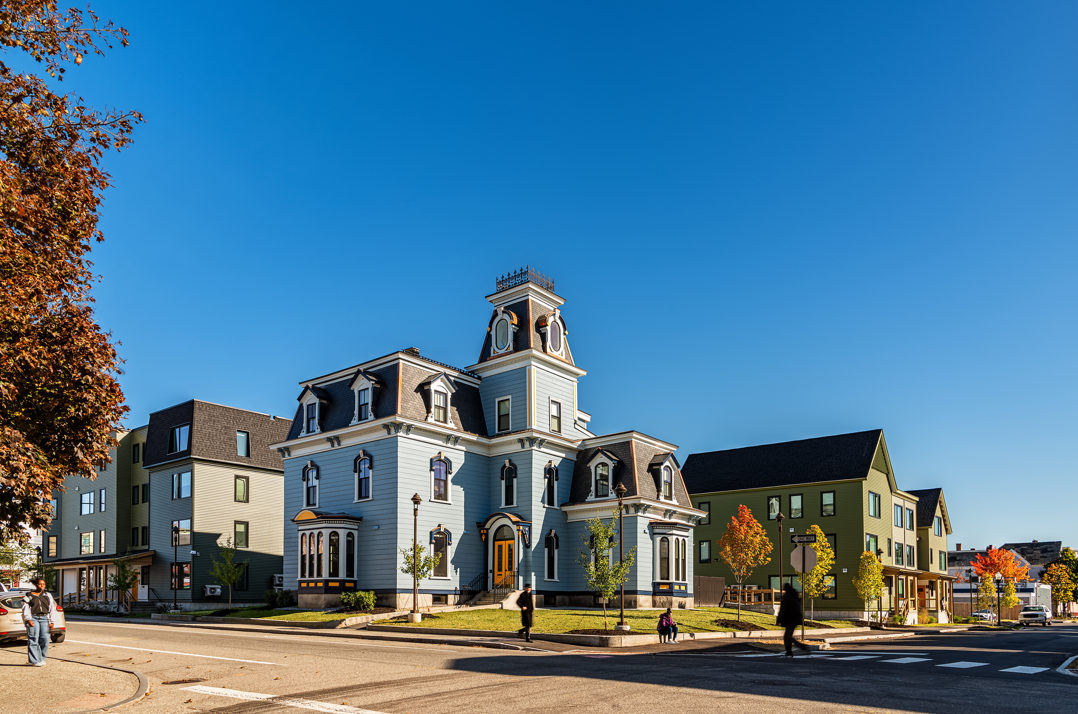
The rehabilitation of the Dr. Milton Wedgewood House in Lewiston is an excellent example of how preservation and progress complement one another, and that repairing and repurposing our historic building stock is an important tool in tackling Maine's housing crisis.
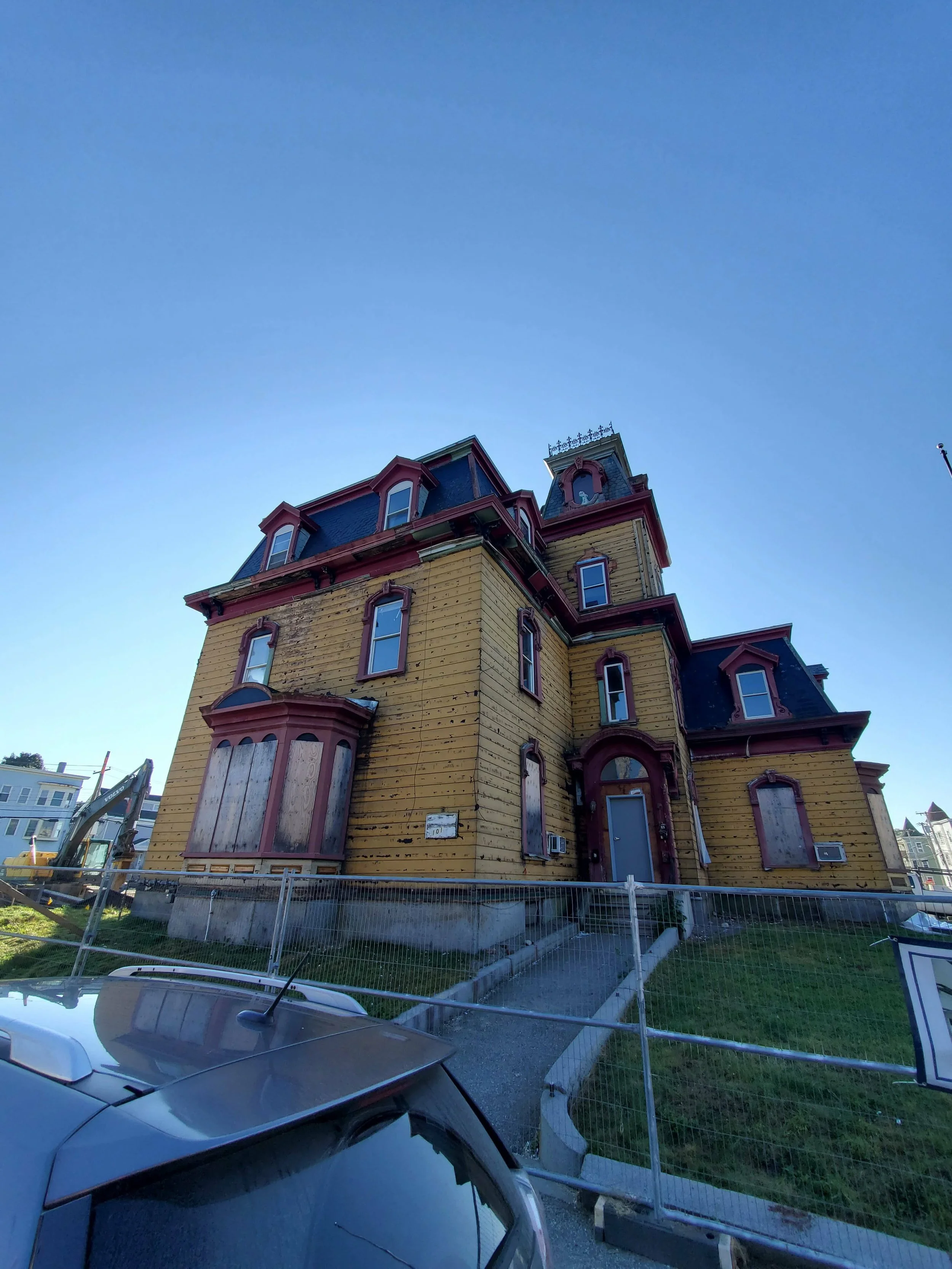
The house was built in 1873 as the home and office of Dr. Milton C. Wedgewood, a surgeon and one of the founders of Central Maine General Hospital. A local Lewiston architect, Charles F. Douglas, integrated the form of an Italianate villa with a French mansard roof in the sophisticated design. Multiple funeral home businesses occupied the building from the 1930s to the early 2000s, before it was subdivided into apartments. In 2013, a fire rendered it unhabitable, and the vacant building added to the decades of disinvestment and demolition in the Tree Streets Neighborhood.
The house’s latest iteration emerged as part of an ambitious push to redevelop the entire block. Thanks to a years-long, grassroots planning process, the city received a $30 million grant through HUD’s Choice Neighborhood Initiative. The Lewiston Housing Authority partnered with Avesta Housing to develop 84 units in what would be called the Wedgewood Development, including the namesake Dr. Milton Wedgewood House.
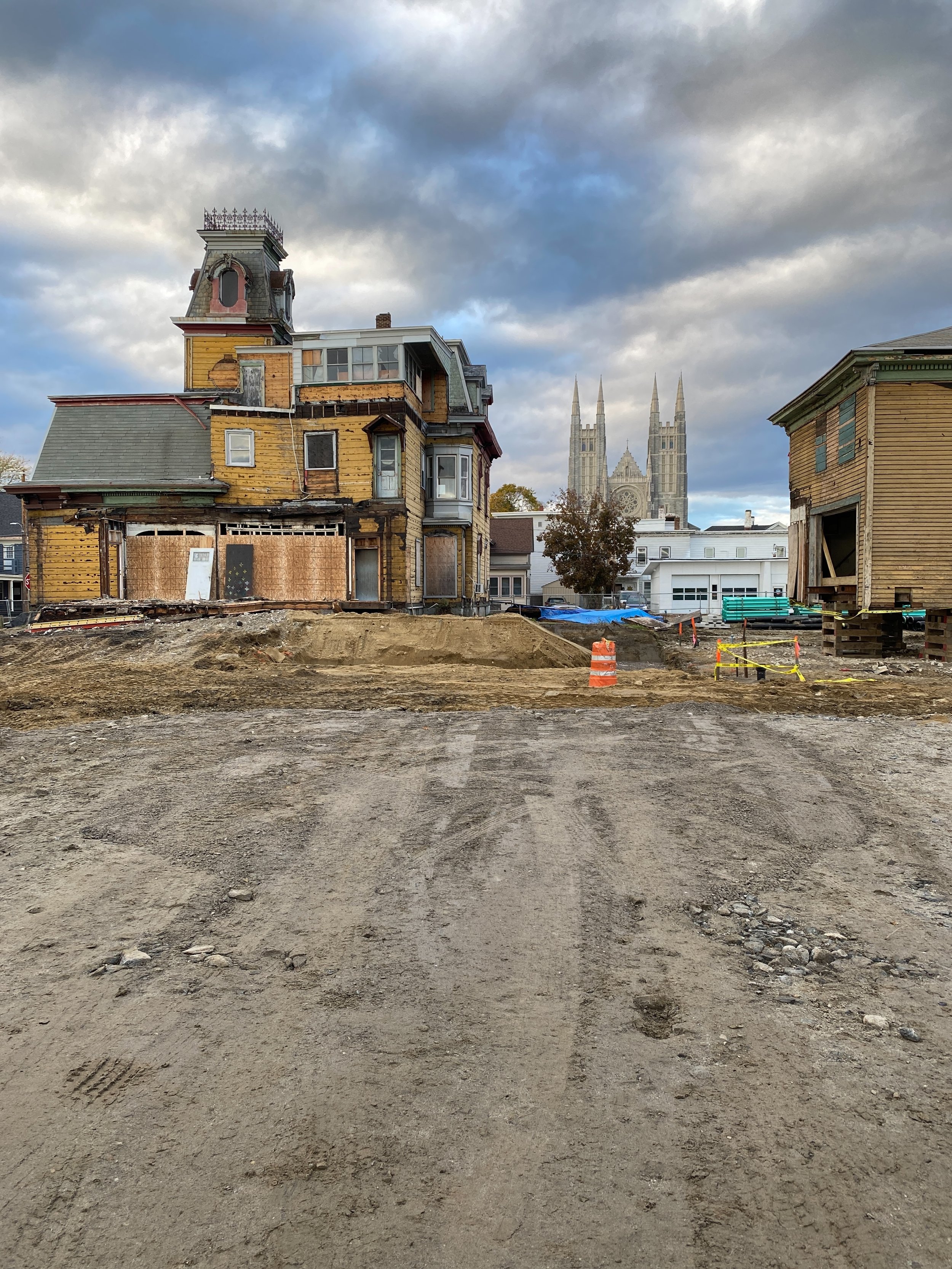
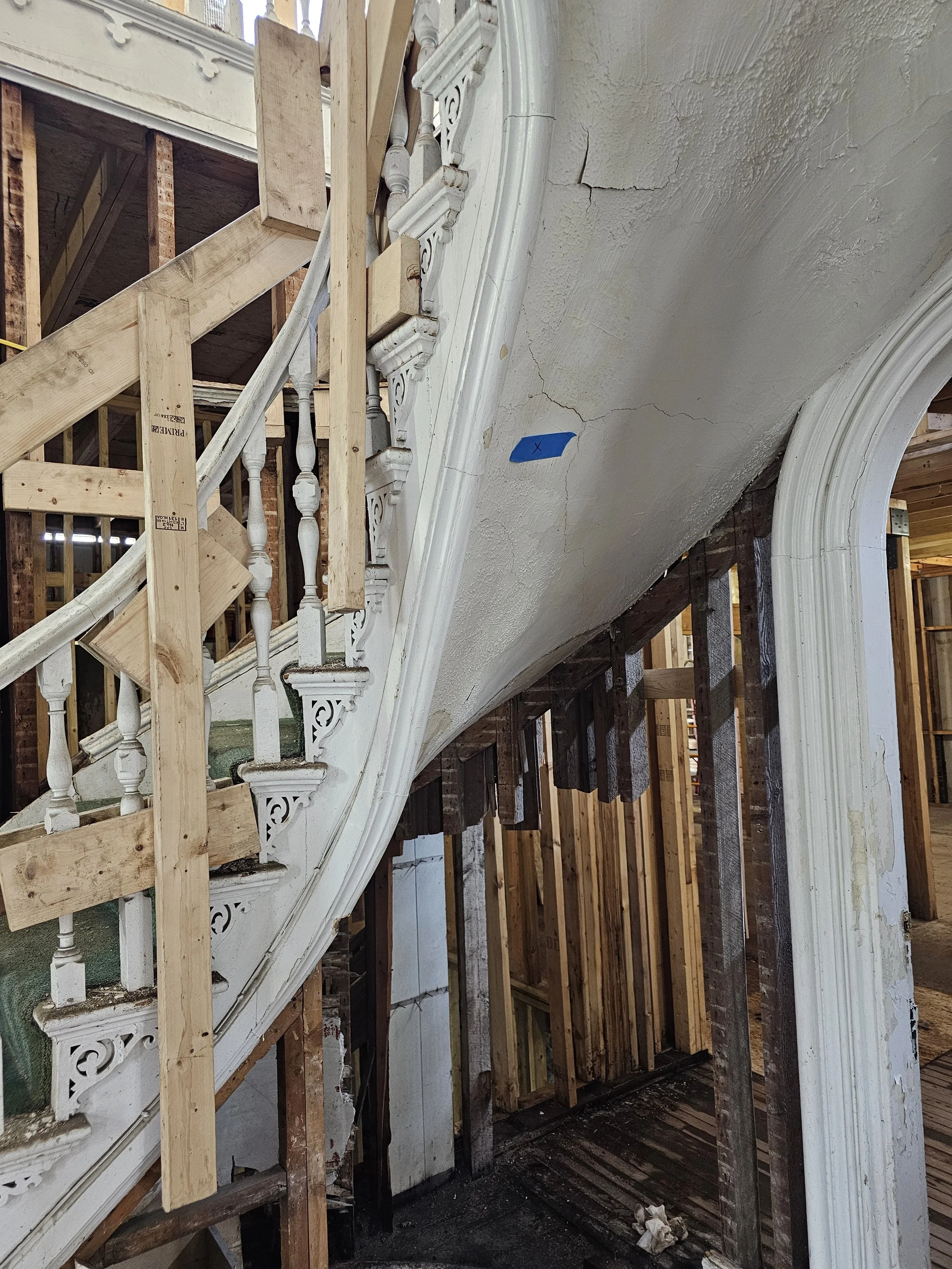
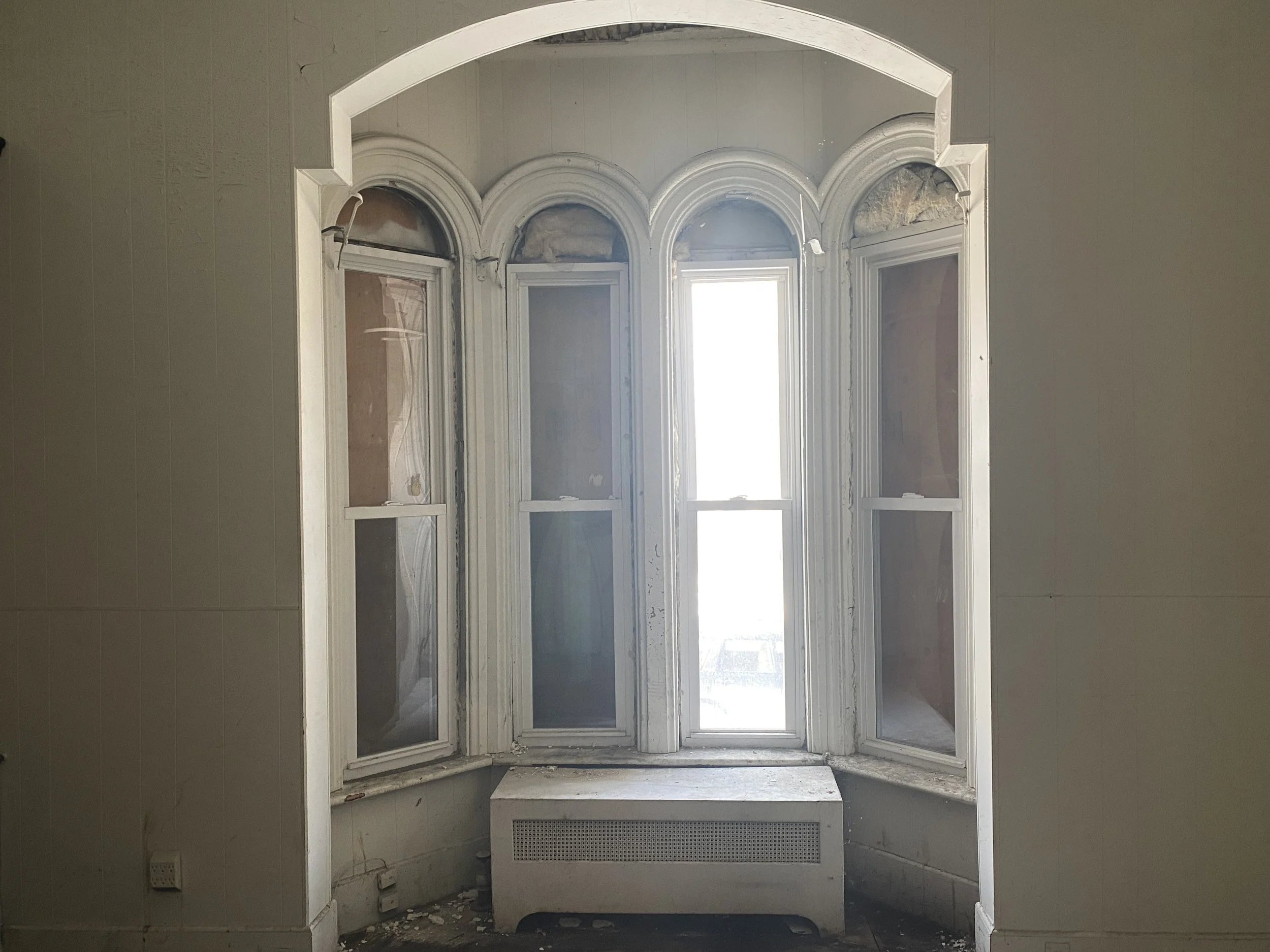
Kaplan Thompson Architects, with expert preservation support from Barba + Wheelock, found much of the original building fabric was intact despite suffering from years of neglect. The matchboard siding and decorative wood trim had been covered with aluminum, while the slate roof and iron tower cresting had reached its end. Wood flooring, trim, and moldings; curved walls; and ornate fireplaces remained inside. Sagging floors and a history of fires required close inspection and shoring up by Allied Engineering.
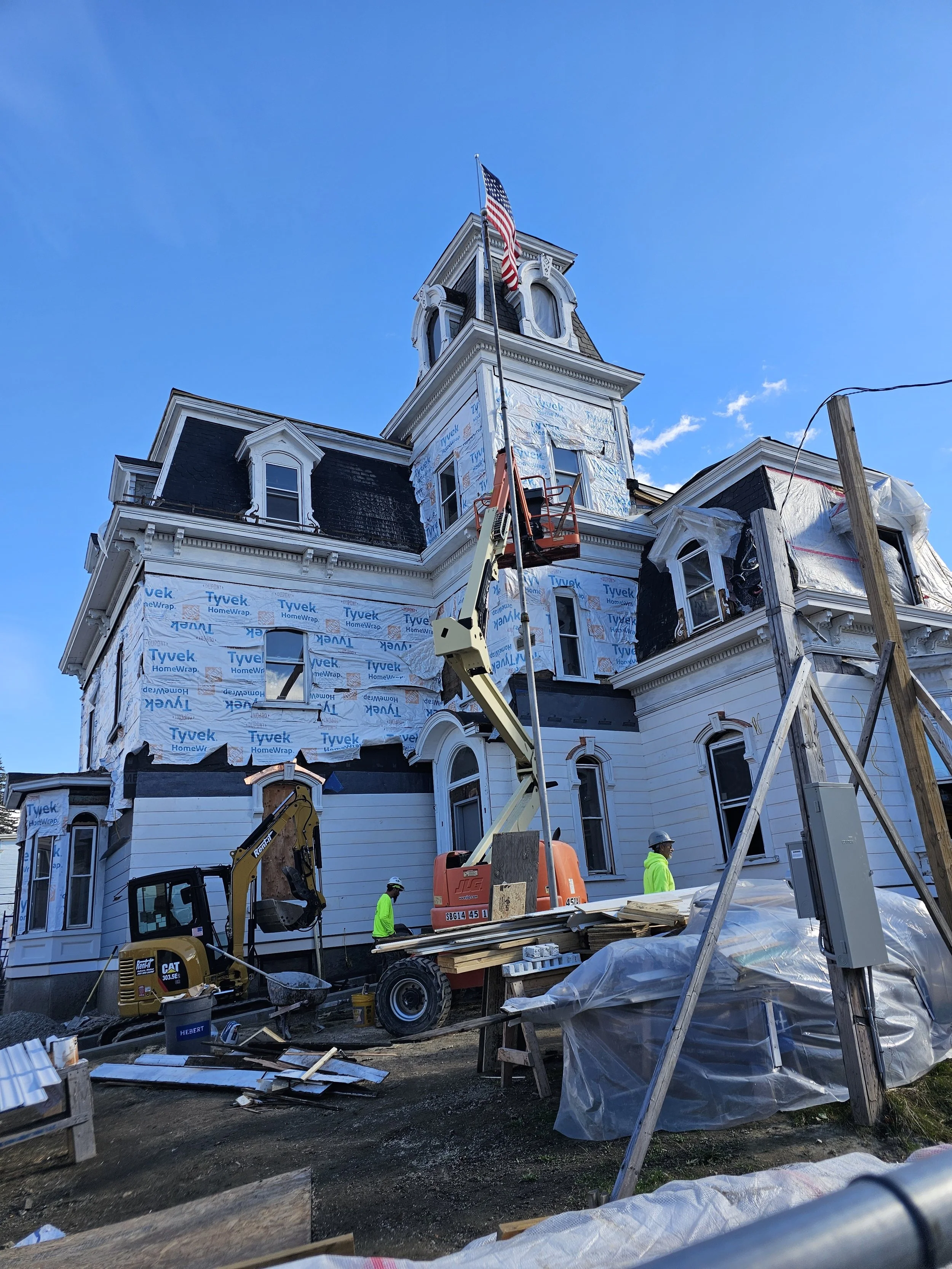
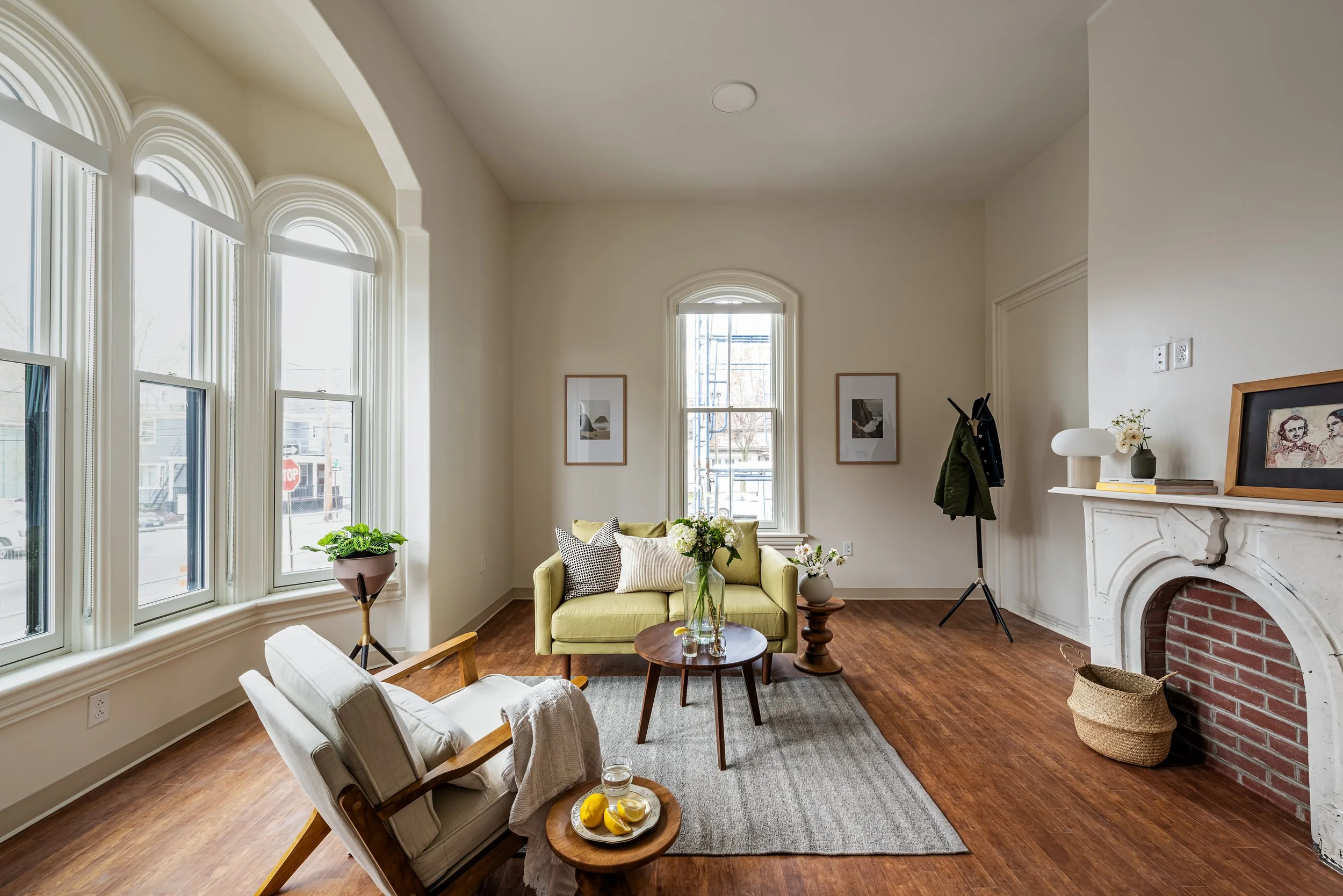
Work commenced with Hebert Construction at the helm. The original siding and wood trim were repaired, and the slate roof was replaced in-kind. Decorative iron cresting on the tower was restored. New energy efficient windows with arched tops reclaimed original openings, while details like the scrolled window jambs and bracketed cornice were carefully restored. The connected carriage house was lifted to make room for a new foundation clad with the original granite foundation stones. The striking blue and mustard paint scheme was inspired by older colors found on the house.
Accessibility and life safety improvements were integrated into the site, from a building-wide sprinkler system and accessibility ramp to the reduction of uneven surfaces through the careful re-laying of historic wood floors.
An imperceivable aspect of the project was the careful study needed to meet the Secretary of the Interior’s Standards and the energy efficiency standards of Maine Housing, required to unlock both Low Income Housing and Historic Rehabilitation Tax Credits. Efforts to improve the hygrothermal performance of the building–how it manages heat and moisture–included the addition of insulation in the basement, vapor permeable barriers, and insulation board on the exterior walls. Careful negotiation with the National Park Service earned approval for insulating the building from the exterior given the minimal changes to the historic trim and siding profiles.
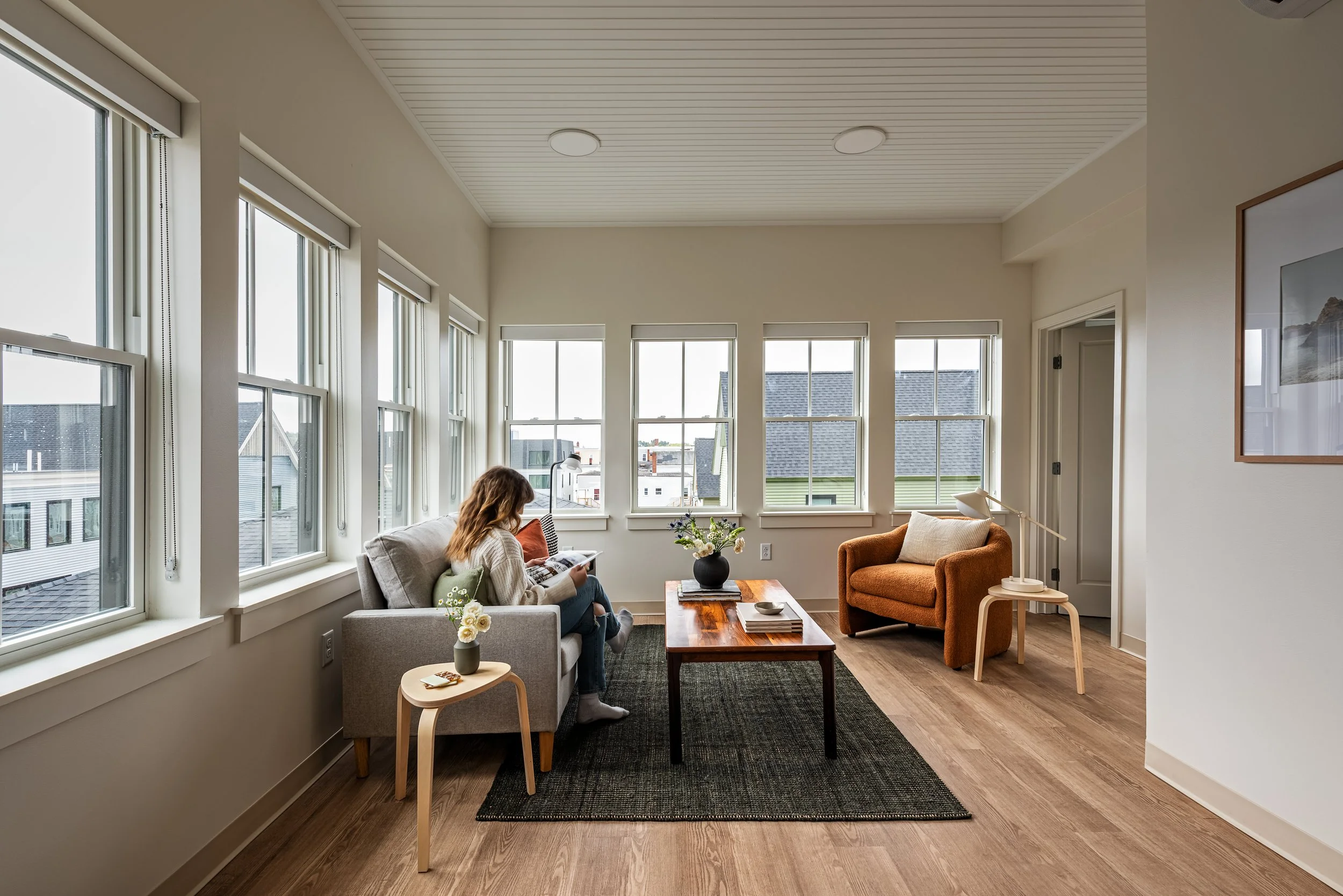
The result is eight energy efficient and comfortable affordable housing units carefully introduced with minimal impact to the historic floor plan and a beautifully restored façade that anchors the enlivened neighborhood.
Project Participants:
Avesta Housing
Kaplan Thompson Architects
Barba + Wheelock
Allied Engineering
Carroll Associates LA
Acorn Engineering, Inc.
Hebert Construction
Lewiston Housing
Lewiston Auburn Area Housing Development Corporation (LAAHDC)
Photo Credits: Barba + Wheelock, Christian Phillips Photography, Herbert Construction, Maine Historic Preservation Commission
