
Bath
Story
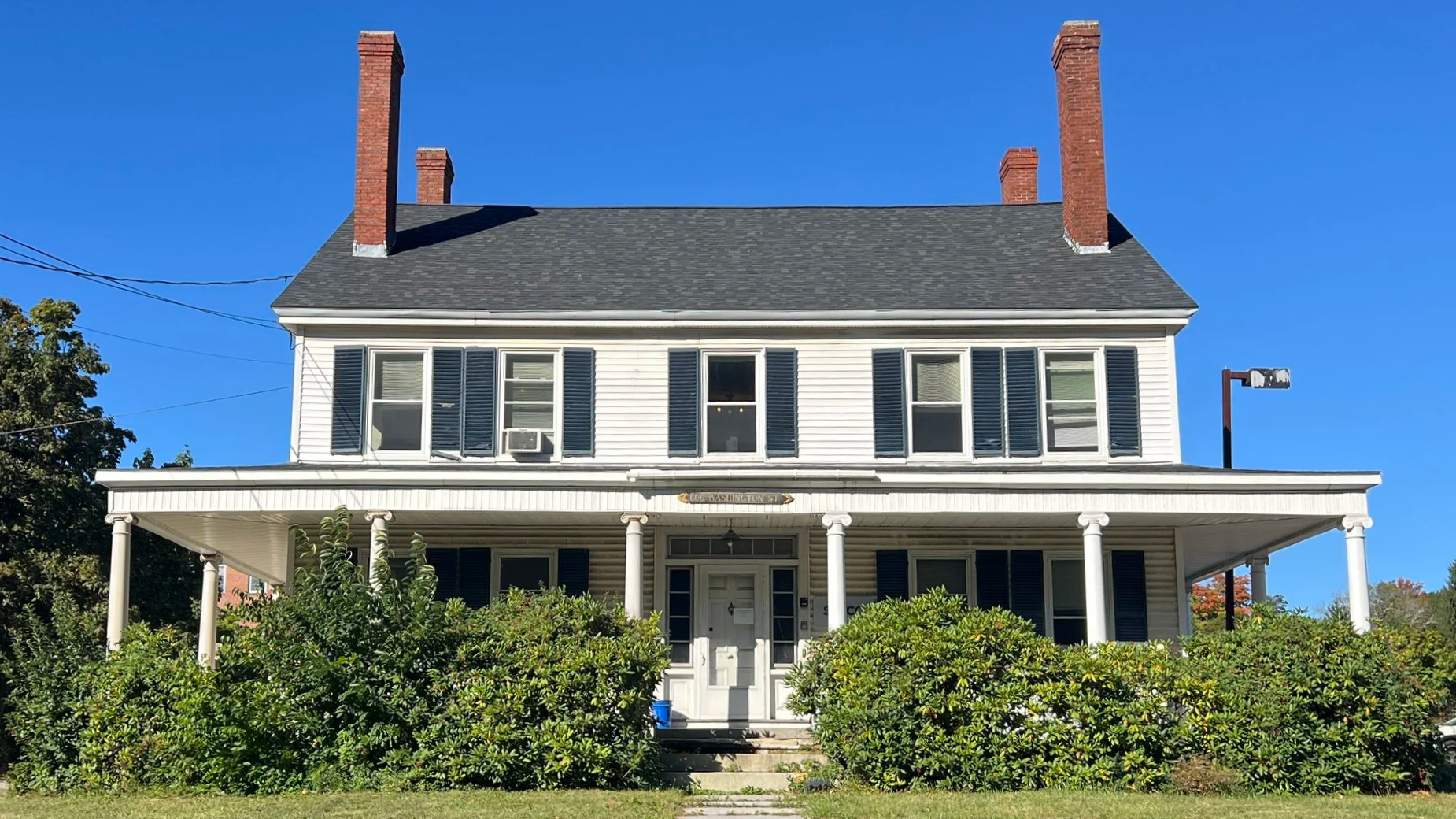
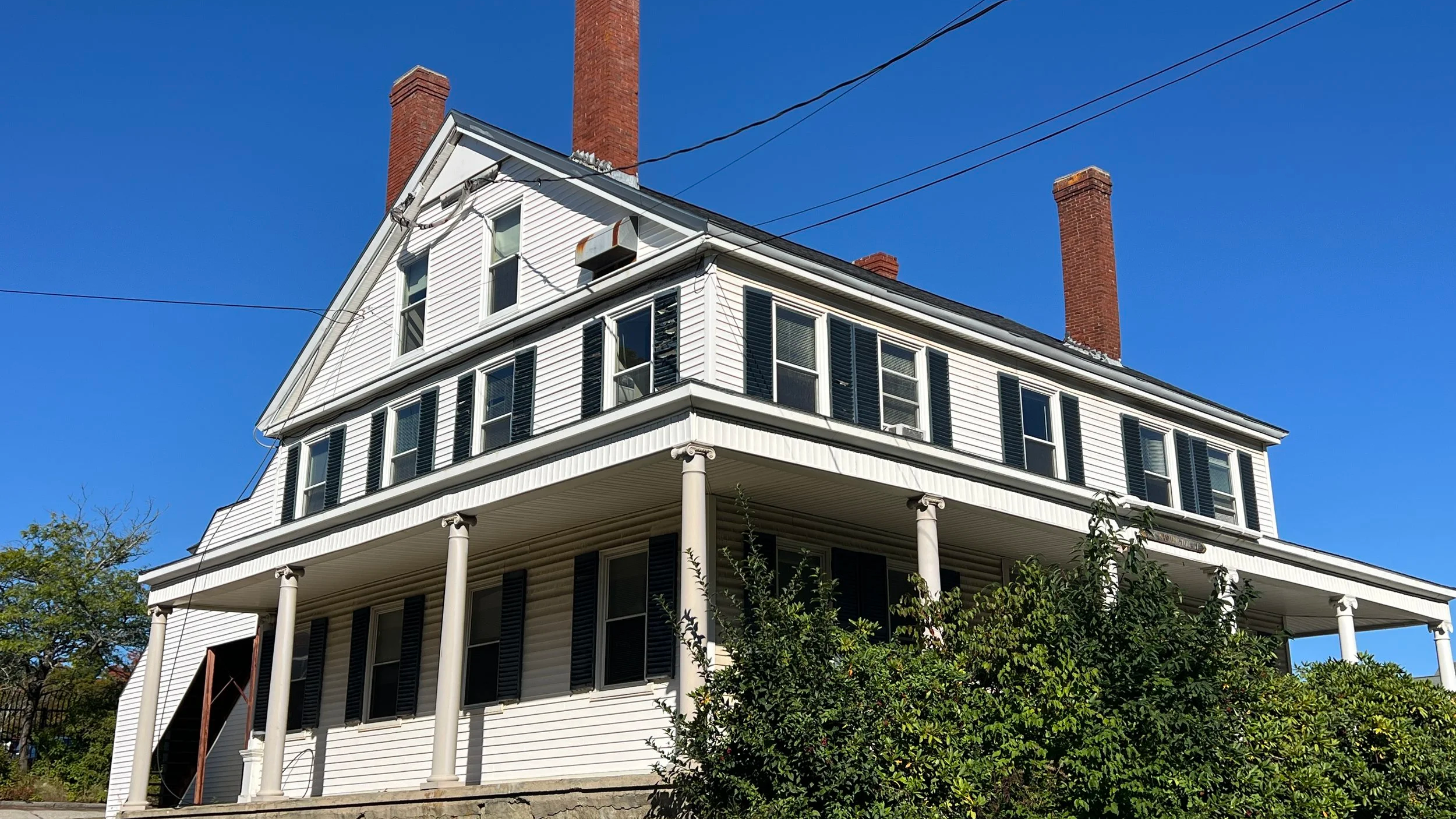
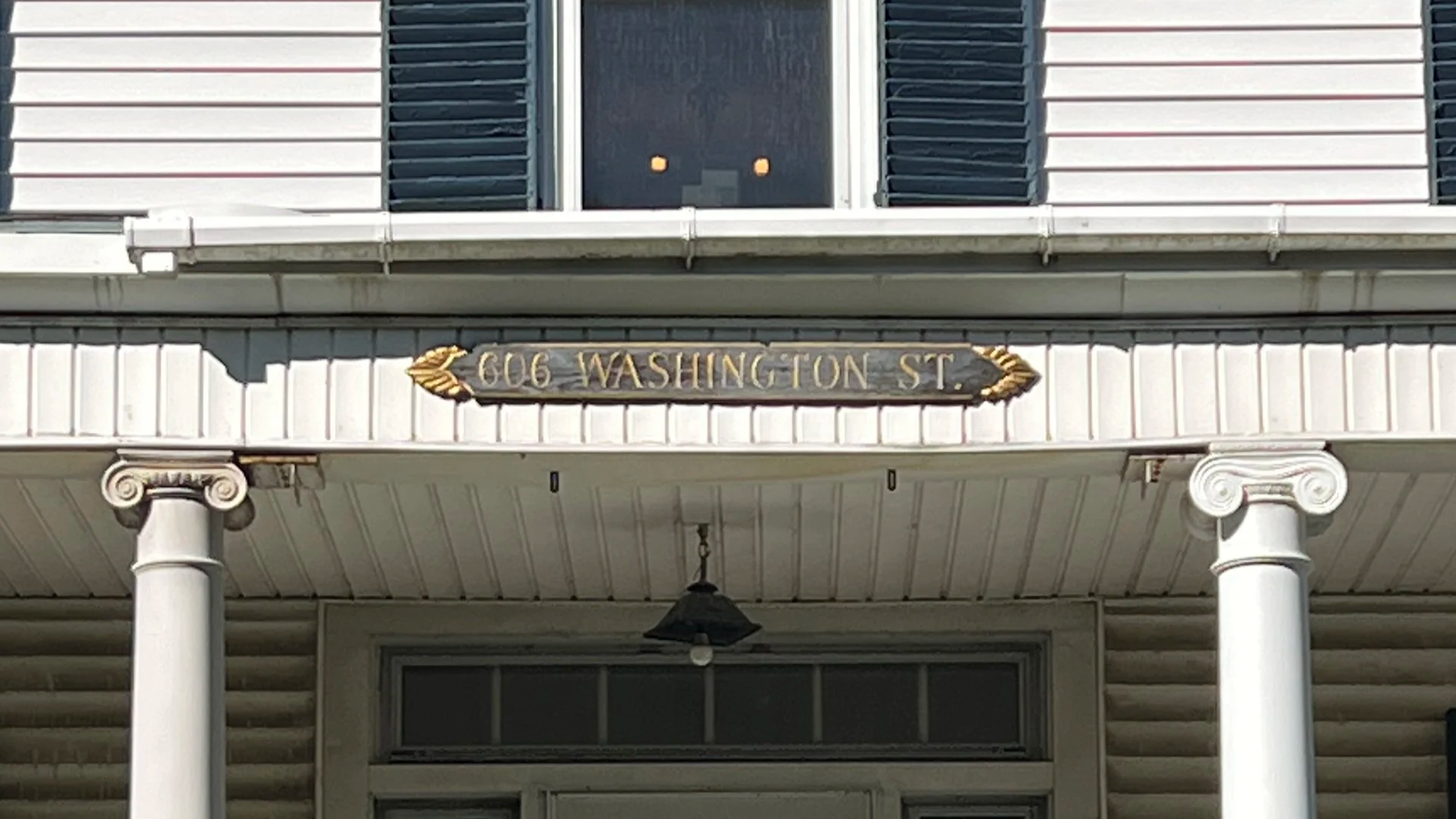
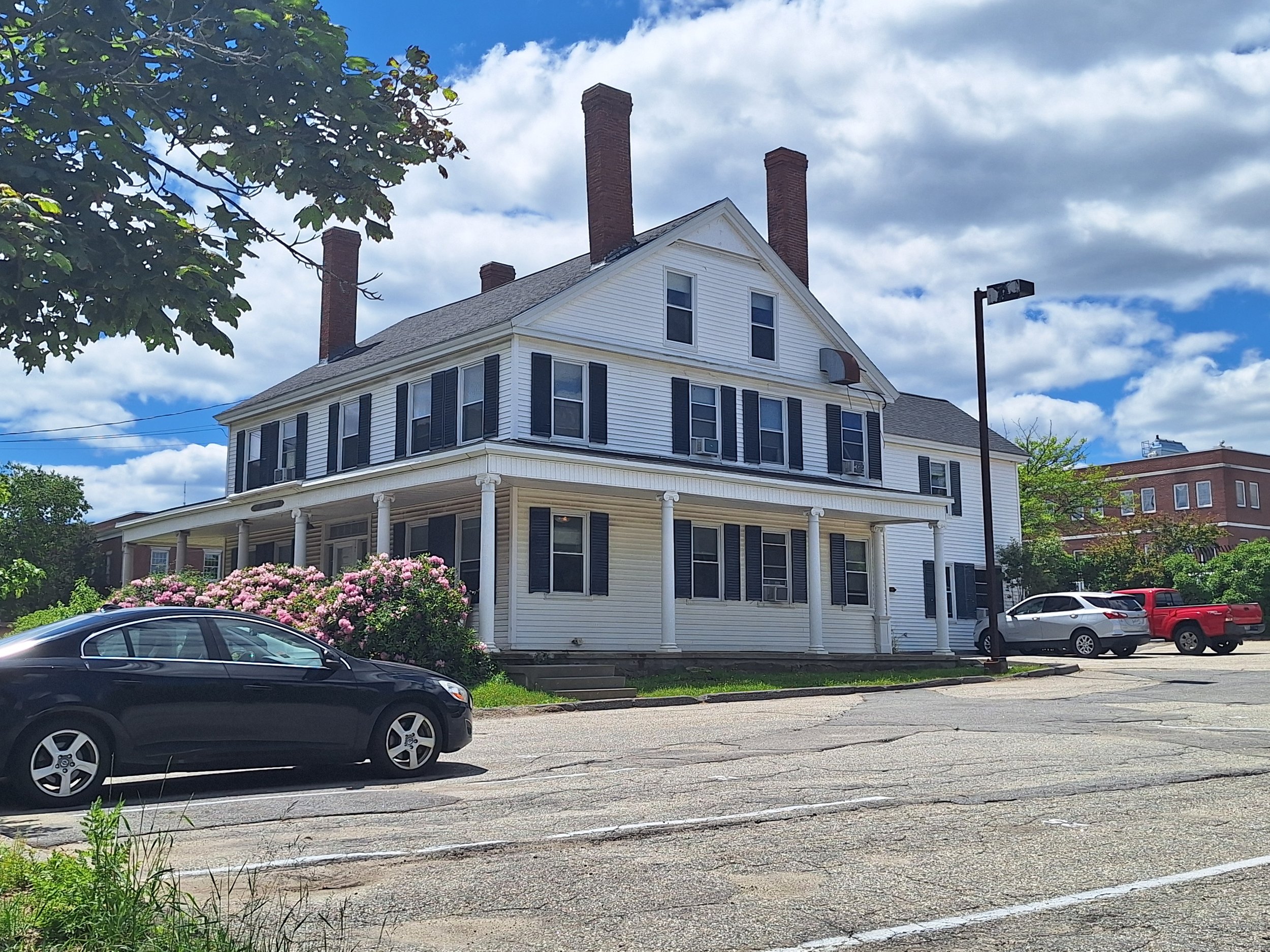
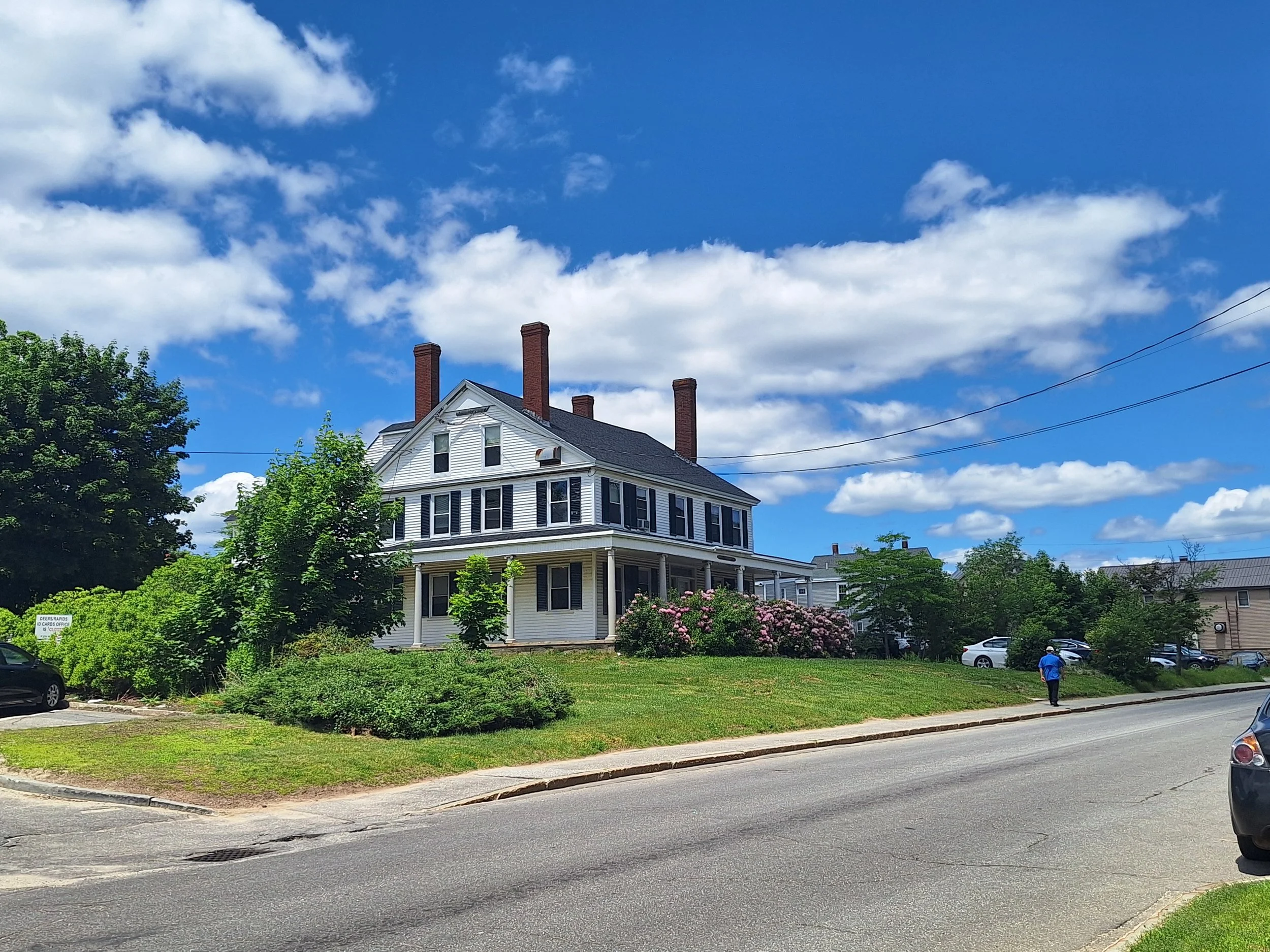
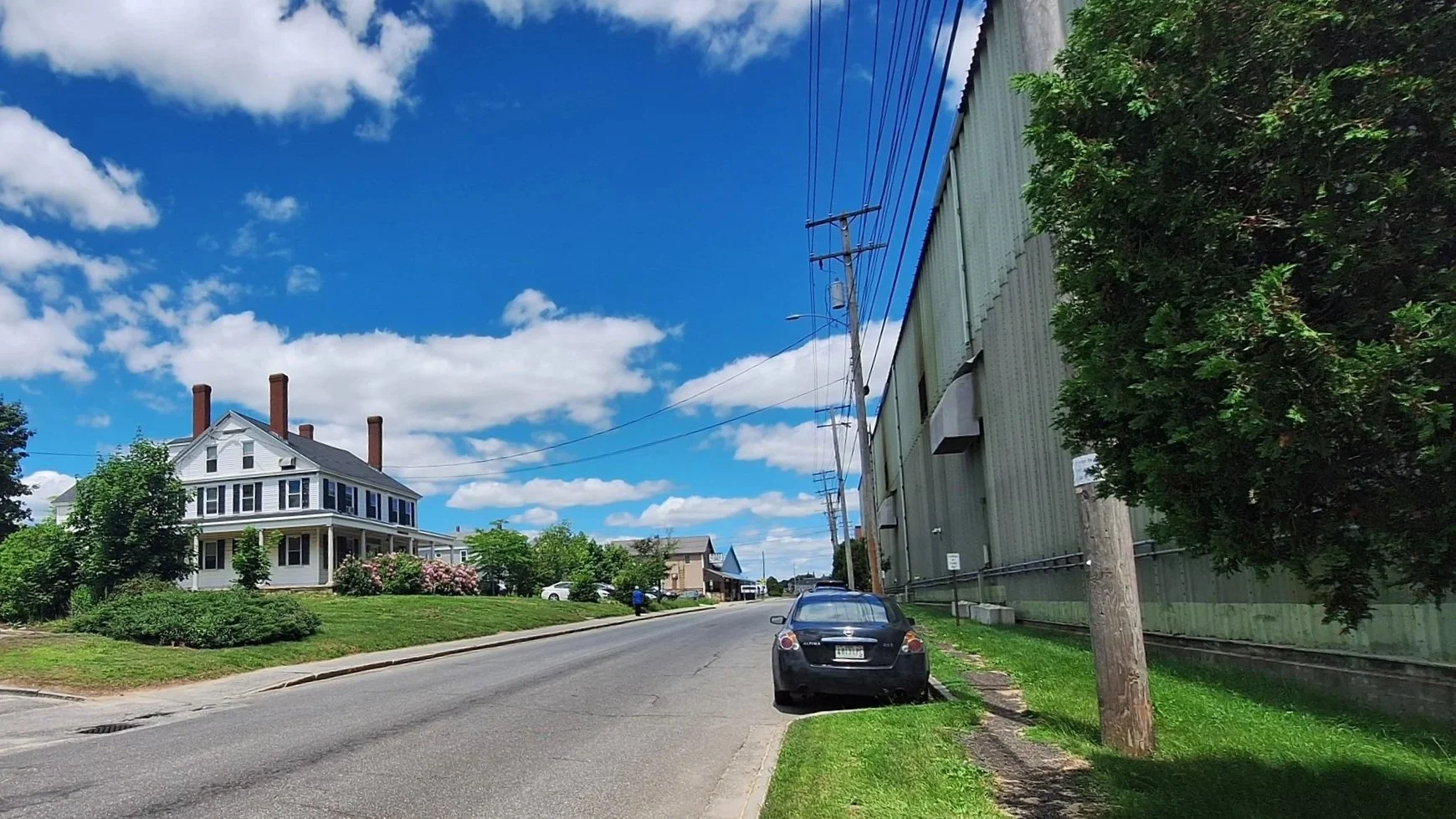
The 1839 Greek Revival-style house at 606 Washington Street stands in stark contrast to the towering metal walls of Bath Iron Works (BIW) across the street.
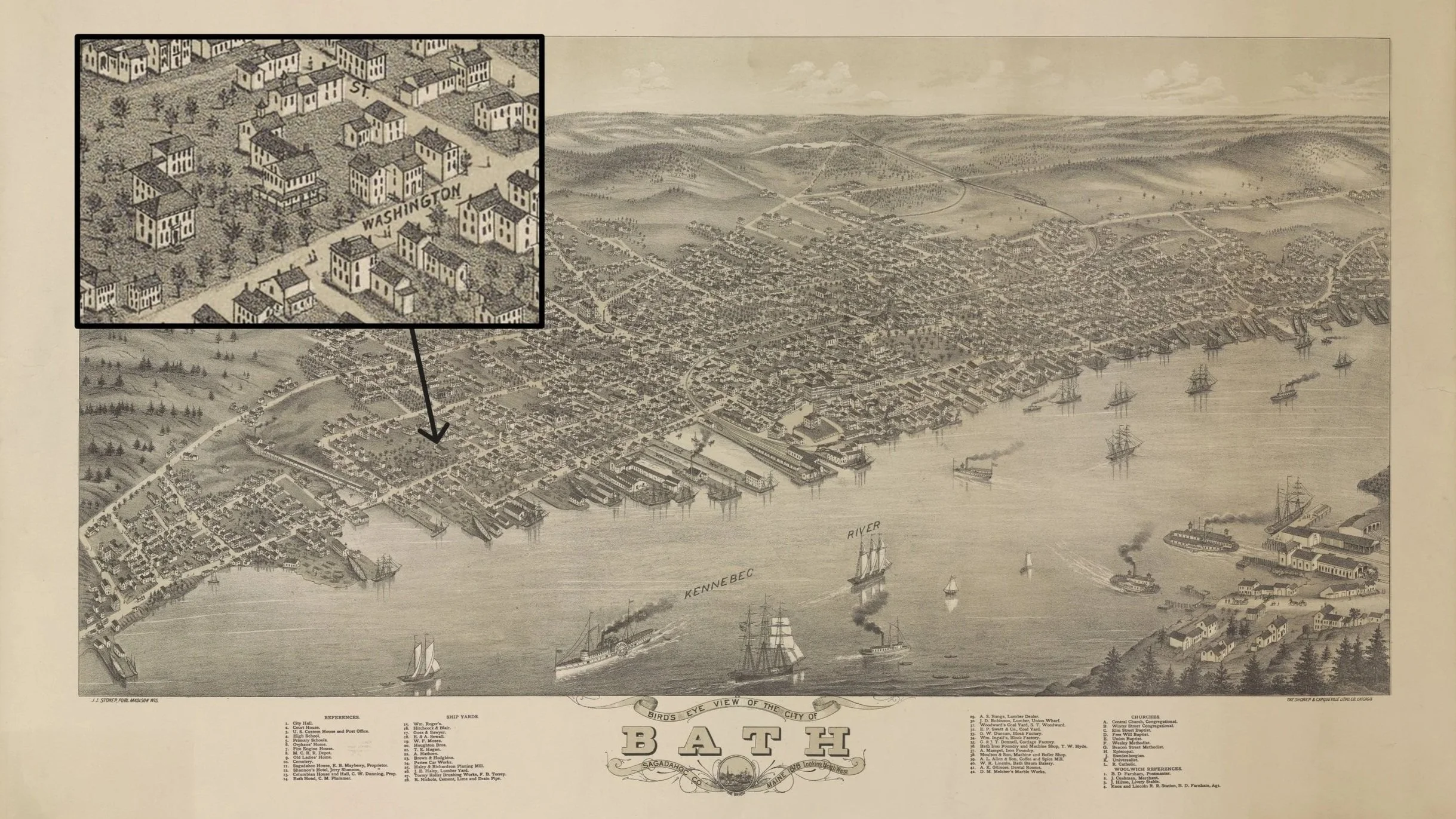
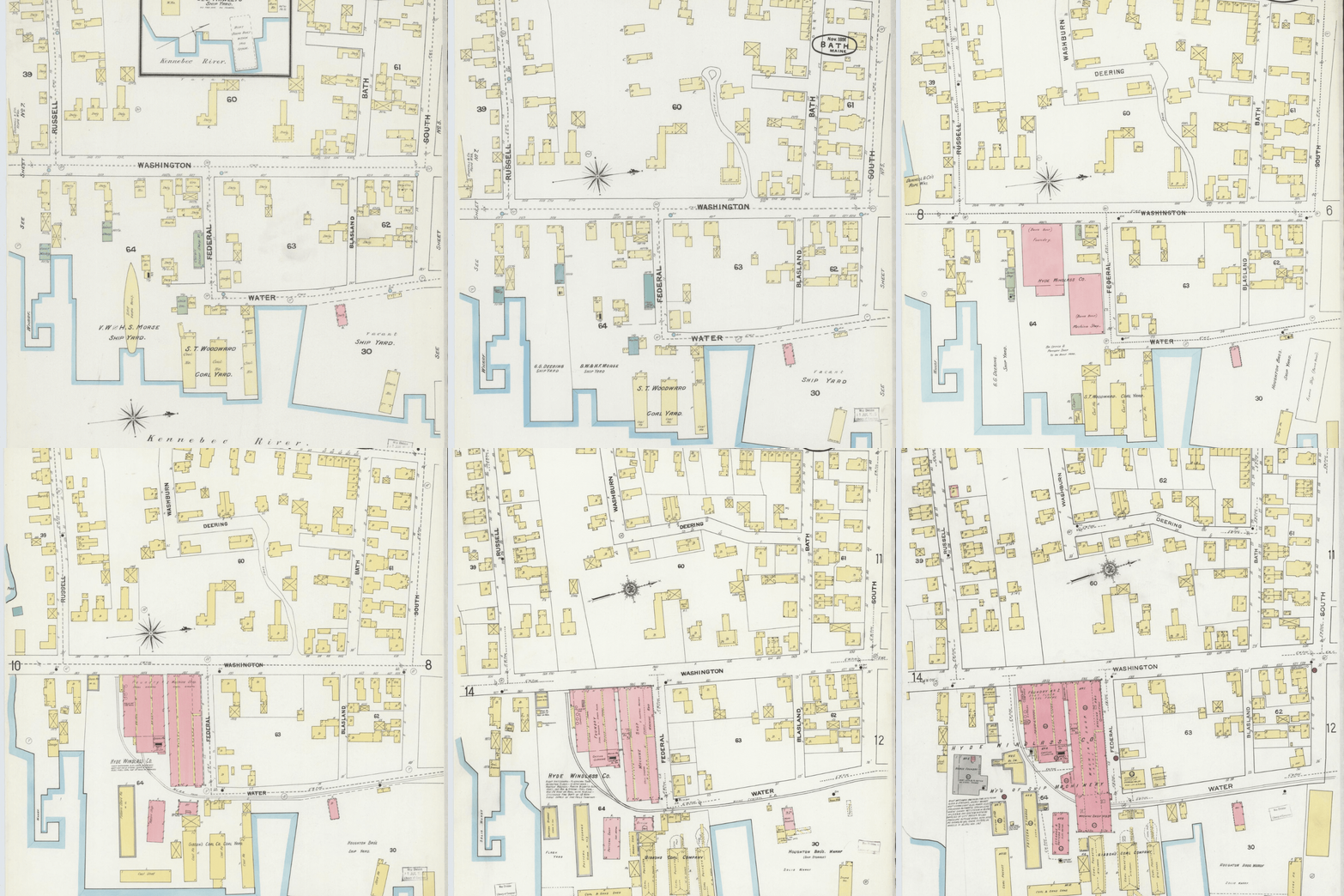
The two-story frame house boasts a one-story portico supported by ionic columns, recalling the prominence of the Greek Revival Style in Bath prior to the Civil War. The house’s occupants tell a story of Bath’s rich shipbuilding legacy. It was constructed by Samuel Swanton II, the great-grandson of William Swanton Sr., who arrived in the small city in the 1760s and is credited as the first commercial shipbuilder in Bath. Following in his grandfather’s footsteps, Samuel Swanton captained vessels in the shipyards, mainly for the C. and W.D. Crooker Shipyard. Brothers-in-law George W. Duncan and Charles Davenport, a blacksmith of bilge blocks and founder of the Goss Iron Marine Works, respectively, were the second and third owners from 1855 through 1883. Gardiner G. and Lydia M. Deering were the last family to purchase the house. William T. Donnell and Gardiner co-owned Deering & Donnel, a shipyard which produced 70 vessels in its two-decade existence. In 1887, Deering founded the G.G. Deering Co. Shipyard, which crafted 30 vessels until its closure in 1919.
The Deering family sold the house in 1982 to BIW, which transitioned the house for use as an office and now leases it to a contractor connected with the shipyard.
Threat
The centuries-long momentum of shipbuilding along the Kennebec River has brought about an ever-growing industrial footprint. Phase I of Bath Iron Works’ recent Washington Street Corridor project resulted in the demolition of several historic homes along with the 1880 Wesley Methodist Church. Now Phase II targets the block bounded by Russell and Bath Streets where the Swanton-Deering House stands. Phase I of the project is still ongoing and focused on providing parking for the company’s nearly 7,000 employees, while Phase II will construct a new supervisor of shipbuilding facility. This places the Swanton-Deering House as the next domino to fall.
Phase II, like Phase I, is funded in part by the United States Navy, which means the project must undergo a Section 106 review to identify cultural resources potentially impacted by the project, assess the level of impacts, and devise mitigation measures. This public process is part of the National Historic Preservation Act and is triggered by every federal undertaking: any project, activity, or program funded, carried out, permitted, licensed, or approved by a federal agency.
How to Get Involved
On August 5, BIW marketed the Deering-Swanton House, along with another residential property, for $1 on the condition that the buyer “relocate structures no later than November 20, 2027.” The Facebook post started an unofficial clock to save the house, while garnering attention on the local news. Those who are seriously interested in the project should request more information or schedule an inspection of the house by contacting BIW: BIWProject@gdbiw.com. If moved and rehabilitated, the dwelling could provide housing, which is an ongoing need in the community.
What’s more, BIW has not yet submitted project details for Phase II to the Maine Historic Preservation Commission to initiate the Section 106 process. Bath residents interested in the future of the Swanton-Deering House should reach out to request consulting party status and encourage city officials to take a proactive approach in their role as the local government. BIW has actively engaged with the public throughout the Washington Street Corridor project, including with the neighborhood’s South End Community Coalition. While no meetings are scheduled, you can keep up to date with events and meetings regarding the project via BIW’s website here, and advocate for saving the Swanton-Deering House.
Finally, we are joining our national partners to fight dramatic changes to the regulations undergirding Section 106 that threaten the future of this public process and the ability for residents, local and state governments, and Tribal Nations to preserve significant cultural resources in federal undertakings.
Call Senator Collins, Senator King, and either Representative Pingree or Representative Golden today and tell them this proposal must be rejected.
Contact Sen. Susan Collins
Contact Sen. Angus King
Contact Rep. Chellie Pingree
Contact Rep. Jared Golden
Click here for helpful scripts in contacting our Congressional Delegation to defend Section 106.
Photos Credits: Grace Hannah Buck, Osher Map Library and Smith Center for Cartographic Education, Library of Congress
